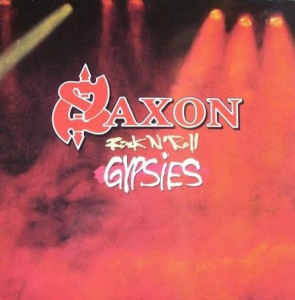
Saxon had lost their way with the dicey Destiny album. Dropped from EMI in 1988, they took a creative break. For the next couple of years their activity was restricted to touring and the release of a couple of live albums through one-off record deals. The first of these, recorded on a tour of Eastern Europe, was 1989’s Rock N’ Roll Gypsies.
The main historical interest is the new lineup: Nigel Glockler makes a welcome return to the drum stool and bassist Timothy ‘Nibbs’ Carter makes his Saxon debut. There’s no song duplication with their previous live album, 1982’s The Eagle Has Landed, and none of that album’s sweaty, beery atmosphere. But it kicks off very promisingly indeed. The band sound driving and ballsy and thunder through Power and the Glory, And the Bands Played On, Rock the Nations and a superb Dallas 1PM, only slipping up on a sleepy version of Broken Heroes. The next side kicks off with a rousing Battle Cry before things start to go pear-shaped. The patchiness of the band’s EMI years rears its ugly head as Rock N’ Roll Gypsy, Northern Lady and I Can’t Wait Anymore progressively suck more and more life out of the album: the excitement level dropping so low that the kinetic closer This Town Rocks barely registers.
CD editions add quality and value with bonus tracks The Eagle Has Landed and Just Let Me Rock but, all in all, Rock N’ Roll Gypsies is a solid but unremarkable live stop-gap. The lack of song duplication with The Eagle… is a double-edged sword. It’s more collectable and interesting to hear different songs but the feel of a live Saxon show is hampered when there’s no Wheels of Steel or Strong Arm of the Law. And given the lack of concert classics, the omission of Crusader (one of the band’s most triumphant post-1982 songs) is unforgivable. Great performances, dodgy tracklisting. The faltering steps of a great band finding its feet again.
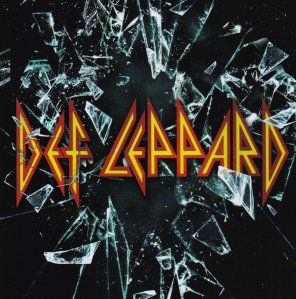
New Def Leppard albums will always be stacked up against Hysteria, the last and most successful album of their classic era. Every subsequent release reliably trotted out as “their best since Hysteria“. But it’s been 28 years since that album and Def Leppard’s career has been hit-and-miss ever since. Without the hard-edged chemistry they enjoyed with the late Steve Clark as their guitarist they’ve been unable to satisfactorily turn the clock back to their classic era and any attempt to progress and achieve a crossover success by introducing contemporary influences has had mixed results and a mixed reception. Their new self-titled album finds them employing various approaches taken from throughout their long career and, like that career, it’s diverse and patchy.
Let’s Go and Dangerous kick the album off in an enjoyably classic Lep vein but they’re basically reheats of Pour Some Sugar on Me and Photograph respectively. Neither possessing the fresh spark or originality of the source material. Then the band pay homage to best-forgotten eras of their career too. Man Enough reworks Queen’s Another One Bites the Dust in such an un-sexy way that it brings to mind the horror of Euphoria‘s All Night. And even their career-nadir X is represented by the insipid ballad We Belong and the boy-band pish of Energized. The latter is quite possibly the worst song of their entire career.
The fan pack. Something to read while you pretend side one never happened.
But anyone loyal enough to stick out the diminishing returns of the album’s first half is rewarded as the album improves in its second half. All Time High and Broke N’ Brokenhearted prove that the band’s dumb-but-fun rock is still not out of the question. But it’s the more serious, moody tracks that are the real winners here. Wings of an Angel is an excellent slice of layered drama. Easily the best song on Def Leppard. And there’s a welcome return to the adventurous feel of the Slang era too with the excellent, moreish Forever Young and the “Lep do Zep” of Battle of my Own.
Sadly, the album’s indian summer isn’t enough to undo the, often embarrassingly bad, first half. With tracks three to seven removed you’d have the makings of a decent Def Leppard album here. But even then, it would still just be solid. There’s nothing here that the band, or other bands, haven’t done before and better. There’s no shame in a classic act relying on past glories but to do so with so little fire and edge is unforgivable. Disappointing.
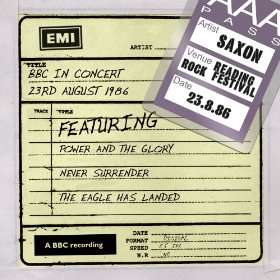
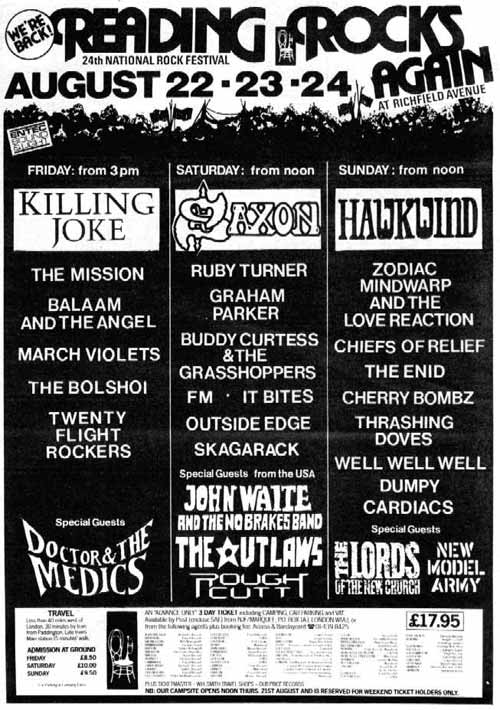
Only a year had passed since Saxon’s 1985 Hammersmith show was broadcast on BBC Radio but Saxon invaded the UK’s airwaves yet again as their headlining slot at 1986’s Reading Festival was recorded for broadcast on the BBC Friday Rock Show. The band were touring to promote the imminent release of the Rock the Nationsalbum and, while that patchy album found them losing their Midas touch in the studio, on BBC in Concert (23rd August 1986) it sounds like they were losing none of their knack as a live act.
Sadly, the BBC didn’t air the whole set and cherry-picked just 9 songs for broadcast. Much of the broadcast has since been available on Saxon’s BBC Sessions album but this album download (available on Amazon/iTunes etc…) now presents the complete 9 song, 51 min broadcast as it was originally aired. It’s fairly heavy on the classic material and if you didn’t know what year it was from you could be forgiven for thinking this was the band in their NWOBHM pomp. Only two new songs give the game away: an excellent version of Rock the Nations that fits right in with the older material and a performance of Waiting for the Night which… doesn’t. It’s actually a pretty good version of the track but its pop rock breaks the spell cast by glorious versions of metal powerhouses like 747 (Strangers in the Night) and Wheels of Steel. On the bonus side it’s the song here that gets played least often so it’s good to hear and own a live version of it.
A bit of a mixed bag then!
That one hiccup aside, the rest of the performance is impressive. The band is on winning form and the crowd sound like they’re lapping it all right up. While new bassist Paul Johnson didn’t command the stage like Steve Dawson he acquits himself well musically. Never Surrender and 20,000ft give the classic TheEagle Has Landed live album versions a run for their money and an excellent Strong Arm of the Law climaxes with a wailing Graham Oliver solo (with some Sabs and Hendrix thrown in for good measure). The real highlight, though, is a captivating The Eagle Has Landed which puts its studio counterpart firmly in the shade.
The vintage quality of this performance must have been heartening stuff for fans troubled by the recent studio albums but any hopes for a return to form would soon be dashed. The Rock the Nations album proved disappointing and, frustrated by the way the band was being managed, Nigel Glockler would leave the band at the end of the tour to join GTR. And Saxon’s next, and last, studio album for EMI would be a desparate gamble that would test the patience and loyalty of their fans more than any other yet.
“Did you listen to the radio every Friday night?” asked Saxon in their classic track Denim and Leather. If you did back in the 80s you might have heard this excellent live recording of Saxon’s show at the Hammersmith Odeon. Broadcast on Radio 1’s Friday Rock Show, BBC In Concert (18th September 1985) captures a difficult and interesting time in Saxon’s career as they toured to promote their controversial new album Innocence Is No Excuse.
Only a selection of the concert’s songs were broadcast so only four Innocence tracks appear here. Of those, Broken Heroes and Devil Rides Out fare best in the live setting, sitting comfortably alongside the band’s established repertoire. However, the moody Rockin’ Again is badly placed and struggles as the first encore tune. And while the catchy and upbeat Back on the Streets kicks off the broadcast well, its worth is put into question by the absolutely spine-tingling performance of Dallas 1PM that follows it.
On one hand the Innocence era tracks weaken the set but their lesser-heard nature adds to the interest for long-time Saxon fans. The rest of the broadcast is taken up by their radio-friendly classics which, with the possible exception of a tired-sounding Strong Arm of the Law, sound fresh and lively. Some of the performances here are exciting enough to make you feel like you’re hearing these songs for the first time. The versions of Dallas 1PM and Power and the Glory might be the best I’ve heard yet and older material like Wheels of Steel and Princess of the Night serve as strong reminders that this is the same band that recorded The Eagle Has Landed three years previously.
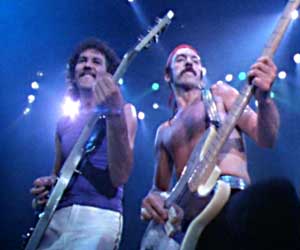
Graham Oliver and Steve Dawson
But they wouldn’t be for much longer. This would be the band’s last tour with bassist Steve Dawson. Disagreements with the band and management saw him fired before sessions began for their next studio album. It was a risky decision: Steve’s playing, performance and writing had played a crucial role in the band’s career and success.
But the problems behind the scenes are not evident in this live recording. It’s not an essential purchase but Saxon devotees are sure to get a good kick out of this. It’s an exciting and atmospheric time capsule of classic 80s Saxon out to prove their worth at a challenging time in their career. They certainly seem to have won over Hammersmith on 18th September 1985 but, with a key member gone and a couple of spotty studio albums behind them, the challenging times would continue.
This recording is available as part of the EMI Years [1985-1988] box set and also available separately as a download through iTunes, Amazon etc…
Innocence Is No Excuse was Saxon’s major-label debut, their first album under EMI/Parlophone. The band had left their indie label Carrere acrimoniously, suing over unpaid royalties. The case took months but meant vocalist Biff Byford and bassist Steve Dawson had plenty of time to prepare new Saxon material. Their last album Crusader had been a patchy, tired effort and, with contemporaries like Iron Maiden and Def Leppard leaving them in the dust, they would have to do better.
Produced by Simon Hanhart, 1985’s Innocence was a more cohesive and consistent album than its predecessor but it was also a controversial reinvention of the band’s style. It has a very commercial sound: smooth chorused guitars, gated drums and extra keyboards. And the band put a pop-metal spin on their material too. The opening track, the moody and windswept Rockin’ Again sets the stall out clearly: this is not going to be your typical Saxon album. With Byford and Dawson hogging the writing chores, the focus is firmly on melodies and anthems with very little guitar-riffing Heavy Metal Thunder. The more radio-friendly side of the band, demonstrated on previous songs like the power ballad Nightmare and simplistic singalong rockers like Just Let Me Rock, dominates here. The lyrics are simpler too. There are no songs about transportation: this band just wants to rock, shout, rock and shout again.
The coulda-shoulda-been hits
The focus on hooks and melodic anthems results in impressive coulda-shoulda-been-hits like Back on the Streets and Rock N Roll Gypsy but means there’s a lack of variety in style and dynamics in the album overall. Call of the Wild and Devil Rides Out stand out with some rare money riffs from guitarists Quinn and Oliver. Gonna Shout and Everybody Up are pleasingly dumb energetic crowd-participation numbers. While Saxon’s take on poppier material tended to sound limp on previous albums, here they sound bold and confident in their direction.
None of the songs are bolder or more confident than the Side 2 opener Broken Heroes. An elegiac ode to history’s war fallen, it’s the only true Saxon classic here, combining tragic sadness with fist-clenching pomp to sublime effect. It’s a triumph and, like Crusader on the album before, the best song on here by a mile. That both Crusader and Innocence… are most successful in their lone epic boy’s-own moments indicates that Saxon were losing sight of the blokey grit, depth and heart that were important parts of their charm.
With their major label behind the album, Saxon enjoyed their highest US chart placing yet and bagged some MTV exposure but found themselves falling out of favour in the UK. A narrative took hold that they were trying too hard to crack America. Ultimately, on both sides of the Atlantic, the glossy sheen and perceived lack of integrity would make Innocence Is No Excuse a forbidden fruit in the Saxon catalogue. But if you fancy some cheese with your apple, it’s worth taking a bite out of this one. It’s an underdog pleasure. Saxon were too talented to put out a total dud and their talent is still very much in evidence here, if misdirected. By the time the next record arrived, there would be one less talent in the band.
Mah copy – never quite sure if she was eating the apple or just dribbling on it
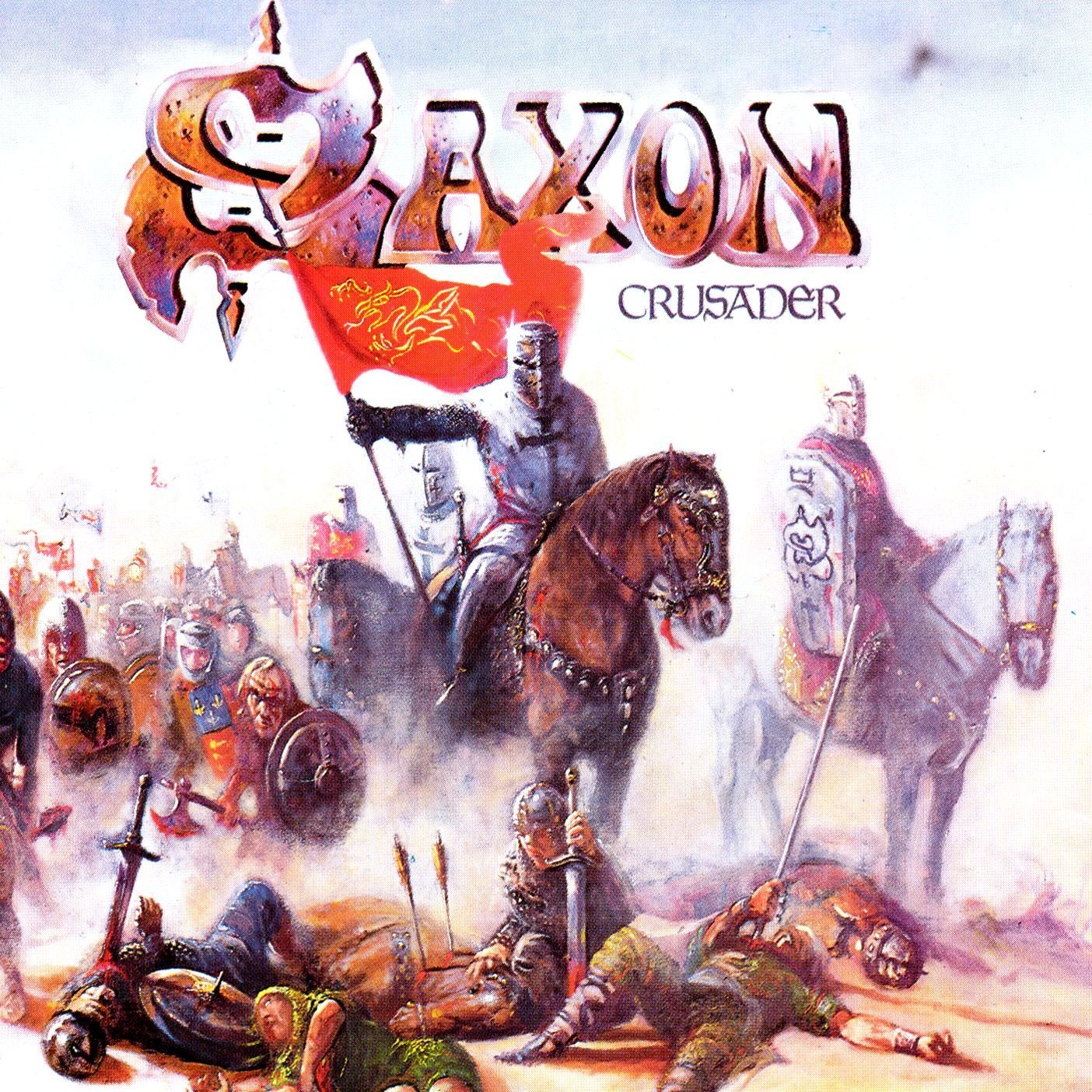
The bold Sir Knight on the excellent cover of 1984’s Crusader looks like he’s expecting some sort of bother. And, by reviewing the album that he adorns, I’m expecting a bit of it too. This is the kind of album you could easily get into a fight about. You could scrap about metal genres and styles: epic metal or hard rock; British or American; 70s glam rock or 80s glam metal; rockers vs ballads. They’re all here. There could be pistols at dawn over notions of integrity about Saxon’s leap to major label status with EMI and their search for a big break in the States. But, as a fan of all kinds of rock and metal I could just focus on the only thing that really matters: is Crusader any good?
As bugles and horses’ hooves herald the arrival of the title-track, the answer is yes. Better than good. It’s astounding. The epic Crusader tells of 12th Century warriors riding into battle. Biff Byford is on exceptional form lyrically and vocally. The grandeur of the song harkens back to tracks like Frozen Rainbow and Militia Guard from their overlooked debut. The climatic guitar solo and impassioned final choruses are Saxon at their most spine-chilling.
The rest of Crusader continues the polishing of Saxon’s sound that began with their previous album, the chrome-plated barnstormer Power & the Glory. Recorded in LA with REO Speedwagon producer Kevin Beamish, Crusader introduces a much more easy-going sun-kissed sound with the guitars quieter and the vocals the main focus. There are some attempts at commercial appeal. Do It All for You is Saxon’s first straight-up love ballad. Similar in mood to Journey’s Lights it’s got a nice sensuous feel and a regal intro but it’s let down by the lyrics as Saxon climb the highest mountains and search the deepest seas in search of clichés. Sailing to America is also in firm AOR territory and is an album highlight, a carefree cruiser with some expressive and colourful guitar.
The remaining tracks are predominantly straight-up rock. Just Let Me Rock, released as a single, is instantly memorable and has cool moody verses but it doesn’t dig in enough to fully engage. A Little Bit of What You Fancy and Rock City push more air but their choruses are a bit too naff for comfort. Run for Your Lives is better with its rousing football-chant coda while Bad Boys (Like to Rock N’ Roll) and the cover of Sweet’s Set Me Free are both tough enough to recall the street-fighting Brit grit of old.
The Yorkshiremen were still fighting the good fight but, with Crusader, Saxon’s standard dropped. It’s an enjoyable album overall but it needed more sonic heft (some songs fared better at the demo stage) and more consistent song-writing to match the quality and vitality of their past efforts. Only the album’s title-track truly belongs in the same rarefied air as past glories like 747 (Strangers in the Night). Crusader remains one of Saxon’s most beloved songs and the rest of the album basks in the goodwill generated by it.
In the UK Crusader turned out to be Saxon’s lowest charting album since their debut and a big US breakthrough continued to elude them. But their US sales were still improving and the album was a hit throughout mainland Europe. It eventually sold 2 million copies, making it Saxon’s bestselling album to date. But as Biff Byford said “we have had albums that have been more popular [than others]. That doesn’t necessarily mean I like them more.” And I think we should keep that in mind with Crusader. It’s a solid, successful and important album in Saxon’s career but better albums came before and after it.
The “classic trilogy” of Saxon albums that culminated with Denim and Leather had been a commercial and critical success. The band was poised for the big-time and a live album was proposed as just the thing to launch them to the level of the stupidly successful. But in order to do a live album, you need a tour and with only two days to go before the opening show of their Denim and Leather trek of the UK and Europe (with no less than Ozzy’s Blizzard supporting), their drummer Pete Gill was out of the band due to a hand injury. It was a disaster on the eve of such a critical and massive tour.
Enter Nigel Glockler: a friend of the band’s manager David Poxon. Nigel was drumming for Toyah at that point but was a hard-hitter with prog chops and a love of metal. Remarkably, in less than two days he was able to learn and perform Saxon’s entire 19-song set and kept the show on the road until Gill recovered, even performing at a show he had originally bought a ticket to see!* By the time Gill was able to return, Saxon had decided to hold on to Glockler as their full-time tub-thumper. So, as if learning 19 songs in two days wasn’t enough, Nigel would be appearing on the band’s hotly-anticipated first live album. Talk about being thrown in at the deep end.
(L to R) Graham Oliver, Steve Dawson, Biff Byford, Nigel Glockler and Paul Quinn
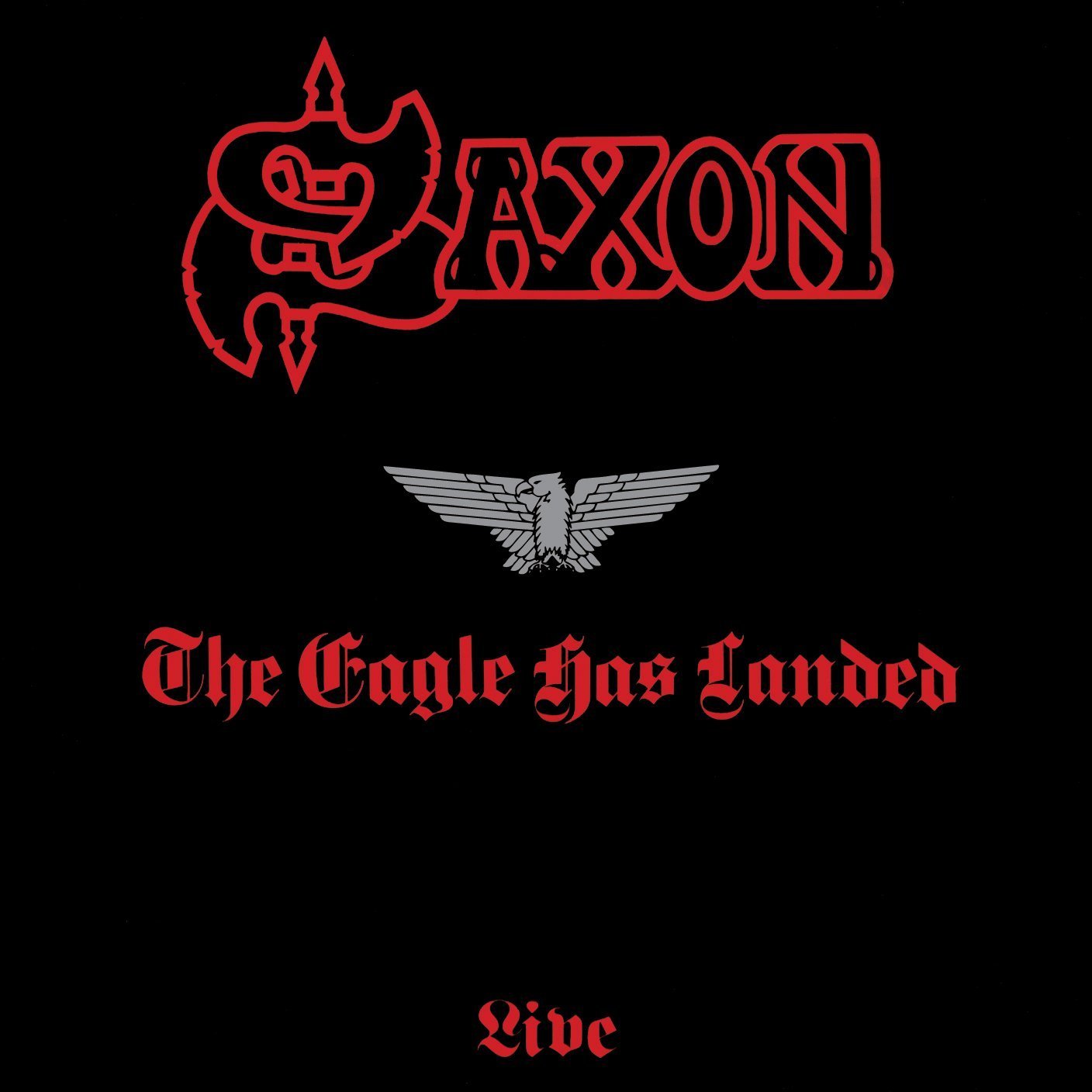
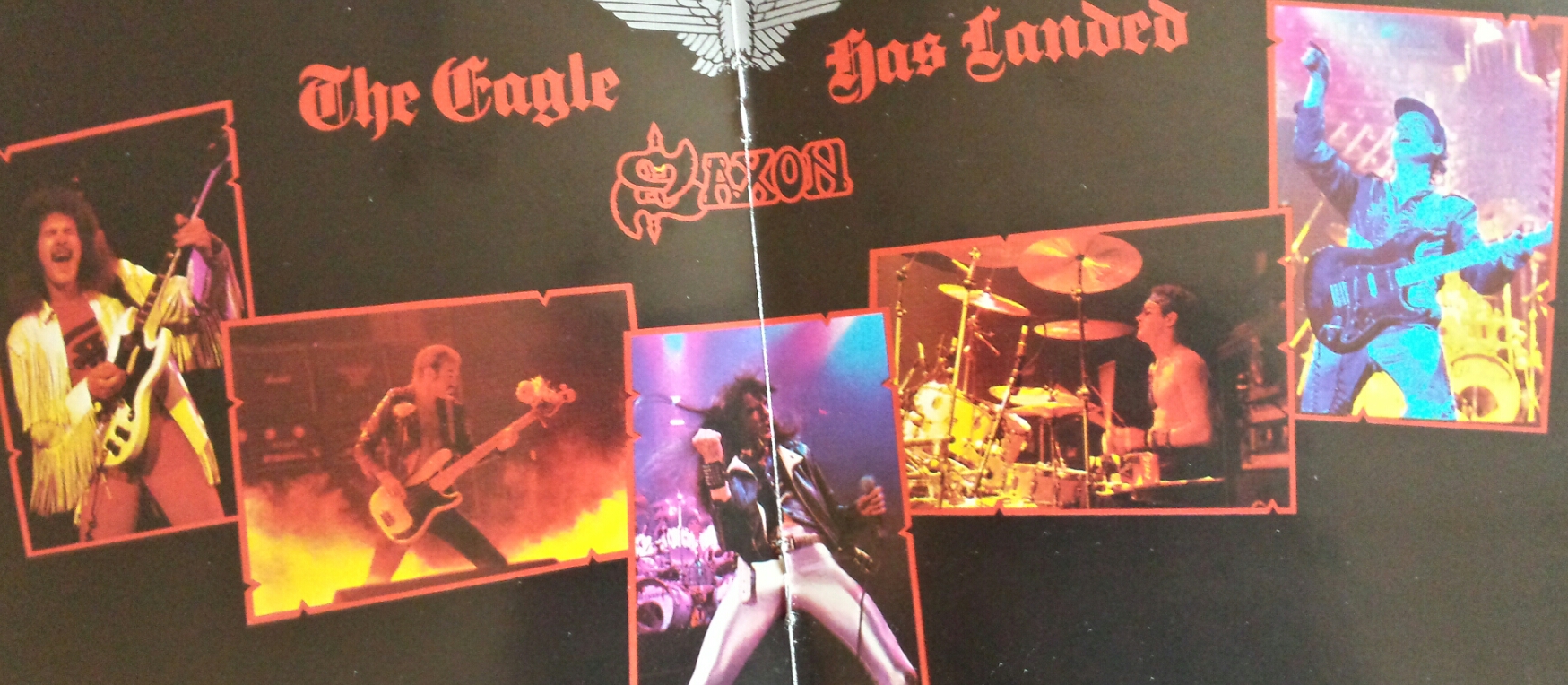
19,320 teabags later the Denim and Leather tour was over and The Eagle Has Landed live album hit the shelves in May 1982. It captures the sweaty, beery atmosphere of a NWOBHM-era gig. Saxon sound enthusiastic, tireless and tight. Each member is at the top of their game. Biff sings with charismatic energy and throws in some choice banter (“I wanna see people dying from exhaustion”) and the chemistry of the Oliver/Quinn guitar duo is palpable with the choppy, jousting guitars panned to each side. The rhythm section steals the show though: Glockler’s expressive, precision drumming charges the music with a fresh dynamism and, with his forceful, driving bass playing, Steve Dawson proves to be the pumping heart and soul of the band, especially on the faster numbers like Heavy Metal Thunder.
Saxon’s surfeit of brilliant material easily justified a lavish double-LP set but, unfortunately, Saxon’s label Carrere skimped and whittled it down to a miserly single album. Classic songs like And the Bands Played On, Denim and Leather, Frozen Rainbow and Dallas 1pm are inexplicably missing.** It’s a missed opportunity but the tracks we do get are hardly filler. The first side is absolutely top-drawer, opening with three of Saxon’s transport tunes: Motorcycle Man, 747(Strangers in the Night) and the definitive version of Princess of the Night. Side 2 falters slightly with some weaker song choices in 20,000ft and Never Surrender but Wheels of Steel is a victorious joy with a chummy singalong led by the charming Byford and the album closes explosively as Fire In the Sky and Machine Gun fly by in a furious blur culminating in wild guitar pyro and double-bass drumming.
My copy!
2006 Reissue Tracklising
The Eagle Has Landed manages to be essential and frustrating all at once. The performances are stellar, many of them definitive and it’s a great introduction to the band (I can personally vouch for that). It continued Saxon’s commendable run of hits in Europe but the omission of vital tracks stopped it being the career-boosting milestone or the all-time classic it should have been. But, nevertheless, it’s a street-level, no-holds barred barrage of an album that atmospherically and honestly captures a gritty and exciting time in metal history. And that’s worth the price of entry alone. It also marks the end of an era for Saxon: by the time The Eagle Has Landed hit the shelves a fellow British metal band had stolen their thunder, taking the NWOBHM to a massively successful and chart-topping conclusion. Saxon were no longer the scene leaders: their number was up. The number was six hundred and sixty six.
*Nigel has never received a refund for his ticket.
**This wasted opportunity has been satisfyingly rectified with the 2006 CD Reissue which adds six recordings from the era as bonus tracks. Still no Denim and Leather though.
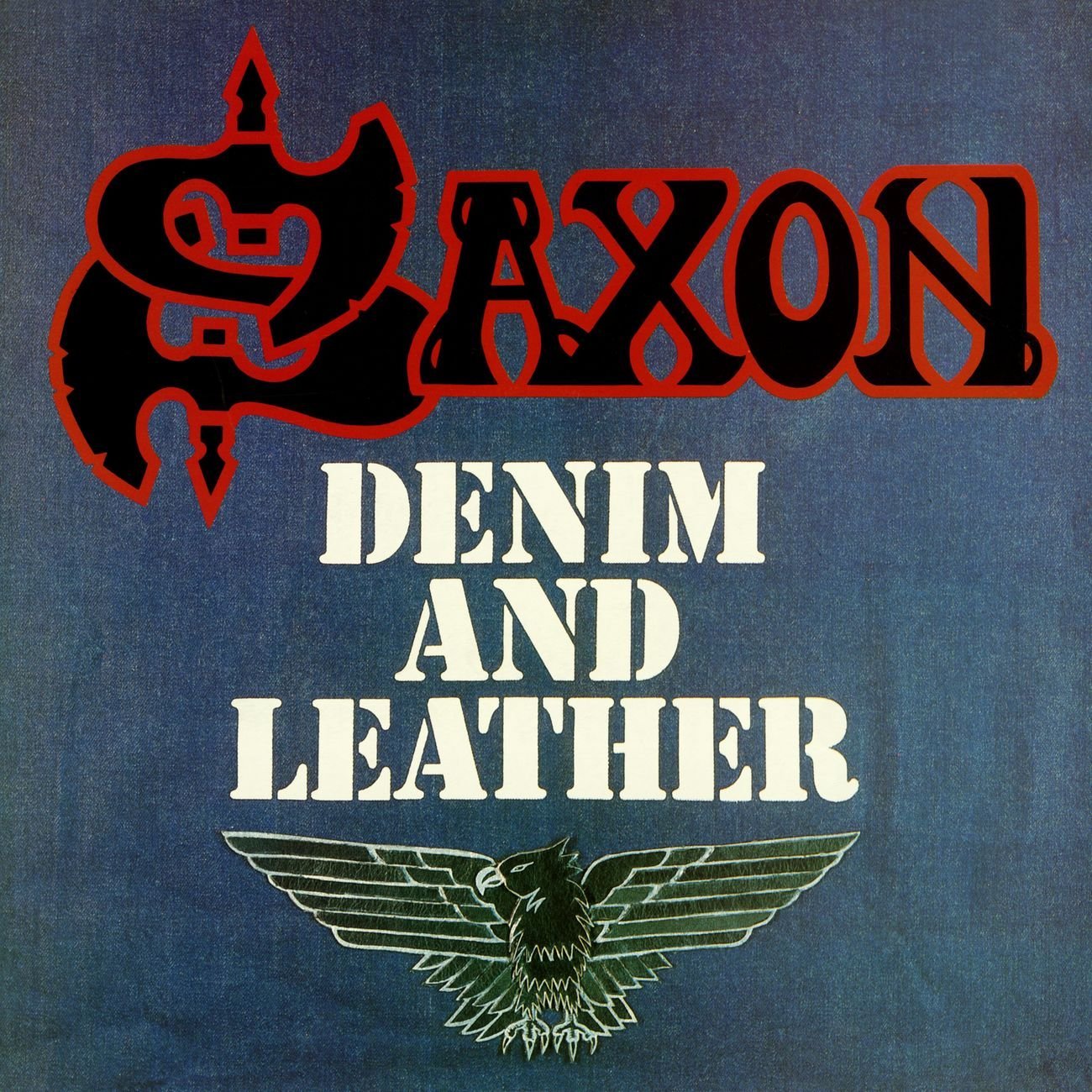
They might have released two stone-cold classics in 1980 but Saxon weren’t about to put their feet up. The New Wave of British Heavy Metal was now in full flow and Saxon were clearly unwilling to relinquish their position as the commercial hot property of the movement. Released in 1981, hot off the back of their considerable success the year before, Saxon’s fourth album Denim and Leather was a celebration. Not just of the band’s success but of their fans and the resurgent metal scene as a whole.
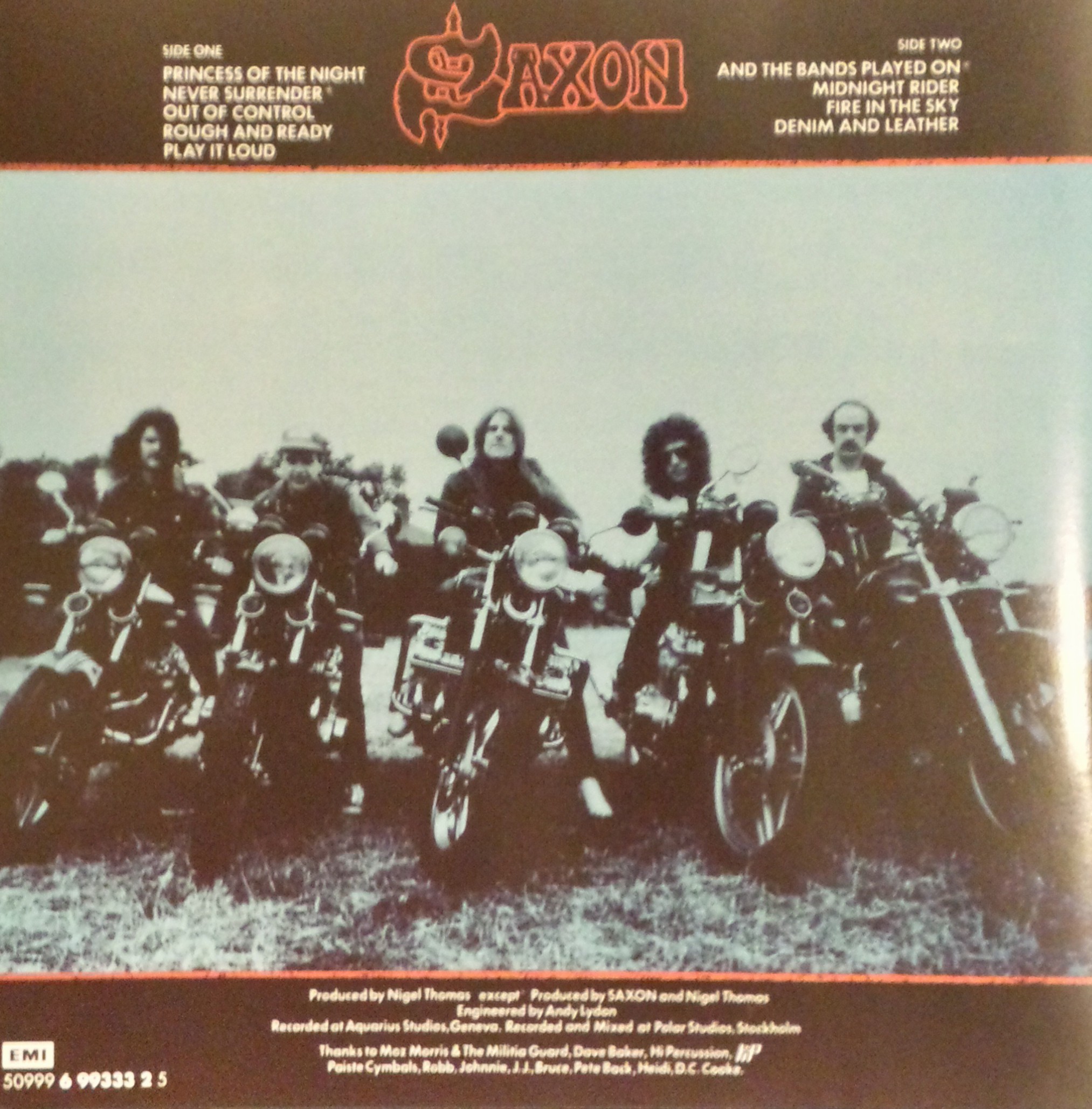
Produced by Nigel Thomas, Denim and Leather is less abrasive than the previous albums but still sonic meat and potatoes. It’s topped and tailed with two of the greatest songs Saxon would ever produce. Continuing their penchant for offbeat lyrical subjects and songs about forms of transport, opening track Princess of the Night tells the tale of a steam train delivering mail through ice and snow. (You’ll have to suspend your disbelief at a British train actually running during such inclement weather). It’s a darting, precision rocker with a riff you can’t believe no-one thought of before and a joyously bluesy guitar solo from Paul Quinn. Closing track Denim and Leather is a genuine and charming tribute to the metal fans that put Saxon on the map, highlighting the band’s down-to-earth attitude. It’s a stomping anthem with a huge and irresistible chorus and one of the most memorable opening lines in metal history: “Where were you in ’79 when the dam began to burst?”
After the superb opening the first side is a mixed-bag. Never Surrender is vintage Saxon and follows Princess of the Night in bruising style but the quality starts to trail off. Rough and Ready is a stodgily unconvincing hard-man boast and Play it Loud is a flat stab at a party anthem. Side 2 immediately gets the album back on track with And the Bands Played On, another of the album’s outstanding victories. Despite its musical similarity to 747 (Strangers in the Night) it has its own unique identity and appeal: a feel-good ode to the inaugural Monsters of Rock festival at Castle Donington. As with the title track, Saxon’s everyman charm works wonders: rather than singing about how amazing their own performance was, they celebrate the festival itself, the attending horde and name-check other bands on the bill. It’s got simple, memorable guitar riffs and Biff Byford’s breathless delivery is a joy “Will it rain, will it snow, will it shine? We don’t know” and it’s one of those classics you never tire of hearing. Midnight Rider continues the musical lap of honour, recounting the band’s early tours of the States with the rolling tempo and gear-changing chords perfectly capturing the excitement of the road trip. The album’s most ripping number, the apocalyptic Fire in the Sky, and the triumphant title-track finish the album on a high.
Hello ladies!
Along with Wheels of Steel and Strong Arm of the Law, Denim and Leather is often thought of as the third in Saxon’s “classic trilogy”. As is often the case with trilogies, the final part is the weakest of the three but it’s still a must-hear with some of the band’s most accomplished songwriting and the guitar duo of Graham Oliver/Paul Quinn at a lively peak. The highlights are magnificent metal classics and far outweighs any filler to elevate the album to star status. It was their second highest charting album in the UK so Saxon’s position at the head of the NWOBHM pack remained secure and just two years on from their debut release they already had a discography and a following worthy of celebration. The dam was well and truly burst.
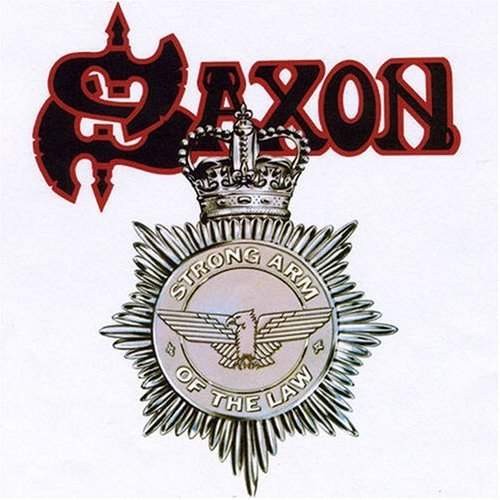
Heavy metal was a big deal in 1980 and so were Saxon. Keen to capitalise on the success of Wheels Of Steel and its accompanying singles, the band were strong-armed into the studio to write and record the follow-up. It could have been a rush-job disaster but the haste gave Saxon a no-frills, street-level edge. It was just four months from the release of Wheels Of Steel and Saxon already had another all-time classic album on the shelves with 1980’s Strong Arm Of The Law.
This album does not hang about as Saxon motör through one banger after another. Heavy Metal Thunder is a blazing ode to everyone’s favourite music, To Hell And Back Again alternates melodic verses with a charging chorus and the high-flying 20,000ft is a relentless live mainstay. The excellent Hungry Years adds a bit of variety with its heavy blues shuffle, the bouncy Sixth Form Girls is a working-class vignette with more intelligent lyrics than the title would suggest and the title-track is pure classic rock with a cool sliding riff and swaggering vocals. But the album’s most classic track is saved for last as Dallas 1pm tells the tale of the JFK assassination with its tense Faith Healer-esque intro, ringing AC/DC chords and a haunting closing section that climaxes with a scorching Graham Oliver guitar solo. It’s a breath-taking conclusion to a blast of an album.
Releasing two albums this wonderful in the space of a year was an incredible feat and its hard to separate them. Wheels Of Steel has the slight edge in strength of tuneage but Strong Arm Of The Law is more pedal-to-the-metal. The label opted to name the album after its lead single but its intended title was originally “Heavy Metal Thunder”. They should have stuck with that cause that’s exactly what you get on this superb album. Fill your heads.
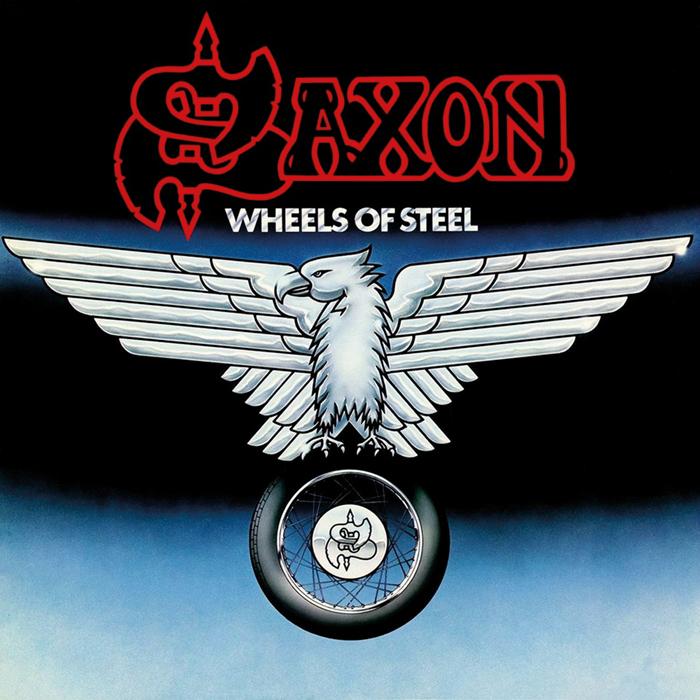
Despite being arguably the first album of the NWOBHM, Saxon’s 1979 debut album sounded more old-fashioned than new wave. But by the following year, revved up by a support slot on Motörhead’s Bomber tour, the band were back with Wheels Of Steel: a biker metal classic that broke the band and became one of the most iconic NWOBHM releases. Much of the album follows the direction set by the debut’s excellent Stallions Of The Highway: up-tempo, racing tunes like Motorcycle Man, Machine Gun and Freeway Mad combine wild Motör-riffing with hollering vocals, ringing chords and hot soloing. It’s headbanging heaven. Elsewhere, the album is less hectic but still brilliant: See The Light Shining has a clever shift in mood half-way through and Suzie Hold On has a yearning, streetwise quality that brings to mind UFO. But the album’s undoubted highlights are the greasy rocker Wheels Of Steel with its raunchy riff and bobbing bass and the wonderful 747 (Strangers in the Night), which tells the perilous tale of Flight 101 with unforgettable guitar hooks and Biff Byford’s enigmatic vocals. The album’s mix of pumping rock, gritty aggression and inspired songwriting shot Saxon to the pole position of the NWOBHM: scoring them hit singles, TV appearances and a spot on the first Monsters of Rock festival bill at Castle Donington. 1980 was a competitive year loaded with timeless metal classics but Wheels Of Steel proved that Saxon had what it took to stand up and be counted. Now their foot was on the throttle, there was no looking back.










 HEAVY METAL OVERLOAD