Tag Archives: EMI

Saxon – Destiny (Album Review)

Saxon - Destiny (1988) Even the logo was wrong!
Saxon – Destiny (1988) Even the logo was wrong!

Rock the Nations was an encouraging but not entirely convincing return to the classic Saxon sound. With EMI breathing down their necks, Saxon made a last-ditch bid for stardom with 1988`s Destiny. But it wasn’t meant to be.

Destiny was the first (and only) Saxon studio album to feature the new rhythm section of bassist Paul Johnson and drummer Nigel Durham. Saxon were at a low ebb in their confidence and creativity, papering over the cracks with all sorts of formulaic 80s pop rock moves and an over-egged pudding of a production. Uninspiring songs like I Can’t Wait Anymore, We Are Strong and Song For Emma rely on stock pop rock moves and limp anthemry. And more promising numbers like Calm Before the Storm and S.O.S. struggle under layers of keyboards and backing vocals.

Look at the nick of these guys.

However, the band recaptures some of their classic might with For Whom the Bell Tolls and Red Alert. More dynamic, riff-heavy and fully-realised, it’s telling that these tracks rely less on the production bells and whistles. The album’s one true classic and standout track is Ride Like the Wind, a driving and charismatic power ballad reinvention of the Christopher Cross tune. It’s a brilliant cover and a should-have-been hit. It’s the only Destiny-era tune to endure in the band’s career and live repertoire. But even then, it’s no Broken Heroes, Battle Cry or Crusader.

Overall, Destiny is likely to be too syrupy for many fans of traditional Saxon and, even judged on its own merits as an AOR album (against, say, Magnum’s Wings of Heaven), it’s unconvincing. In fact, it’s one of Saxon’s worst albums. As worst albums go, it’s not a total disaster. There’s good stuff here and in the right mood even some of the ropier tunes can connect. But the patchiness, dissipating credibility and perceived commercial desperation of Saxon’s EMI years came to a head here. Before long the band were dropped from EMI, had fired their management and were taking time out to rethink and recharge. It would take years for the one-time champions of NWOBHM to fully recover.
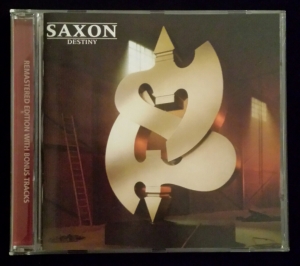
Mah copy
Mah copy

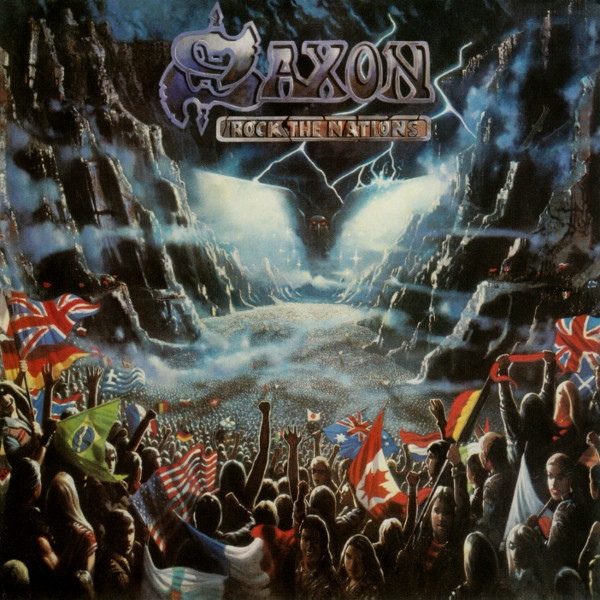
Saxon – Rock the Nations (Album Review)

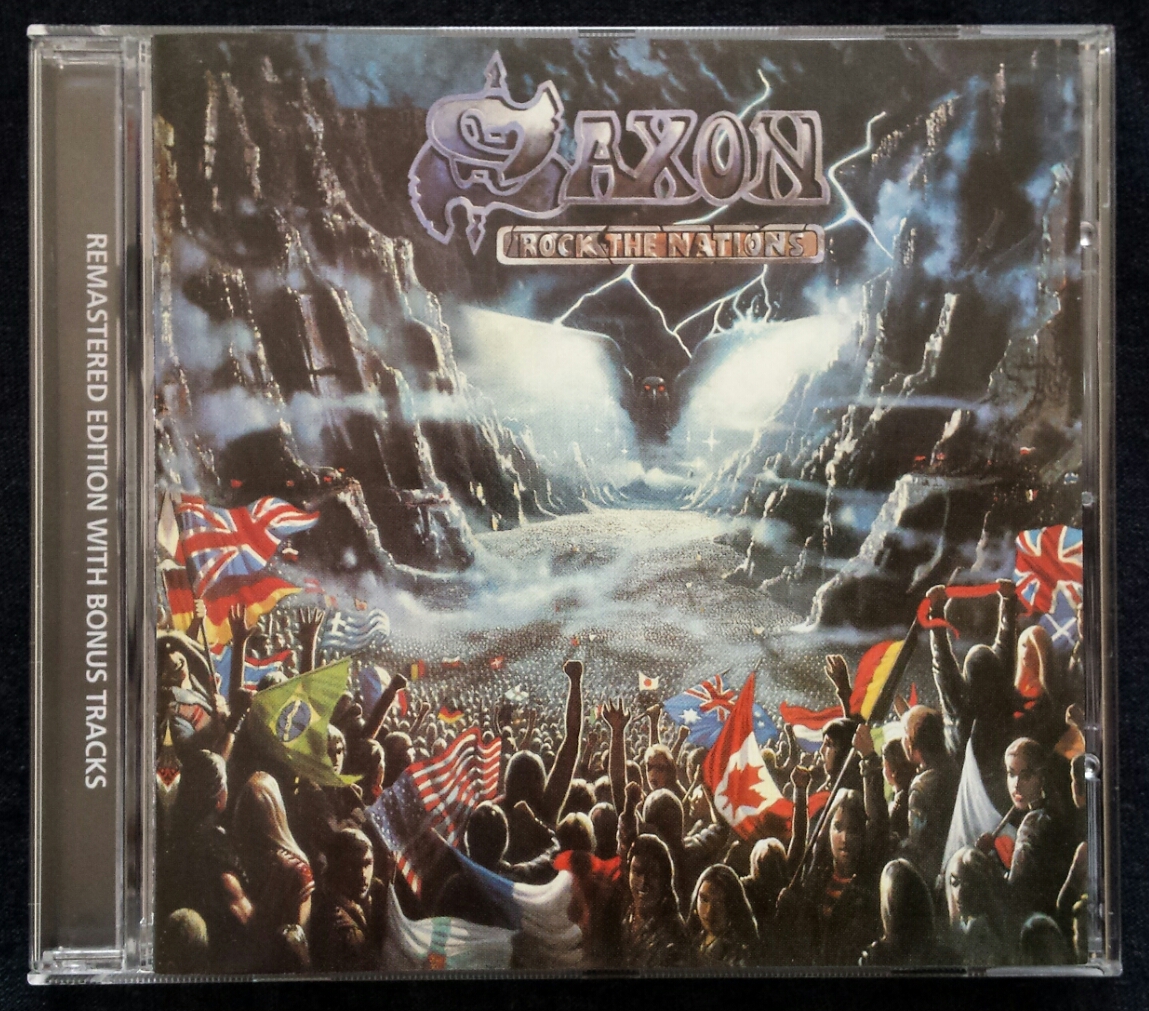
Saxon - Rock the Nations (1986)
Saxon – Rock the Nations (1986)

Saxon had aimed for the big time with the slick, streamlined Innocence Is No Excuse but fell short. The band put on a positive face, pointing to their improved US chart placings and successful tour but the album was basically an expensive flop. So for their follow-up, 1986’s Rock the Nations, Saxon went back to basics and recorded quickly and cheaply with producer Gary Lyons. Minus departed bassist Steve Dawson, vocalist Biff Byford took on the bass-playing duties for the recording of the album.* It would be the first and only Saxon album recorded by a four-piece.

Well, except the songs that have got Elton John playing on them.

I’ll give you a little moment here to let that sink in.

Rock the Nations sees the band return to a harder, grittier sound but there’s still a bit of radio-friendly finesse. It has a strong, muscular production much in the same vein as their classic Power & The Glory album. The opening title-track gets things off to a great start with its bold, blocky riffing and gruff vocals and the next track Battle Cry is even better, a strident true metal belter. Byford’s vocals are astonishingly passionate and gutsy, the arena-ready main riff is absolutely inspired simplicity and the rhythm section is flawless and propulsive. It’s a bloody triumph. But any hopes for a return to the band’s “classic trilogy” heyday are dashed as the band fail to maintain this fighting form for much longer.

2015-08-28 12.10.53

Waiting For The Night is a catchy, personable AOR track. It’s one of those coulda-shoulda-been hits but it’s poorly positioned and fares badly coming hot on the heels of the bulging, anthemic Battle Cry. Elsewhere, tracks like Running Hot and You Ain’t No Angel are well-performed but forgettable Sunset Strip rockers (and the spoken word part on the latter is a low point). We Came Here to Rock overcomes its clichéd chorus with lively verses and Empty Promises is a pleasingly sultry slow-burner that gets lost on the album due to being sandwiched between “those” two songs. You know… the ones with him on them.

Yep, in the oddest pairing since Billy Joel guested on Exodus’ Bonded By Blood album**, Elton John was recording nearby and ended up tinkling the ivories on two of Saxon’s new tracks. You can probably guess from the titles that neither of these songs are particularly sophisticated. Party Til You Puke is a loose, fun Rock n’ Roll jam but the jokey lyrics and vocals are painfully unfunny and sink the song. And Northern Lady is uninspired, lazy balladry. If you’re going to write a passionate ode to your great love, you’d like to think you could think of a better way to describe her than just “Northern” surely? Just me?

Ultimately, Rock the Nations is Saxon putting on a brave face at a difficult time but their spirit is weak. The album starts off sublime and loses focus, direction and steam as it progresses. It’s not a bad record, it has some brilliant songs and a loose, fun quality about it, but it is a frustrating one. And, following Crusader and Innocence Is No Excuse, Saxon needed to do better than release another patchy underdog effort. Their next album would need to be much better or their days as a major-label act would be seriously numbered.

*During the recording Saxon would audition and hire Paul Johnson as their new bass player. He would be credited on the album sleeve as the bassist on Rock the Nations but he doesn’t play a note here.

**OK, I made that one up.

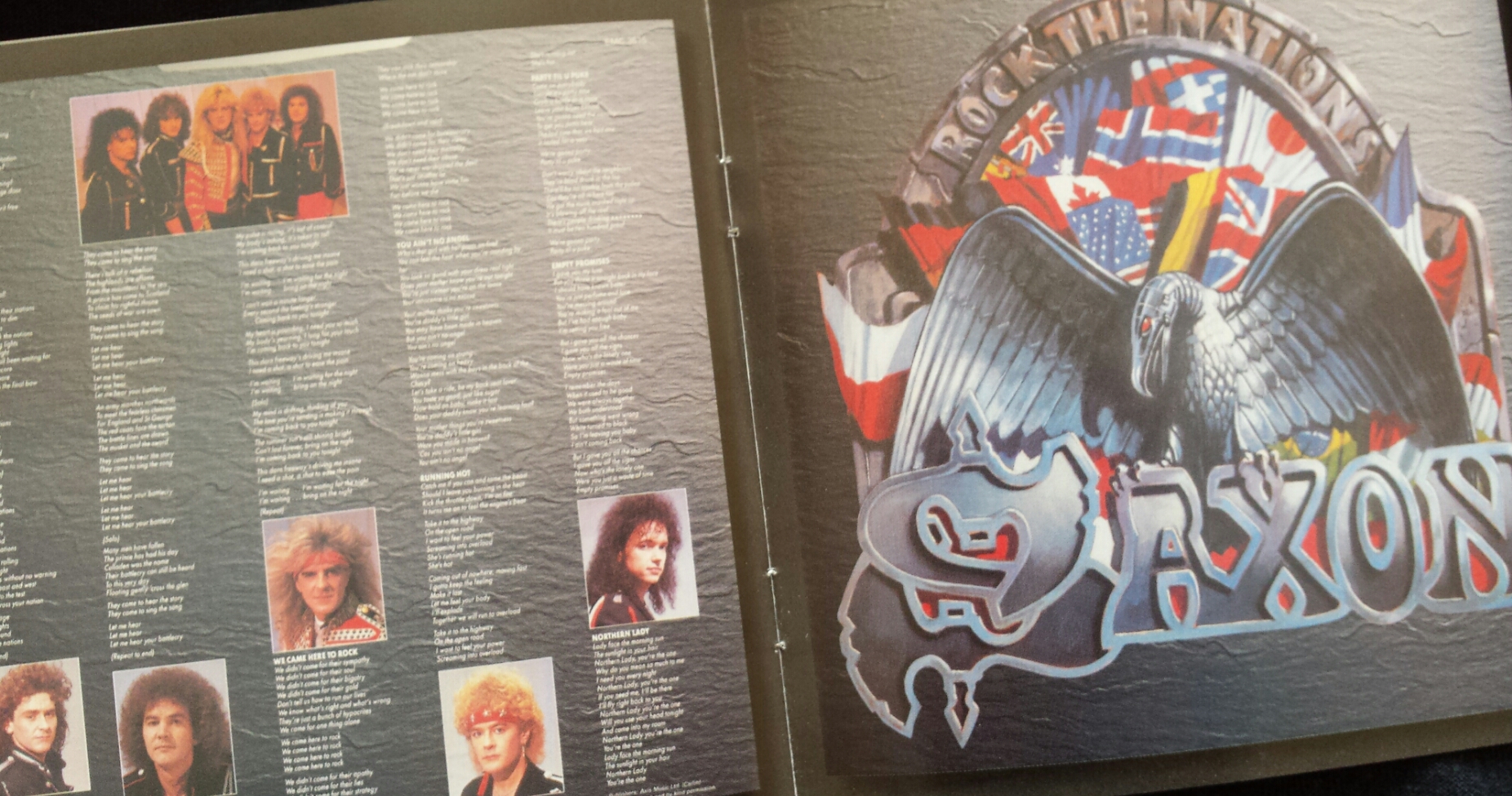
Mah copy
Mah copy

Saxon – Innocence Is No Excuse (Album Review)

Saxon - Innocence Is No Excuse (1985)
Saxon – Innocence Is No Excuse (1985)

Innocence Is No Excuse was Saxon’s major-label debut, their first album under EMI/Parlophone. The band had left their indie label Carrere acrimoniously, suing over unpaid royalties. The case took months but meant vocalist Biff Byford and bassist Steve Dawson had plenty of time to prepare new Saxon material. Their last album Crusader had been a patchy, tired effort and, with contemporaries like Iron Maiden and Def Leppard leaving them in the dust, they would have to do better.

Produced by Simon Hanhart, 1985’s Innocence was a more cohesive and consistent album than its predecessor but it was also a controversial reinvention of the band’s style. It has a very commercial sound: smooth chorused guitars, gated drums and extra keyboards. And the band put a pop-metal spin on their material too. The opening track, the moody and windswept Rockin’ Again sets the stall out clearly: this is not going to be your typical Saxon album. With Byford and Dawson hogging the writing chores, the focus is firmly on melodies and anthems with very little guitar-riffing Heavy Metal Thunder. The more radio-friendly side of the band, demonstrated on previous songs like the power ballad Nightmare and simplistic singalong rockers like Just Let Me Rock, dominates here. The lyrics are simpler too. There are no songs about transportation: this band just wants to rock, shout, rock and shout again.

The coulda-shoulda-been hits

The focus on hooks and melodic anthems results in impressive coulda-shoulda-been-hits like Back on the Streets and Rock N Roll Gypsy but means there’s a lack of variety in style and dynamics in the album overall. Call of the Wild and Devil Rides Out stand out with some rare money riffs from guitarists Quinn and Oliver. Gonna Shout and Everybody Up are pleasingly dumb energetic crowd-participation numbers. While Saxon’s take on poppier material tended to sound limp on previous albums, here they sound bold and confident in their direction.

None of the songs are bolder or more confident than the Side 2 opener Broken Heroes. An elegiac ode to history’s war fallen, it’s the only true Saxon classic here, combining tragic sadness with fist-clenching pomp to sublime effect. It’s a triumph and, like Crusader on the album before, the best song on here by a mile. That both Crusader and Innocence… are most successful in their lone epic boy’s-own moments indicates that Saxon were losing sight of the blokey grit, depth and heart that were important parts of their charm.

With their major label behind the album, Saxon enjoyed their highest US chart placing yet and bagged some MTV exposure but found themselves falling out of favour in the UK. A narrative took hold that they were trying too hard to crack America. Ultimately, on both sides of the Atlantic, the glossy sheen and perceived lack of integrity would make Innocence Is No Excuse a forbidden fruit in the Saxon catalogue. But if you fancy some cheese with your apple, it’s worth taking a bite out of this one. It’s an underdog pleasure. Saxon were too talented to put out a total dud and their talent is still very much in evidence here, if misdirected. By the time the next record arrived, there would be one less talent in the band.

Mah copy - never quite sure if she was eating the apple or just dribbling on it
Mah copy – never quite sure if she was eating the apple or just dribbling on it