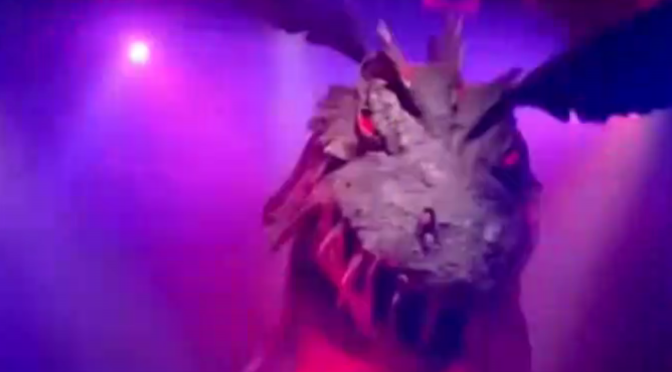
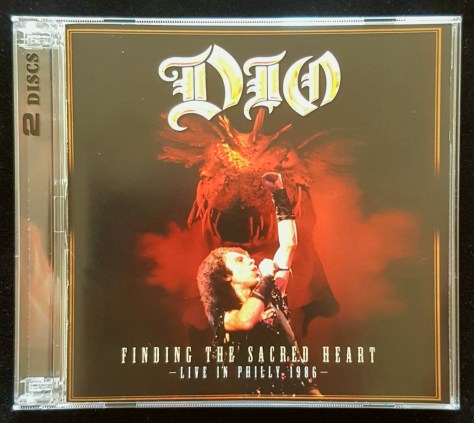
Dio in his spectacular 80s live prime: explosions, lasers, crystal balls, knights, heraldry and a big fucking dragon! None of that on the CD version though… but have no fear! The music is just as spectacular. The band, including new guitarist Craig Goldy, breathe fire into the new material from the under-rated Sacred Heart album: King Of Rock N’ Roll is an explosive opener; Sacred Heart and Like The Beat Of A Heart are stately magnificence; and Hungry For Heaven and Rock N’ Roll Children are fun melodic anthems. The powerful band does a great job on the older Dio tracks like We Rock, Stand Up And Shout and Rainbow In The Dark too. In particular, the version of Don’t Talk To Strangers here is goosebump city: the best version of the track I’ve ever heard. Unfortunately, some of the other Dio, Rainbow and Sabbath classics get shoehorned into medleys, which are enjoyable enough but a bit frustrating. Especially when drum, keyboard and guitar solos are allowed to drag…on(!) for 18 minutes of valuable running time. So there’s both heaven and hell here for Dio fans. If you can find the sacred skip button, you’ll discover golden renditions of your favourites and fresh excitement from some lesser-heard treasures. Buy the live DVD too… it’s got a big fucking dragon in it!
The animals are all insane… and badly dressed. God help us.
Normally I would base a review of an album on more than three listens but after listening to W.A.S.P’s Inside the Electric Circus that many times this week, I’ve heard enough. The first three proper tracks on it (the title track, I Don’t Need No Doctor and 95-N.A.S.T.Y.) are the only ones worth writing home about. Fantastic howling, raunchy metal that makes you feel like this could be one of the most fun metal albums ever. The problem is, the rest of this album is mundane. It doesn’t do anything wrong exactly: this is no “hope you like our new direction” misfire. I love what W.A.S.P. did with their first two albums and this continues in that vein but it’s the sound of a band on autopilot. W.A.S.P. knew it too. After the supporting tour and live album (guess which songs from this made it onto that?) they changed tack, releasing the more serious and ambitious The Headless Children. If further proof of Inside the Electric Circus‘ mediocrity is needed: that cover. If you paid money to see an “Electric Circus” and got a dude in a cage wearing a tiger-print leotard and fake claws… you’d ask for a refund. Demand better.
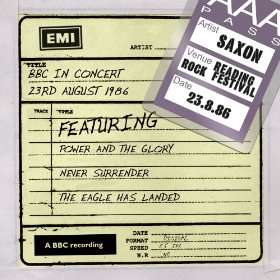
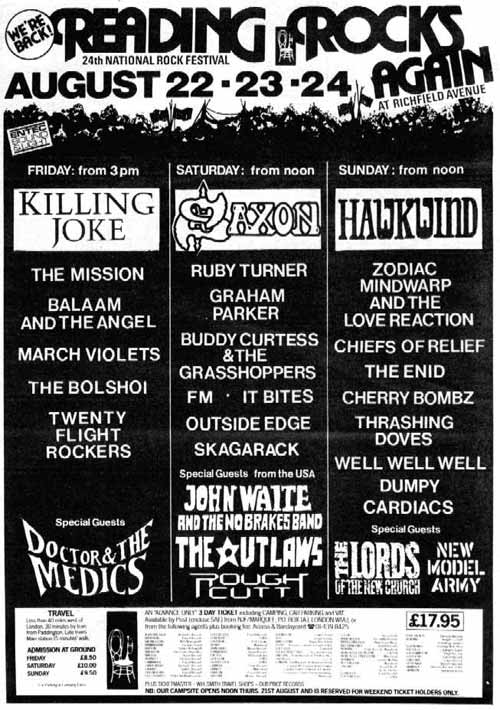
Only a year had passed since Saxon’s 1985 Hammersmith show was broadcast on BBC Radio but Saxon invaded the UK’s airwaves yet again as their headlining slot at 1986’s Reading Festival was recorded for broadcast on the BBC Friday Rock Show. The band were touring to promote the imminent release of the Rock the Nationsalbum and, while that patchy album found them losing their Midas touch in the studio, on BBC in Concert (23rd August 1986) it sounds like they were losing none of their knack as a live act.
Sadly, the BBC didn’t air the whole set and cherry-picked just 9 songs for broadcast. Much of the broadcast has since been available on Saxon’s BBC Sessions album but this album download (available on Amazon/iTunes etc…) now presents the complete 9 song, 51 min broadcast as it was originally aired. It’s fairly heavy on the classic material and if you didn’t know what year it was from you could be forgiven for thinking this was the band in their NWOBHM pomp. Only two new songs give the game away: an excellent version of Rock the Nations that fits right in with the older material and a performance of Waiting for the Night which… doesn’t. It’s actually a pretty good version of the track but its pop rock breaks the spell cast by glorious versions of metal powerhouses like 747 (Strangers in the Night) and Wheels of Steel. On the bonus side it’s the song here that gets played least often so it’s good to hear and own a live version of it.
A bit of a mixed bag then!
That one hiccup aside, the rest of the performance is impressive. The band is on winning form and the crowd sound like they’re lapping it all right up. While new bassist Paul Johnson didn’t command the stage like Steve Dawson he acquits himself well musically. Never Surrender and 20,000ft give the classic TheEagle Has Landed live album versions a run for their money and an excellent Strong Arm of the Law climaxes with a wailing Graham Oliver solo (with some Sabs and Hendrix thrown in for good measure). The real highlight, though, is a captivating The Eagle Has Landed which puts its studio counterpart firmly in the shade.
The vintage quality of this performance must have been heartening stuff for fans troubled by the recent studio albums but any hopes for a return to form would soon be dashed. The Rock the Nations album proved disappointing and, frustrated by the way the band was being managed, Nigel Glockler would leave the band at the end of the tour to join GTR. And Saxon’s next, and last, studio album for EMI would be a desparate gamble that would test the patience and loyalty of their fans more than any other yet.
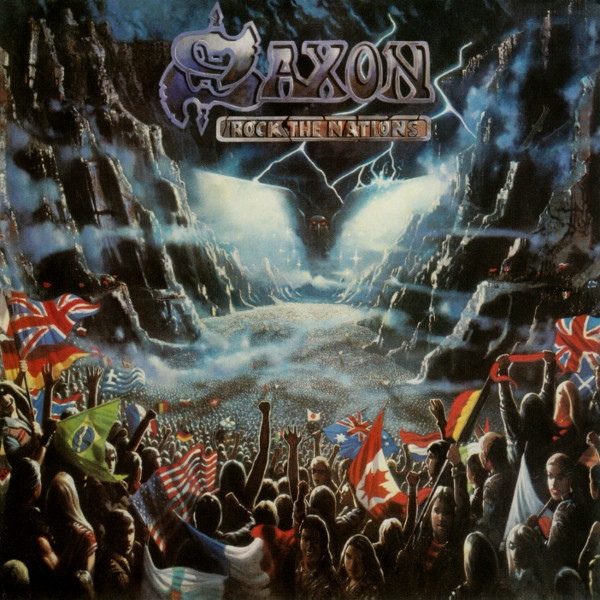
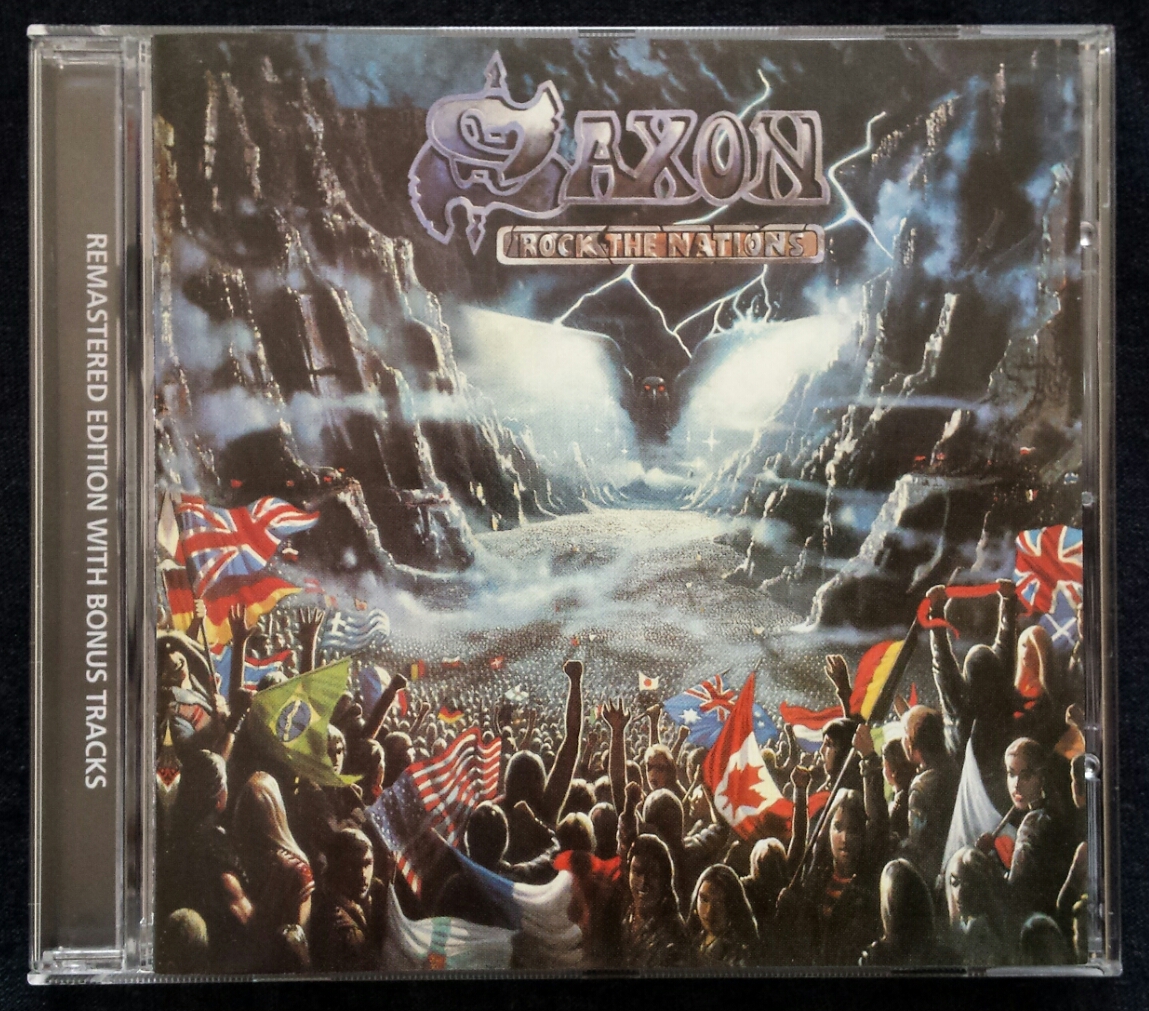
Saxon had aimed for the big time with the slick, streamlined Innocence Is No Excuse but fell short. The band put on a positive face, pointing to their improved US chart placings and successful tour but the album was basically an expensive flop. So for their follow-up, 1986’s Rock the Nations, Saxon went back to basics and recorded quickly and cheaply with producer Gary Lyons. Minus departed bassist Steve Dawson, vocalist Biff Byford took on the bass-playing duties for the recording of the album.* It would be the first and only Saxon album recorded by a four-piece.
Well, except the songs that have got Elton John playing on them.
I’ll give you a little moment here to let that sink in.
Rock the Nations sees the band return to a harder, grittier sound but there’s still a bit of radio-friendly finesse. It has a strong, muscular production much in the same vein as their classic Power & The Glory album. The opening title-track gets things off to a great start with its bold, blocky riffing and gruff vocals and the next track Battle Cry is even better, a strident true metal belter. Byford’s vocals are astonishingly passionate and gutsy, the arena-ready main riff is absolutely inspired simplicity and the rhythm section is flawless and propulsive. It’s a bloody triumph. But any hopes for a return to the band’s “classic trilogy” heyday are dashed as the band fail to maintain this fighting form for much longer.
Waiting For The Night is a catchy, personable AOR track. It’s one of those coulda-shoulda-been hits but it’s poorly positioned and fares badly coming hot on the heels of the bulging, anthemic Battle Cry. Elsewhere, tracks like Running Hot and You Ain’t No Angel are well-performed but forgettable Sunset Strip rockers (and the spoken word part on the latter is a low point). We Came Here to Rock overcomes its clichéd chorus with lively verses and Empty Promises is a pleasingly sultry slow-burner that gets lost on the album due to being sandwiched between “those” two songs. You know… the ones with him on them.
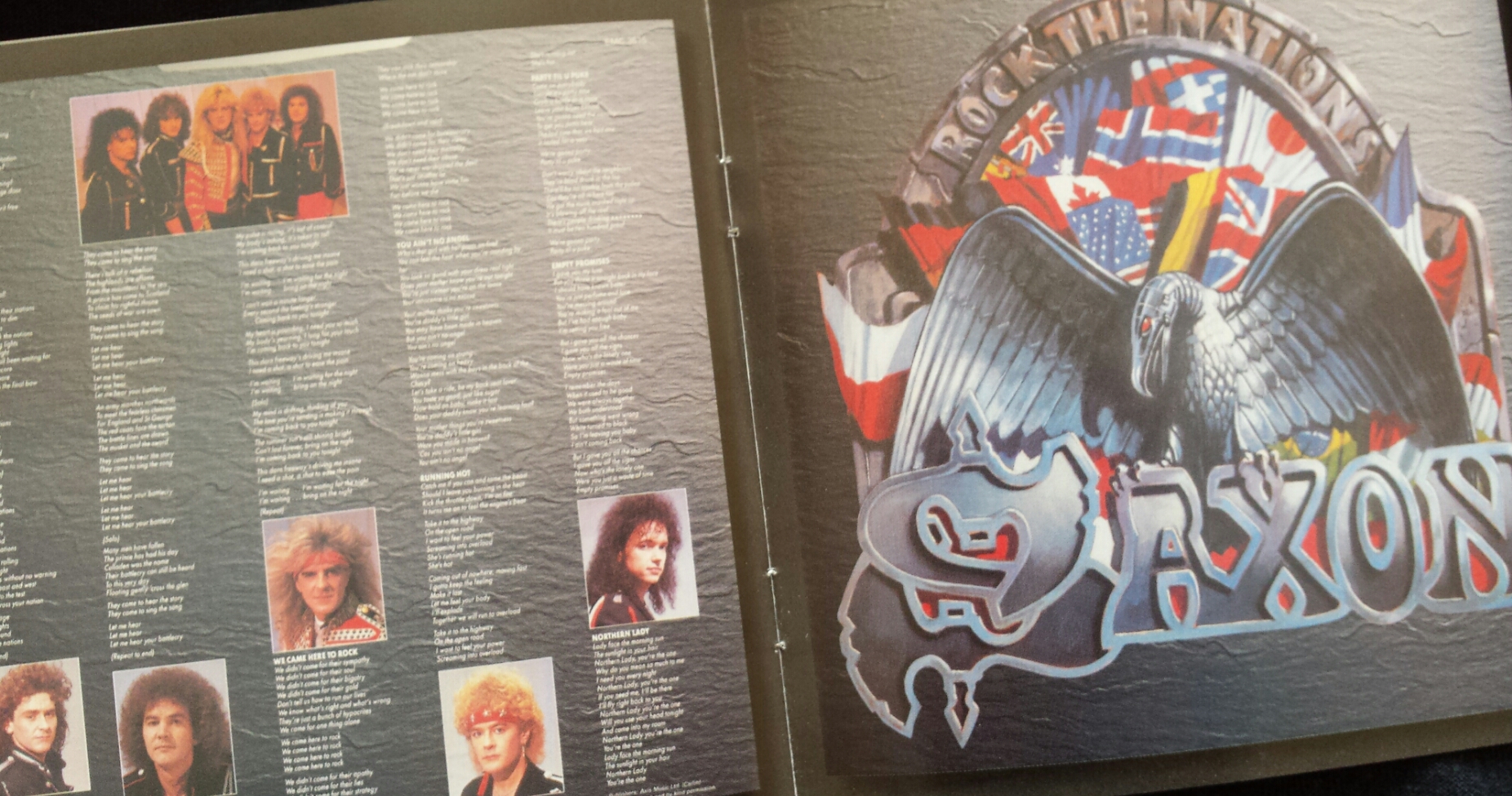
Yep, in the oddest pairing since Billy Joel guested on Exodus’ Bonded By Blood album**, Elton John was recording nearby and ended up tinkling the ivories on two of Saxon’s new tracks. You can probably guess from the titles that neither of these songs are particularly sophisticated. Party Til You Puke is a loose, fun Rock n’ Roll jam but the jokey lyrics and vocals are painfully unfunny and sink the song. And Northern Lady is uninspired, lazy balladry. If you’re going to write a passionate ode to your great love, you’d like to think you could think of a better way to describe her than just “Northern” surely? Just me?
Ultimately, Rock the Nations is Saxon putting on a brave face at a difficult time but their spirit is weak. The album starts off sublime and loses focus, direction and steam as it progresses. It’s not a bad record, it has some brilliant songs and a loose, fun quality about it, but it is a frustrating one. And, following Crusader and Innocence Is No Excuse, Saxon needed to do better than release another patchy underdog effort. Their next album would need to be much better or their days as a major-label act would be seriously numbered.
*During the recording Saxon would audition and hire Paul Johnson as their new bass player. He would be credited on the album sleeve as the bassist on Rock the Nations but he doesn’t play a note here.
The 1986 debut record of Sweden’s Candlemass casts the kind of pure Heavy Metal spell you’d expect to find scrawled in some dusty old grimoire found in a subterranean chamber. As well as giving the Doom Metal genre its name, the album’s title also describes its contents perfectly. Six ancient tales of myth, legend and tragedy told through Metal of portentous and quaking heaviness.
On Epicus… bassist and songwriter, Leif Edling, offers up a treasure-trove of timeless riffs, all heftily delivered by rhythm guitarist Mats “Mappe” Bjorkman, from the snaky, neoclassical riffs in Demons Gate and Crystal Ball, to the windswept bludgeon that opens Black Stone Wielder and the Am I Evil-esque riff that fires up Under the Oak. In addition to the lumbering guitars, the album’s acoustic passages and doleful harmonies add a bleak, gothic atmosphere.
Vocalist Johan Längqvist’s baritone is sincerely and chillingly emotive: anguished in funereal opener Solitude and channelling some arcane evil in Crystal Ball. He tells all of Epicus’ tales with theatrical flair and melodrama. Lead guitarist Klas Bergwall provides chinks of light and a very European flavour with his lyrical, neo-classical leads and drummer Matz Ekström proves to be the album’s secret weapon, filling the gaps between snail-paced chords with massive fills that sound like the raging elements.
It’s surprising, considering the musical chemistry and cohesiveness, that Candlemass wasn’t really a band at this point. They had been signed to France’s Black Dragon label on the strength of Edling, Bjorkman and Ekström’s demos. Längqvist and Bergwall were hurriedly drafted in for the album’s recording sessions but were uninterested in joining the band on a more permanent basis and after the recording finished, Ekström left the band too. Despite a positive critical reception, Epicus… sold poorly but the next line-up of Candlemass would record another masterpiece that helped boost the reputation of the band, sending many back to the debut.
The legend of Epicus… would grow in stature over time, becoming a mainstay of best-album polls and increasingly cited as an important influence by other bands. While forever associated with its titular sub-genre, it’s a timeless, magical classic for Metal fans of all stripes and still casts a powerful spell to this day.





 HEAVY METAL OVERLOAD