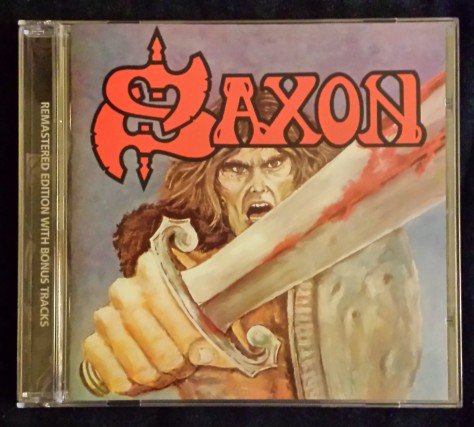
It would cool to be able to say Saxon’s 1979 debut album rages like the sword-waving maniac that adorns Saxon’s album sleeve, but I’d be exaggerating. Even on their first album, the Yorkshire rockers already sounded like old guys. There’s a long-in-the-tooth quality to many of Saxon’s songs which is both a good and bad thing. The album is bookended by the excellent prog-flavoured epics Frozen Rainbow and Militia Guard but is also padded out with stodgy brickie boogie like Big Teaser. But there are three tracks where the band sounds more like the marauder on the sleeve. Judgement Day and Backs To The Wall have a mix of muscle, melody and raging vocals from Biff Byford that sounds more like the real Saxon we all know and love. And biker classic Stallions Of The Highway is phenomenal: the revved-up guitars and a driving rhythm section laying down the template for the band’s future direction and the raw metal attack that would typify the soon-to-be-named New Wave Of British Heavy Metal. Saxon would deliver on the promise of this mighty tune and their next albums would have a huge impact. By comparison, the debut is more old-fashioned than New Wave but it’s still a varied and exciting listen that captures a talented band at the point the dam began to burst.
It’s 2014 and the Priest is back! Normally a phrase that would generate considerable excitement at HMO Mission Control but following the disappointing Nostradamus, the departure of the legendary KK Downing and a few uninspiring advance tracks I couldn’t help but feel sceptical about their return. But I was kidding myself. On the day of release I headed straight to Fopp to get my hands on it.
Despite my renewed enthusiasm for their return, on my initial spin I still couldn’t shake off the feeling that I shouldn’t have bothered. Dragonaut and the title track kick off Redeemer of Souls in a fairly routine manner. Both are enjoyable enough but a touch flat. It’s not until Halford screams his way into Halls of Valhalla that the album hits its stride. From here on it’s a long set of varied and solid Metal with the boat pushed out just enough to keep things moving forward without losing the trademark Priest identity. Sword of Damocles introduces a Maidenesque rhythm and its slashing climax is one of the album’s highlights. Cold Blooded is tightly coiled, moody and intricate and Crossfire’s bluesy riff works as a nice change of pace even if it’s a bit unimaginative. The Metal God delivers the goods on every song: he’s unable to shatter the windows like he used to but he always had more strings to his bow than that and any singer of any age would be proud to sing like Rob does in his sixties.
The main album climaxes with Battle Cry, a charging riff-fest with rousing, soaring vocals before it finally cools down with Beginning of the End, an atmospheric and sombre ballad. And, barring the very last song Never Forget (an uncomfortably twee last-dance number), the bonus disc is impressively strong too. I can understand why the bonus tunes didn’t fit stylistically on the main album but they are great songs: tough, dynamic and catchy and pleasingly redolent of the bands early-80s output.
It’s a lot to take in and it’s not without its faults. New guitarist Richie Faulkner plays well but I don’t feel either his or Glenn Tipton’s solos push the excitement levels like they should. The length and muddy sound also make it a tough album to absorb. Many songs like March of the Damned and the title-track have stock riffs and lyrics and are too reined in for their own good, creating a worry that the album might prove to be a little disposable. But after repeated listens and dividing the album into manageable chunks I find it growing on me listen by listen.
Ultimately, Priest have delivered a strong album for this era and held their own in a competitive climate of strong releases. And, more importantly, it sounds like they have enough gas in their tank to suggest there could be more and better yet to come.
For many years I knew Trapeze as a historical footnote and not much else. Usually prefixed with “ex-” as former members Glenn Hughes (bassist and “Voice of Rock”), the late Mel Galley (guitar/vocals) and Dave Holland (drums) all moved on to higher profile gigs with other bands. Hughes joined Deep Purple, Galley appeared in Whitesnake and Holland served time in Judas Priest before… well… serving time.
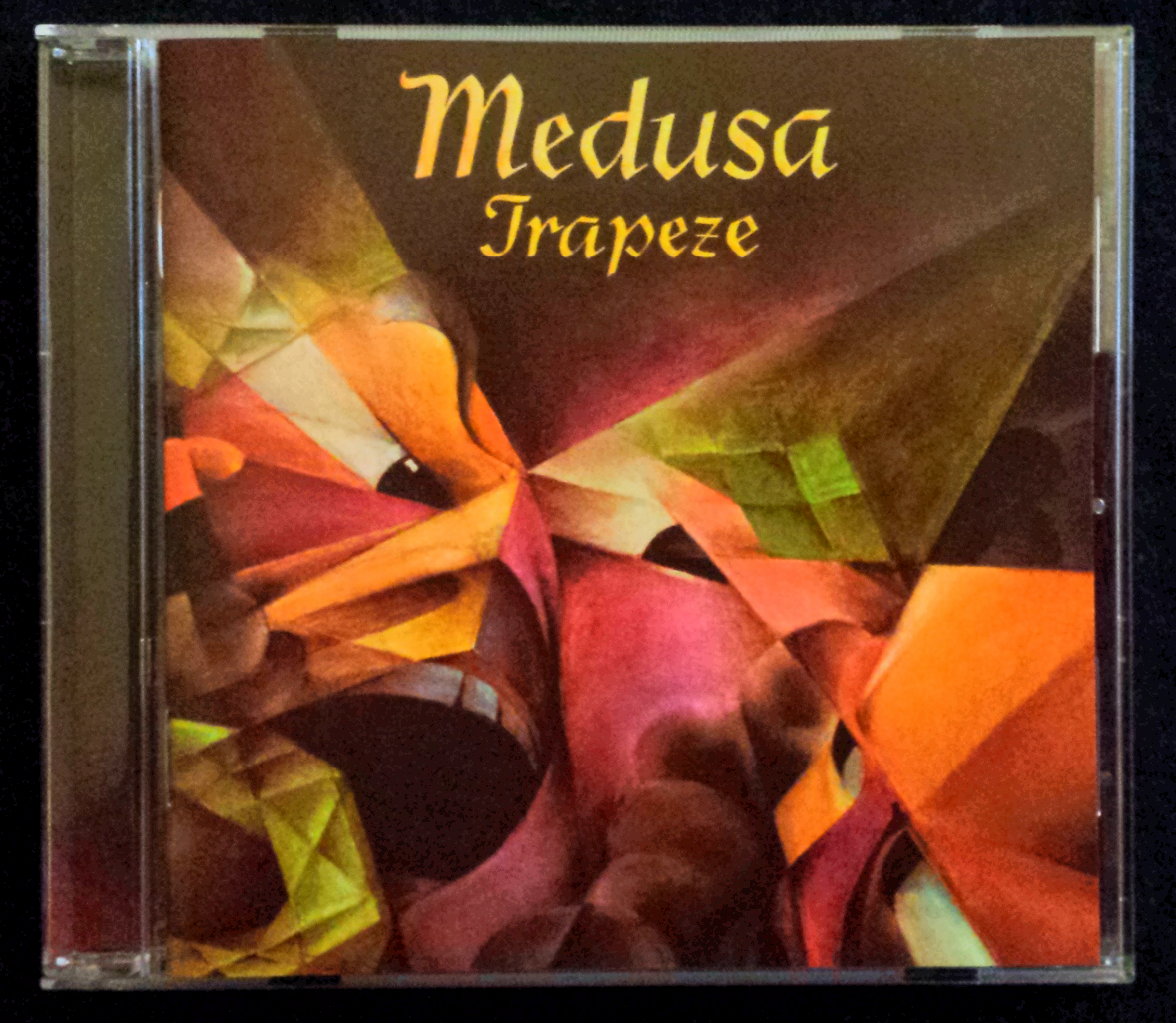
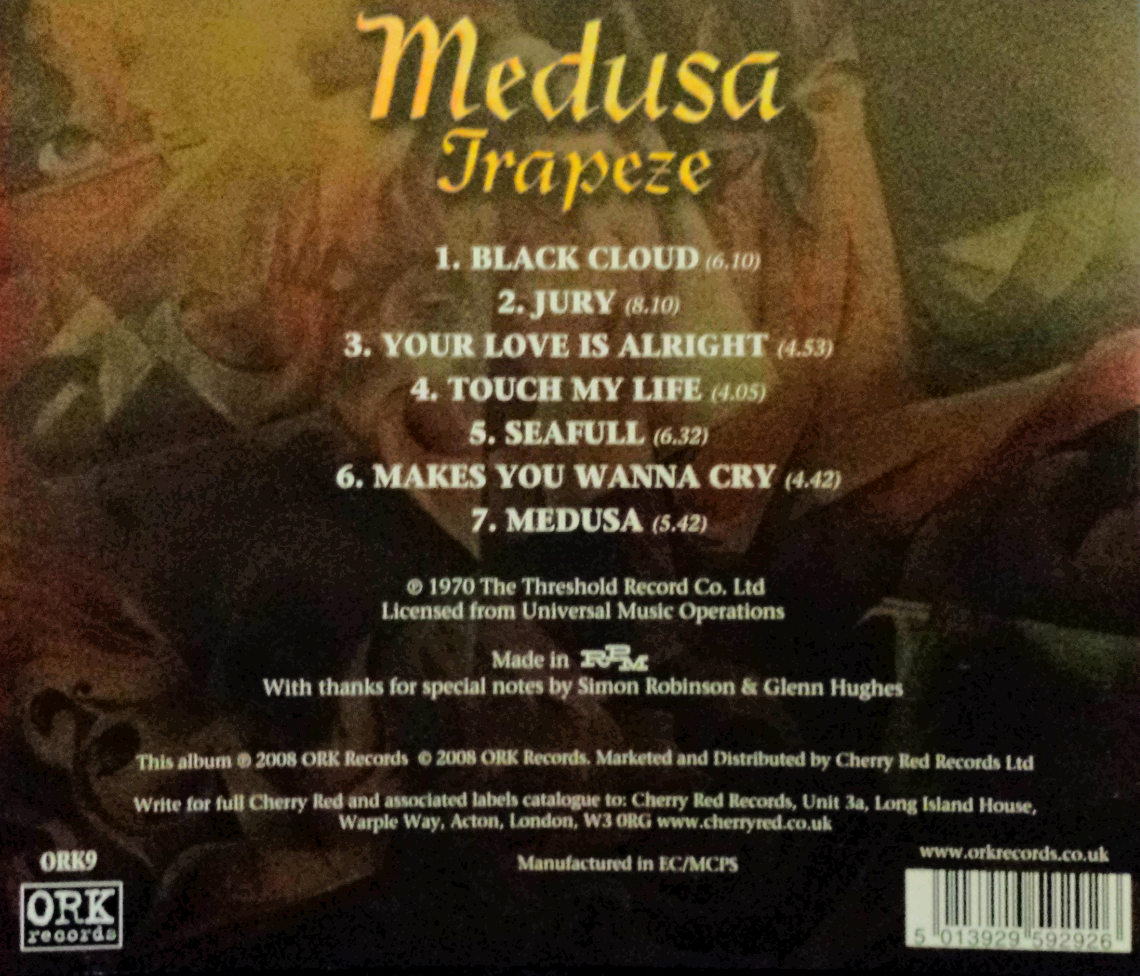
In the early ’00s, a run of brilliant Glenn Hughes solo albums finally inspired me to investigate his old band. Medusa was Trapeze’s second album but the first to feature its most famous power trio line-up of Hughes/Galley/Holland. It was released in late 1970 and, as was often the case with the era’s Hard Rockers, it’s an album of light and shade. This means Led Zep often come up as a comparison but I hear more of a Free influence, especially in groovy Rockers like Black Cloud and Touch My Life. Although the funky, stop-start rhythms of Your Love is Alright get a little bit frustrating the band sound tight and confident, leaving plenty of space for everyone’s contributions to be heard. And with the tasteful exception of Mel Galley’s guitar jamming on Makes You Wanna Cry, there is very little instrumental showboating on Medusa which leaves the focus squarely on Glenn’s superb voice.
It’s fascinating to hear him at this early stage, with a rawer tone and delivery that brings to mind Paul Rodgers and Steve Marriott. And his voice is even more remarkable in the album’s longer tracks. Jury, Seafull and the title-track have a more progressive feel. Pastoral acoustic passages build up to intense, heavy climaxes that would appeal to fans of Uriah Heep or early Judas Priest. When Glenn employs his full vocal range at the climax of Jury the results are spine-chilling.
Medusa is an album of real maturity and depth from a group with tangible chemistry. Before going their separate ways, Trapeze would record one more excellent studio album and enjoy some live success in the US but it’s a shame their recorded output didn’t achieve more success or recognition. While it’s unsurprising that the musicians involved went on to bigger things, together they deserved way more than footnote status.
2008 Edition on Ork Records. Great remaster and liner notes
Extreme Metal pioneers Venom waged war from the very depths of Hell, raging against the early-80s New Wave of British Heavy Metal bands they considered tame and the heroes that they felt had pulled their punches.
They combined the filth and fury of Punk and Motörhead with the larger-than-life images of KISS and Priest and the kind of Devilish allegiance that would have Sabbath crying “Please God help me!” Conrad, Tony and Jeff became the far more demonic-sounding Cronos, Abaddon and Mantas and their classic album cover set out their allegiance to Beelzebub in black and gold. And they had the sound to match their demonic image.
Another trip to the beach ruined
The band used demo sessions for the final album, signalling their primitive purity and honesty. Welcome to Hell sounded under-produced and unholy. The Motörhead influences are obvious, especially in the opening tracks Sons of Satan and Welcome to Hell, but the brio with which they mangle these rockers is thrillingly rudimentary. Cronos’ appropriately named “Bulldozer” bass piles over everything, Mantas peels off some fun wild solos and Abaddon’s caveman drumming tries to keep up. The sense of limits being pushed gives the performance a chaotic edge, especially during the lurching changes of pace. The debauchery of tracks like Poison and Red Light Fever is often criticized but really it all just adds to the shock factor and what’s the point of being one of the Great Horned One’s Legion if you can’t indulge in a bit of hellraising hedonism?
On Side 2 the band enter more original and scarier territory. Witching Hour is seminal proto-Thrash, Angel Dust is face-ripping and In League with Satan is addictively catchy while still sounding ominous and threatening. The band tightens their Metal grip as the album progresses and the most influential musical moments come from the record’s second half. Welcome to Hell has many elements of the Heavy music that preceded it and its fast pace, growled vocals and evil vibe can be heard in so much Metal that came after. But it remains unique and divisive. In fact, it’s a hellish maelstrom of just about everything I love about Heavy Metal while also embodying everything the genre is criticised for.
Venom’s raw, no-holds barred approach would prove to be massively influential on Thrash, Death and particularly Black Metal. Although Venom hadn’t gotten around to christening it yet, many key components of BM began here: particularly the occult, evil atmosphere and rotten production values but also the iconography, aliases and instrument descriptions (Bulldozer Bass, Chainsaw Guitars and Nuclear Warheads!)
But most importantly, Venom’s greatest legacy was their harder/faster/scarier mind-set which became the ethos of much of the Metal that followed. With Welcome to Hell Metal became Extreme and for that we should all praise Satan.
Swansong was released in 1996 after Extreme Metal pioneers Carcass had an unlikely stint as a major-label act in the US. With Columbia unwilling to release the album it was given back to the band and their UK indie label Earache to release, by which time the band had already split up (hence the title). The album met with a muted reception. While the diehard Metal underground felt it was too watered-down it was also way too extreme for mainstream acceptance.
This is Carcass’ “Rot n’ Roll” album. The groovy, stripped-down feel of the performance gives the album a Classic Rock vibe but the up-front delivery is defiantly Metallic with speaker-rattling production from Colin Richardson. Meaty and sophisticated guitar riffs are topped with deft, melodic solos and underpinned with a powerful bass sound. Ken Owen’s drumming is sublime and Jeff Walker’s exasperated snarl and nihilistic lyrics offer the album’s most extreme components. In many ways, the qualities Carcass exhibits on Swansong are very similar to those of Megadeth’s 90s output, albeit a Death Metal equivalent.
Carcass – (on left panel) Jeff Walker (v,b), Carlo Regadas (g), Ken Owens (d), Bill Steer (g)
Opener Keep on Rotting in the Free World’s rumination on the Western economy still sounds relevant and, as the seriously weighty guitars open up into the harmonised chorus riff, it’s a truly exciting way to kick off an album. Tomorrow Belongs to Nobody’s opening riff salvo is just about the best HM riffing you’ll ever hear and the arpeggios of Child’s Play offer the album’s uplifting lighter-waving moment.
However, Swansong suffers from a mid-album lull that it struggles to recover from, largely due to the lack of variation in tempo. The album regains its footing in the second half with Generation Hexed, Firm Hand and the Thin Lizzy-esque R**k the Vote standing out as album highlights.
Although flawed, Swansong’s enthralling blend of power and flair has a strong appeal. The combination of Classic Metal sensibility and grinding delivery make this an ideal starting point for anyone interested in exploring heavier terrain and there is enough depth to reward repeated listens. On the eve of their comeback album Surgical Steel there is no better time to revisit their great underdog album.
[Carcass – Tomorrow Belongs to Nobody]
The Swansong DualDisc edition. With Part 5 of “The Pathologist’s Report” on DVD and stickers!
I imagine few people expected Ozzy’s first musical venture after his expulsion from Sabbath to be this good. In fact, I imagine few people expected any musical ventures at all (including Ozzy, who would have probably just continued wallowing in a last hurrah of beer and pizza deliveries if a pep talk/kick up the arse from his management hadn’t sent him out looking for new bandmates). But then, who knew about Ozzy’s talent for assembling shit-hot bands? Ex-Rainbow bassist Bob Daisley and ex-Heep drummer Lee Kerslake were joined by US guitarist Randy Rhoads whose astonishing playing had the flash and glamour of Van Halen and the Blues-free, hard-edged style that fit in with the burgeoning NWOBHM scene.
2002 Edition – The one to avoid
The band’s performance is top notch. Joyous, bouncy tunes like I Don’t Know, Crazy Train and No Bone Movies are topped with deft, choppy guitar riffs and euphoric soloing. Dramatic, epic compositions Mr. Crowley and Revelation (Mother Earth) are the album’s centrepieces, Rhoads’ neo-classical runs and phrasing reaching almost unassailable heights on these tracks. Buoyed by his band’s energy, support and creativity, Ozzy came into his own as a vocalist and performer, establishing his now-famous persona in crazy tales of booze and sex, with a hint of the diabolic in Mr. Crowley and in the sinister cover art. And, while his delivery is warm and upbeat, there are hints of doubt and desperation. These endearing chinks in Ozzy’s wild-man armour are a large part of the album’s emotional power (and the power of much of Ozzy’s solo work).
1995 Edition – The one with the shitey cover
It could be argued that subsequent Ozzy albums improved on this but, as a statement of intent, Blizzard of Ozz is hard to beat, and provided many of the classics that remain at the core of Ozzy’s live setlists. It’s an absolute comfort-blanket of a record and a genuine Metal classic. Ozzy might not remember much of the 80s but this album remains unforgettable.
Thanks to Mike! His review of The Ultimate Sin put me in a right old Ozzy mood.