Tag Archives: Reissues

Saxon – Innocence Is No Excuse (Album Review)

Saxon - Innocence Is No Excuse (1985)
Saxon – Innocence Is No Excuse (1985)

Innocence Is No Excuse was Saxon’s major-label debut, their first album under EMI/Parlophone. The band had left their indie label Carrere acrimoniously, suing over unpaid royalties. The case took months but meant vocalist Biff Byford and bassist Steve Dawson had plenty of time to prepare new Saxon material. Their last album Crusader had been a patchy, tired effort and, with contemporaries like Iron Maiden and Def Leppard leaving them in the dust, they would have to do better.

Produced by Simon Hanhart, 1985’s Innocence was a more cohesive and consistent album than its predecessor but it was also a controversial reinvention of the band’s style. It has a very commercial sound: smooth chorused guitars, gated drums and extra keyboards. And the band put a pop-metal spin on their material too. The opening track, the moody and windswept Rockin’ Again sets the stall out clearly: this is not going to be your typical Saxon album. With Byford and Dawson hogging the writing chores, the focus is firmly on melodies and anthems with very little guitar-riffing Heavy Metal Thunder. The more radio-friendly side of the band, demonstrated on previous songs like the power ballad Nightmare and simplistic singalong rockers like Just Let Me Rock, dominates here. The lyrics are simpler too. There are no songs about transportation: this band just wants to rock, shout, rock and shout again.

The coulda-shoulda-been hits

The focus on hooks and melodic anthems results in impressive coulda-shoulda-been-hits like Back on the Streets and Rock N Roll Gypsy but means there’s a lack of variety in style and dynamics in the album overall. Call of the Wild and Devil Rides Out stand out with some rare money riffs from guitarists Quinn and Oliver. Gonna Shout and Everybody Up are pleasingly dumb energetic crowd-participation numbers. While Saxon’s take on poppier material tended to sound limp on previous albums, here they sound bold and confident in their direction.

None of the songs are bolder or more confident than the Side 2 opener Broken Heroes. An elegiac ode to history’s war fallen, it’s the only true Saxon classic here, combining tragic sadness with fist-clenching pomp to sublime effect. It’s a triumph and, like Crusader on the album before, the best song on here by a mile. That both Crusader and Innocence… are most successful in their lone epic boy’s-own moments indicates that Saxon were losing sight of the blokey grit, depth and heart that were important parts of their charm.

With their major label behind the album, Saxon enjoyed their highest US chart placing yet and bagged some MTV exposure but found themselves falling out of favour in the UK. A narrative took hold that they were trying too hard to crack America. Ultimately, on both sides of the Atlantic, the glossy sheen and perceived lack of integrity would make Innocence Is No Excuse a forbidden fruit in the Saxon catalogue. But if you fancy some cheese with your apple, it’s worth taking a bite out of this one. It’s an underdog pleasure. Saxon were too talented to put out a total dud and their talent is still very much in evidence here, if misdirected. By the time the next record arrived, there would be one less talent in the band.

Mah copy - never quite sure if she was eating the apple or just dribbling on it
Mah copy – never quite sure if she was eating the apple or just dribbling on it

Saxon – Crusader (Album Review)

Saxon - Crusader (1984)
Saxon – Crusader (1984)

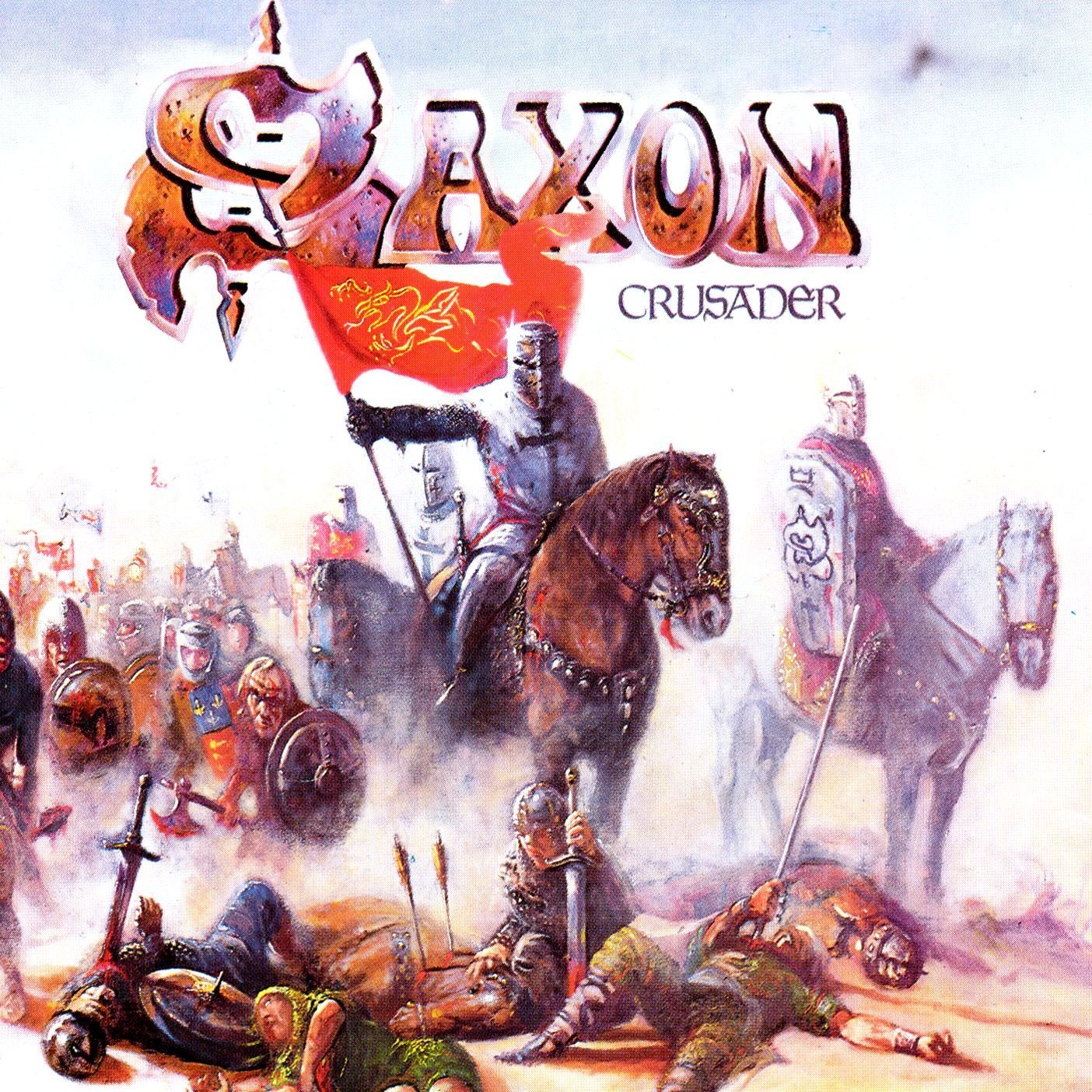
The bold Sir Knight on the excellent cover of 1984’s Crusader looks like he’s expecting some sort of bother. And, by reviewing the album that he adorns, I’m expecting a bit of it too. This is the kind of album you could easily get into a fight about. You could scrap about metal genres and styles: epic metal or hard rock; British or American; 70s glam rock or 80s glam metal; rockers vs ballads. They’re all here. There could be pistols at dawn over notions of integrity about Saxon’s leap to major label status with EMI and their search for a big break in the States. But, as a fan of all kinds of rock and metal I could just focus on the only thing that really matters: is Crusader any good?

As bugles and horses’ hooves herald the arrival of the title-track, the answer is yes. Better than good. It’s astounding. The epic Crusader tells of 12th Century warriors riding into battle. Biff Byford is on exceptional form lyrically and vocally. The grandeur of the song harkens back to tracks like Frozen Rainbow and Militia Guard from their overlooked debut. The climatic guitar solo and impassioned final choruses are Saxon at their most spine-chilling.

2015-04-16 18.03.08-1

The rest of Crusader continues the polishing of Saxon’s sound that began with their previous album, the chrome-plated barnstormer Power & the Glory. Recorded in LA with REO Speedwagon producer Kevin Beamish, Crusader introduces a much more easy-going sun-kissed sound with the guitars quieter and the vocals the main focus. There are some attempts at commercial appeal. Do It All for You is Saxon’s first straight-up love ballad. Similar in mood to Journey’s Lights it’s got a nice sensuous feel and a regal intro but it’s let down by the lyrics as Saxon climb the highest mountains and search the deepest seas in search of clichés. Sailing to America is also in firm AOR territory and is an album highlight, a carefree cruiser with some expressive and colourful guitar.

The remaining tracks are predominantly straight-up rock. Just Let Me Rock, released as a single, is instantly memorable and has cool moody verses but it doesn’t dig in enough to fully engage. A Little Bit of What You Fancy and Rock City push more air but their choruses are a bit too naff for comfort. Run for Your Lives is better with its rousing football-chant coda while Bad Boys (Like to Rock N’ Roll) and the cover of Sweet’s Set Me Free are both tough enough to recall the street-fighting Brit grit of old.

The Yorkshiremen were still fighting the good fight but, with Crusader, Saxon’s standard dropped. It’s an enjoyable album overall but it needed more sonic heft (some songs fared better at the demo stage) and more consistent song-writing to match the quality and vitality of their past efforts. Only the album’s title-track truly belongs in the same rarefied air as past glories like 747 (Strangers in the Night). Crusader remains one of Saxon’s most beloved songs and the rest of the album basks in the goodwill generated by it.

In the UK Crusader turned out to be Saxon’s lowest charting album since their debut and a big US breakthrough continued to elude them. But their US sales were still improving and the album was a hit throughout mainland Europe. It eventually sold 2 million copies, making it Saxon’s bestselling album to date. But as Biff Byford said “we have had albums that have been more popular [than others]. That doesn’t necessarily mean I like them more.” And I think we should keep that in mind with Crusader. It’s a solid, successful and important album in Saxon’s career but better albums came before and after it.

My copy!
My copy!

Saxon – Power & The Glory (Album Review)

Saxon - Power & The Glory (1983)
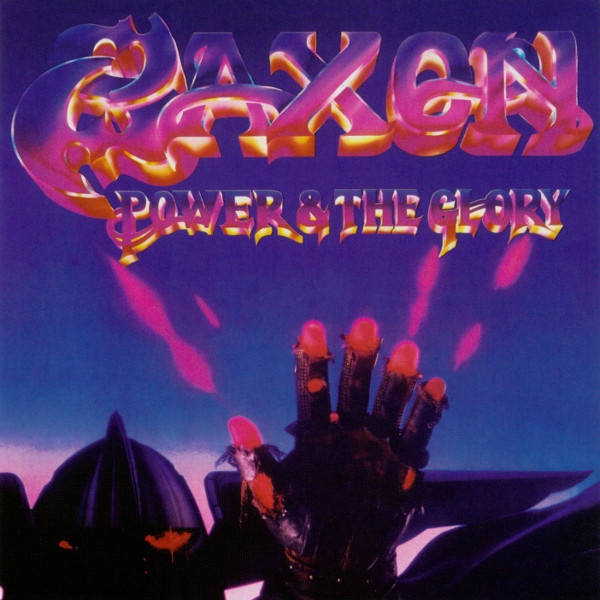
Saxon – Power & The Glory (1983)

In 1982 it was time for a rethink in the Saxon camp. They had been turning their attention to America and while they slogged in support slots and club gigs Iron Maiden and Judas Priest were enjoying impressive Stateside commercial breakthroughs. Saxon’s management and label set their sights squarely on American success and the Yorkshiremen were packed off to Atlanta to record their next album, 1983’s Power & The Glory, with hopes of finessing their sound and upping their game.

While the UK fans and critics might have suspected the band would soften their edges, Power & The Glory turned out to be Saxon’s most Metallic release yet: former Kansas producer Jeff Glixman helped them achieve their best sound to date with layers of massive guitars and a charged rhythm section put straight in your face. A combination of hot-rodded British steel and radio-friendly sheen in a similar vein to Judas Priest’s hit Screaming for Vengeance album. The steelier moments are the most impressive: as Power and the Glory’s tense album-opening riff breaks into the verse it’s like you’ve been launched into battle. Biff Byford gives a rousing vocal and the lyrics are an alluring combo of proud valour and anti-war sentiment. It’s another classic jewel in Saxon’s crown. Redline’s pneumatic shuffle breaks into a classy open-road chorus and Warrior is a scything speed-metaller. The Quinn/Oliver guitar duo are in peak form throughout the album but Warrior’s berserk, slurry guitar solo from Paul Quinn is one of the band’s best.

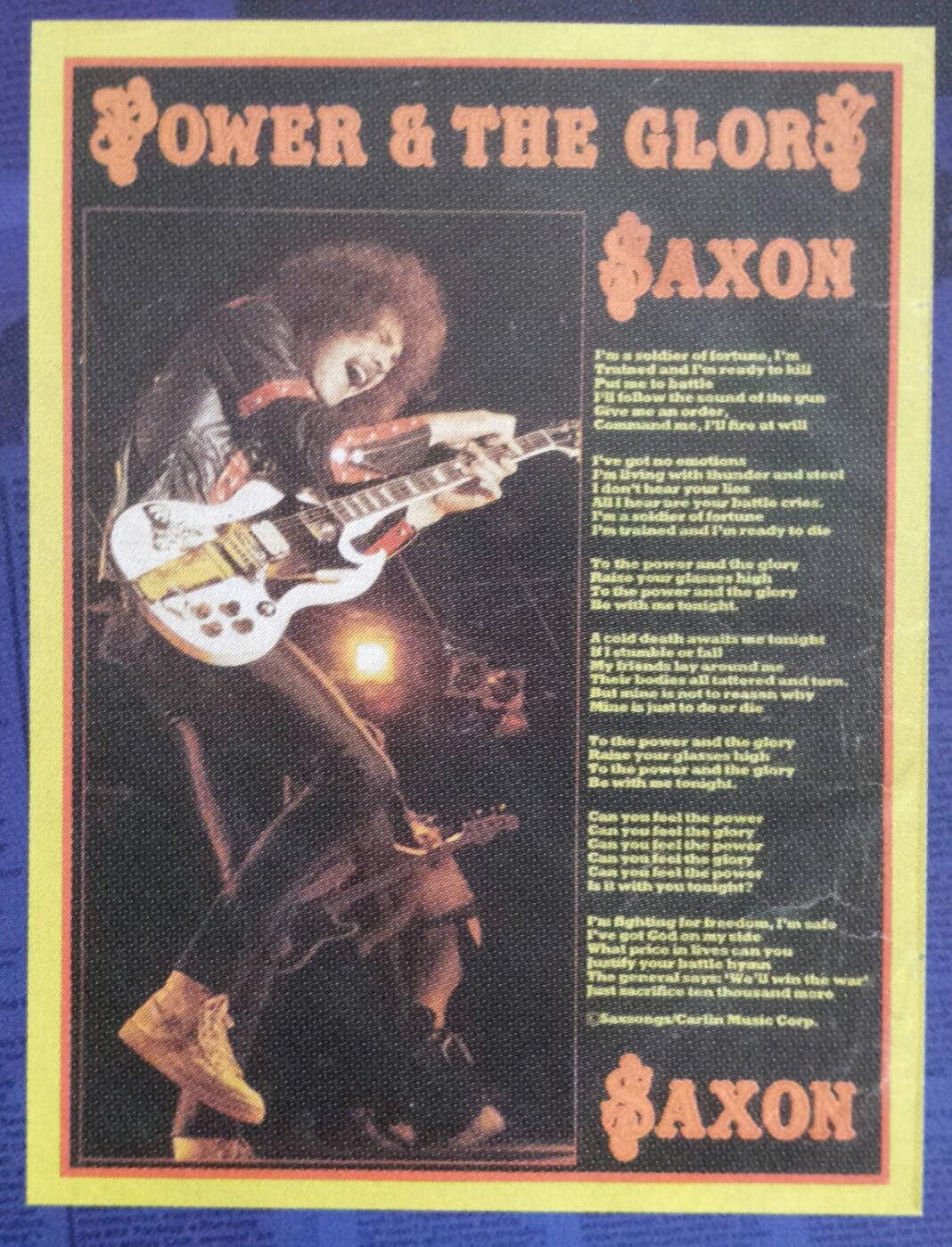
Can you feel the power? Can you read the lyrics?

The album is less sure-footed when it aims for airplay. Watching the Sky is enjoyable but stock and Nightmare is not quite the star single it wants to be (despite its coruscating guitar solo and cool harmony vocals). But even at Power & The Glory’s weakest the band thunders with conviction, enlivened by the hurricane energy of new drummer Nigel Glockler. Nowhere is this more apparent than on Side 2 opener This Town Rocks which, although it works better live, is a veritable showcase for Glockler’s combustible drumming. The icing on the album’s cake though, is the return of the debut’s prog rock elements to the band’s style. Midas Touch overcomes its daft lyrics by combining a weighty Sabbath-grade riff with Frozen Rainbow-style mellow verses for satisfying light and shade and The Eagle Has Landed closes the album with another Saxon classic: an interstellar journey with lush, spacey guitars and a hefty riff so dramatic you can almost overlook its similarity to Priest’s Victim of Changes. But despite the familiar riff it’s still one of Saxon’s more creative tracks and a great album closer.

Power & The Glory was Saxon’s purest heavy metal release to date: there’s little of the older Saxon’s blues and boogie here. While fans might miss the knockabout, rowdy style of albums like Wheels of Steel the progression is understandable following the slight diminishing returns of previous album Denim and Leather. It’s a more fully-realised and consistent album with less Rough and Ready-style throwaway filler but it doesn’t quite rack up the same quota of classics as previous records. Sadly, as far as their invasion of the US went: Saxon came, Saxon saw, but Saxon failed to conquer. Even in the UK they found their commercial grip loosening. But metal fans whose taste runs to the epic and the martial (and don’t mind a bit of drivetime pomp) will find that this album is an absolute blast. The title-track alone makes it worth the price of entry and no metal collection can be complete without it. While often overlooked in favour of the preceding “classic trilogy” it truthfully forms the last in a quadrilogy. This is a lively and exciting record that fulfils the promise of its title. You can feel the power and, even though Saxon probably weren’t getting as much of it as they’d like, you can definitely feel the glory. What more do you want from a metal album?

Death SS – Zombie/Terror (7″ Single – Review)

It's fun to slay at the YMCA
It’s fun to slay at the Y.M.C.A.

Considering the huge impact Italy has had on the world of horror movies since the 60s, it’s hardly surprising that the first Italian Heavy Metal band was steeped in the sepulchral atmosphere of the graveyard. Death SS were formed in 1977 by guitarist Paul Chain (the “Death”) and vocalist Steve Sylvester (The “Vampire” whose initials also provided the “SS” of the band name). The band was rounded out by guitarist Claud Galley (The “Zombie”), bassist Danny Hughes (the “Mummy”) and the superbly-monikered Thomas Hand Chaste (the “Werewolf”) on drums. If the Village People ever went Hammer Horror they would probably end up looking something like Death SS.

Although they toiled in obscurity, Death SS still managed to release demos and some privately pressed singles. The Zombie/Terror 7” is the earliest of those singles, an extremely rare release that has now been exhumed and reissued by Svart Records. A-Side Zombie is a 1979 demo version recorded at a rehearsal and B-Side Terror is a rough live take from 1980. Both are horrible, crudely performed and even more crudely recorded. But an inspired and creative magick cuts through the sonic fog. Naively simple but ominous riffs are topped with chiming, ethereally spooky guitar melodies and the vocal hooks in both songs are immediate and melodic enough to endure Sylvester’s cheese-grater vocals. The ugly rawness of the production and singing also strengthens the dark, occult atmosphere: a method that many Black Metal bands would make a virtue of years later.

You could draw style connections via the Italians from Killer-era Alice Cooper through to the Black Metal genre but Death SS don’t really sound like anyone else. Their otherworldly eeriness, melodic nous and the murky, macabre shroud of sound makes for a darkly seductive listen that I’d strongly recommend to fans of occult/horror-themed Metal. Superior versions of both these songs can be found on the essential The Story of Death SS 1977 – 1984 compilation so newcomers should start there. But for existing fans this single is a great opportunity to own more of this obscure band’s rare and early work and to hear their first lumbering steps from beyond the grave.

Saxon – The Eagle Has Landed (Album Review)

Saxon - The Eagle Has Landed (1982)
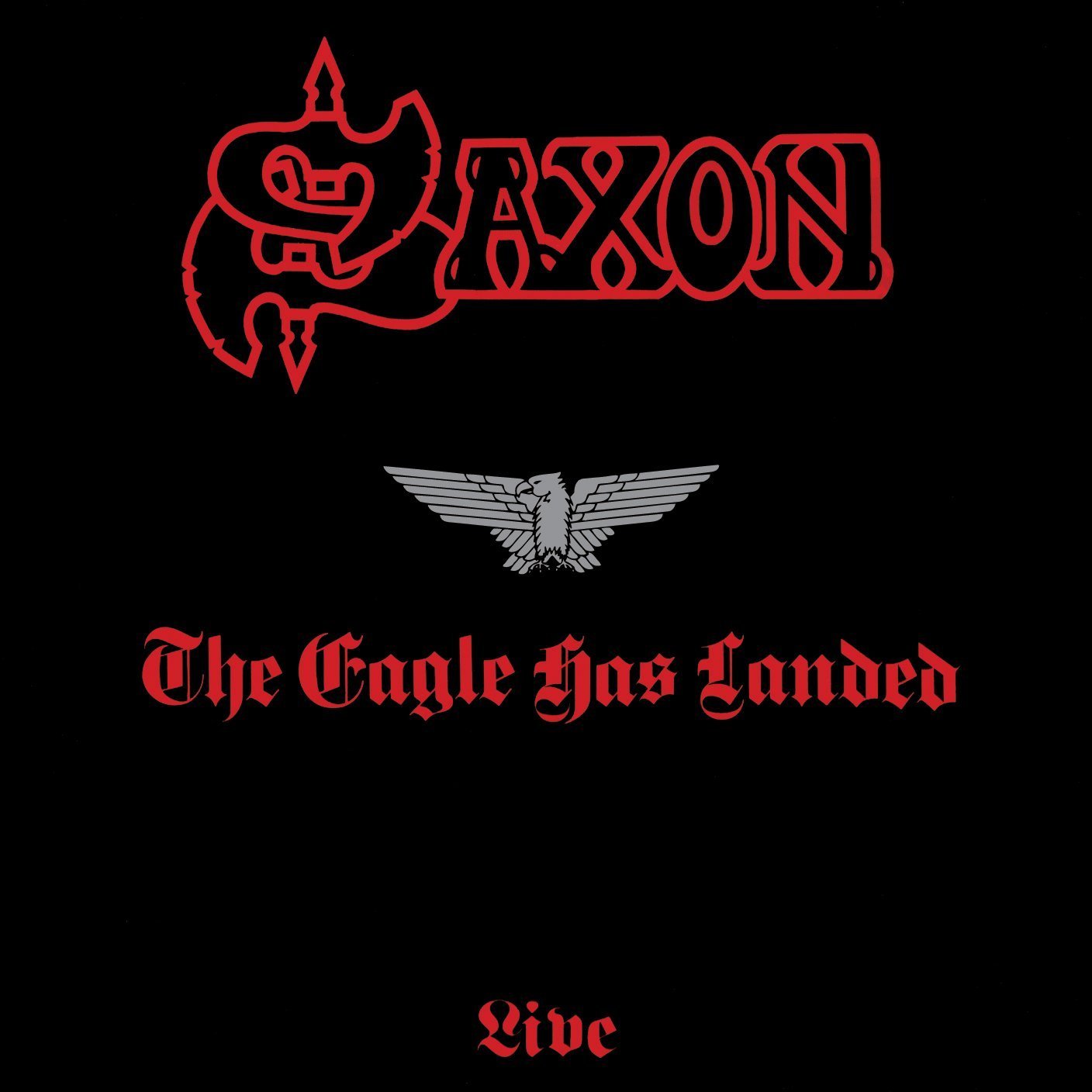
Saxon – The Eagle Has Landed (1982)

The “classic trilogy” of Saxon albums that culminated with Denim and Leather had been a commercial and critical success. The band was poised for the big-time and a live album was proposed as just the thing to launch them to the level of the stupidly successful. But in order to do a live album, you need a tour and with only two days to go before the opening show of their Denim and Leather trek of the UK and Europe (with no less than Ozzy’s Blizzard supporting), their drummer Pete Gill was out of the band due to a hand injury. It was a disaster on the eve of such a critical and massive tour.

Enter Nigel Glockler: a friend of the band’s manager David Poxon. Nigel was drumming for Toyah at that point but was a hard-hitter with prog chops and a love of metal. Remarkably, in less than two days he was able to learn and perform Saxon’s entire 19-song set and kept the show on the road until Gill recovered, even performing at a show he had originally bought a ticket to see!* By the time Gill was able to return, Saxon had decided to hold on to Glockler as their full-time tub-thumper. So, as if learning 19 songs in two days wasn’t enough, Nigel would be appearing on the band’s hotly-anticipated first live album. Talk about being thrown in at the deep end.

The Saxon live show - brought to you by Tea
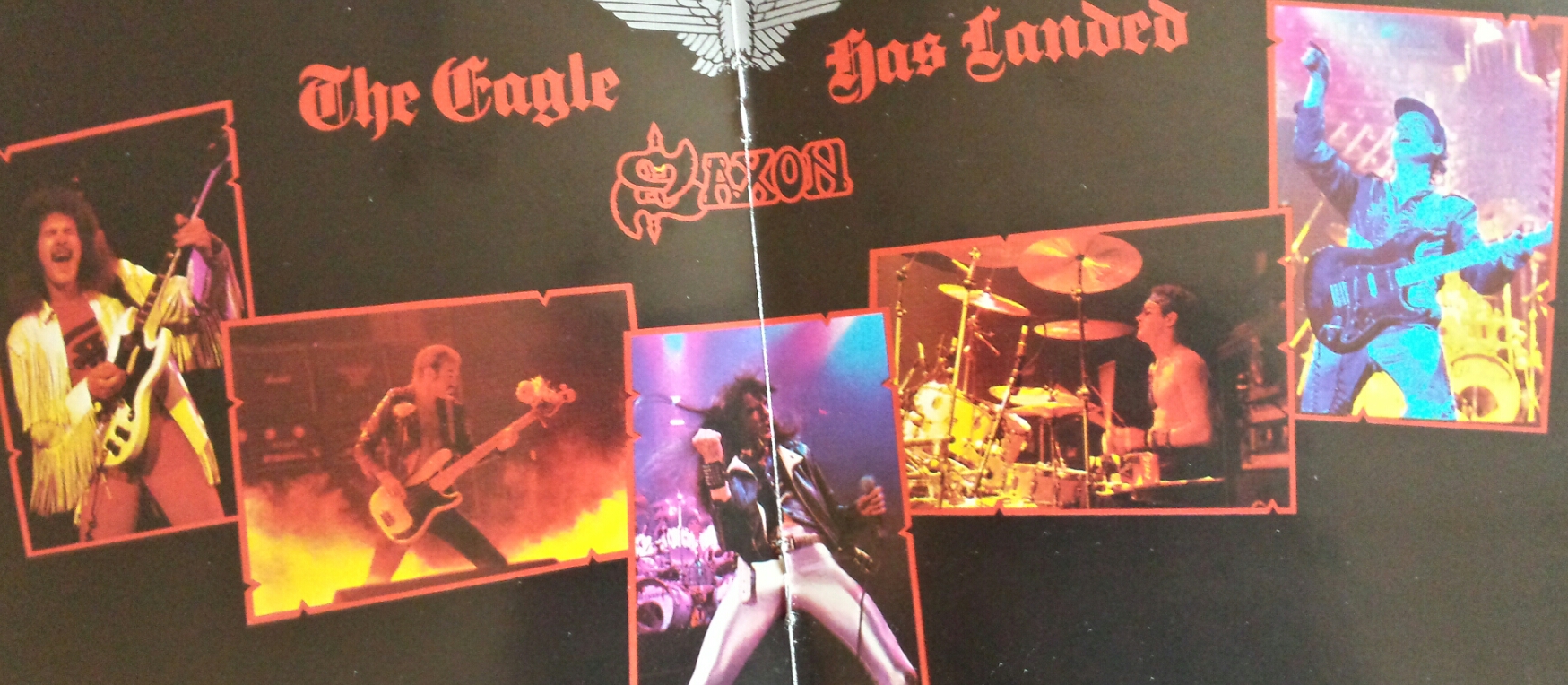
(L to R) Graham Oliver, Steve Dawson, Biff Byford, Nigel Glockler and Paul Quinn

19,320 teabags later the Denim and Leather tour was over and The Eagle Has Landed live album hit the shelves in May 1982. It captures the sweaty, beery atmosphere of a NWOBHM-era gig. Saxon sound enthusiastic, tireless and tight. Each member is at the top of their game. Biff sings with charismatic energy and throws in some choice banter (“I wanna see people dying from exhaustion”) and the chemistry of the Oliver/Quinn guitar duo is palpable with the choppy, jousting guitars panned to each side. The rhythm section steals the show though: Glockler’s expressive, precision drumming charges the music with a fresh dynamism and, with his forceful, driving bass playing, Steve Dawson proves to be the pumping heart and soul of the band, especially on the faster numbers like Heavy Metal Thunder.

Saxon’s surfeit of brilliant material easily justified a lavish double-LP set but, unfortunately, Saxon’s label Carrere skimped and whittled it down to a miserly single album. Classic songs like And the Bands Played On, Denim and Leather, Frozen Rainbow and Dallas 1pm are inexplicably missing.** It’s a missed opportunity but the tracks we do get are hardly filler. The first side is absolutely top-drawer, opening with three of Saxon’s transport tunes: Motorcycle Man, 747(Strangers in the Night) and the definitive version of Princess of the Night. Side 2 falters slightly with some weaker song choices in 20,000ft and Never Surrender but Wheels of Steel is a victorious joy with a chummy singalong led by the charming Byford and the album closes explosively as Fire In the Sky and Machine Gun fly by in a furious blur culminating in wild guitar pyro and double-bass drumming.

The Eagle Has Landed manages to be essential and frustrating all at once. The performances are stellar, many of them definitive and it’s a great introduction to the band (I can personally vouch for that). It continued Saxon’s commendable run of hits in Europe but the omission of vital tracks stopped it being the career-boosting milestone or the all-time classic it should have been. But, nevertheless, it’s a street-level, no-holds barred barrage of an album that atmospherically and honestly captures a gritty and exciting time in metal history. And that’s worth the price of entry alone. It also marks the end of an era for Saxon: by the time The Eagle Has Landed hit the shelves a fellow British metal band had stolen their thunder, taking the NWOBHM to a massively successful and chart-topping conclusion. Saxon were no longer the scene leaders: their number was up. The number was six hundred and sixty six.

*Nigel has never received a refund for his ticket.

**This wasted opportunity has been satisfyingly rectified with the 2006 CD Reissue which adds six recordings from the era as bonus tracks. Still no Denim and Leather though.

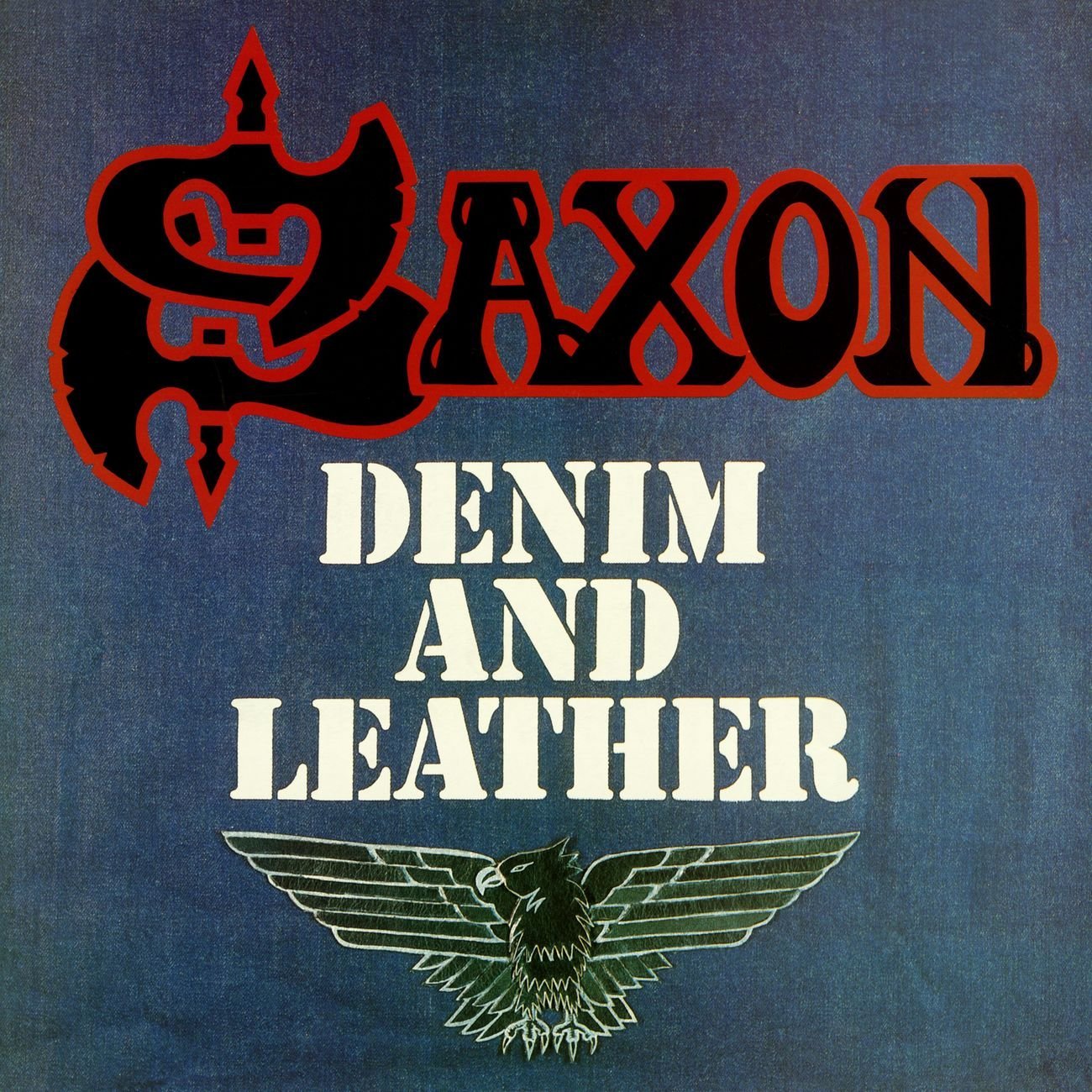
Saxon – Denim and Leather (Album Review)

815K+mBspyL._SL1300_
Saxon – Denim and Leather (1981)

They might have released two stone-cold classics in 1980 but Saxon weren’t about to put their feet up. The New Wave of British Heavy Metal was now in full flow and Saxon were clearly unwilling to relinquish their position as the commercial hot property of the movement. Released in 1981, hot off the back of their considerable success the year before, Saxon’s fourth album Denim and Leather was a celebration. Not just of the band’s success but of their fans and the resurgent metal scene as a whole.

2015-01-05 20.08.20

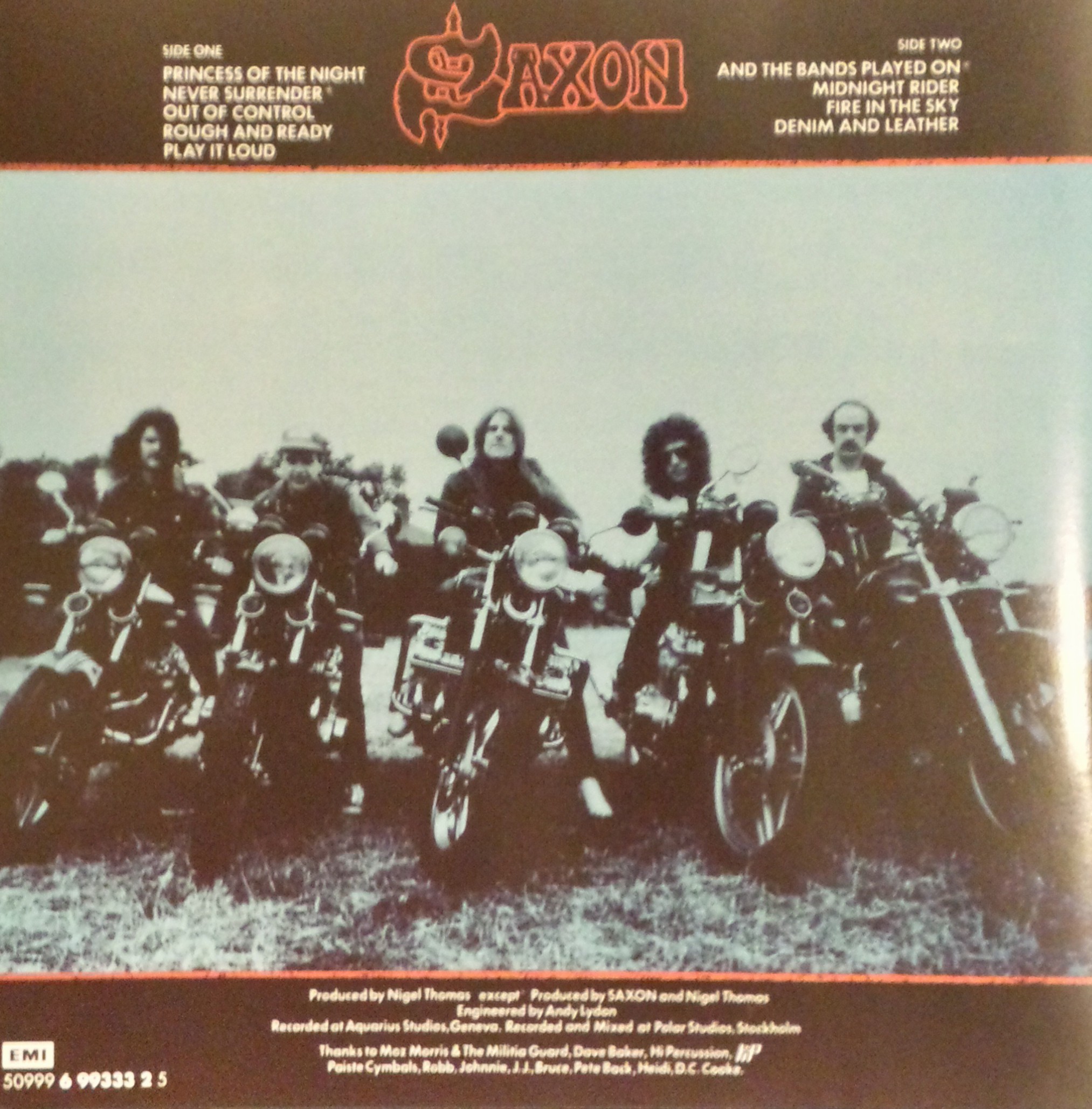
Produced by Nigel Thomas, Denim and Leather is less abrasive than the previous albums but still sonic meat and potatoes. It’s topped and tailed with two of the greatest songs Saxon would ever produce. Continuing their penchant for offbeat lyrical subjects and songs about forms of transport, opening track Princess of the Night tells the tale of a steam train delivering mail through ice and snow. (You’ll have to suspend your disbelief at a British train actually running during such inclement weather). It’s a darting, precision rocker with a riff you can’t believe no-one thought of before and a joyously bluesy guitar solo from Paul Quinn. Closing track Denim and Leather is a genuine and charming tribute to the metal fans that put Saxon on the map, highlighting the band’s down-to-earth attitude. It’s a stomping anthem with a huge and irresistible chorus and one of the most memorable opening lines in metal history: “Where were you in ’79 when the dam began to burst?”

2015-01-05 20.17.43

After the superb opening the first side is a mixed-bag. Never Surrender is vintage Saxon and follows Princess of the Night in bruising style but the quality starts to trail off. Rough and Ready is a stodgily unconvincing hard-man boast and Play it Loud is a flat stab at a party anthem. Side 2 immediately gets the album back on track with And the Bands Played On, another of the album’s outstanding victories. Despite its musical similarity to 747 (Strangers in the Night) it has its own unique identity and appeal: a feel-good ode to the inaugural Monsters of Rock festival at Castle Donington. As with the title track, Saxon’s everyman charm works wonders: rather than singing about how amazing their own performance was, they celebrate the festival itself, the attending horde and name-check other bands on the bill. It’s got simple, memorable guitar riffs and Biff Byford’s breathless delivery is a joy “Will it rain, will it snow, will it shine? We don’t know” and it’s one of those classics you never tire of hearing. Midnight Rider continues the musical lap of honour, recounting the band’s early tours of the States with the rolling tempo and gear-changing chords perfectly capturing the excitement of the road trip. The album’s most ripping number, the apocalyptic Fire in the Sky, and the triumphant title-track finish the album on a high.

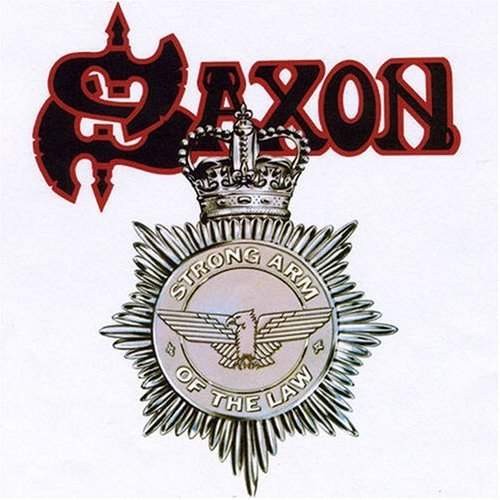
Along with Wheels of Steel and Strong Arm of the Law, Denim and Leather is often thought of as the third in Saxon’s “classic trilogy”. As is often the case with trilogies, the final part is the weakest of the three but it’s still a must-hear with some of the band’s most accomplished songwriting and the guitar duo of Graham Oliver/Paul Quinn at a lively peak. The highlights are magnificent metal classics and far outweighs any filler to elevate the album to star status. It was their second highest charting album in the UK so Saxon’s position at the head of the NWOBHM pack remained secure and just two years on from their debut release they already had a discography and a following worthy of celebration. The dam was well and truly burst.

Saxon – Strong Arm of the Law (Album Review)

Saxon - Strong Arm of the Law (1980)
Saxon – Strong Arm of the Law (1980)

Heavy metal was a big deal in 1980 and so were Saxon. Keen to capitalise on the success of Wheels Of Steel and its accompanying singles, the band were strong-armed into the studio to write and record the follow-up. It could have been a rush-job disaster but the haste gave Saxon a no-frills, street-level edge. It was just four months from the release of Wheels Of Steel and Saxon already had another all-time classic album on the shelves with 1980’s Strong Arm Of The Law.

This album does not hang about as Saxon motör through one banger after another. Heavy Metal Thunder is a blazing ode to everyone’s favourite music, To Hell And Back Again alternates melodic verses with a charging chorus and the high-flying 20,000ft is a relentless live mainstay. The excellent Hungry Years adds a bit of variety with its heavy blues shuffle, the bouncy Sixth Form Girls is a working-class vignette with more intelligent lyrics than the title would suggest and the title-track is pure classic rock with a cool sliding riff and swaggering vocals. But the album’s most classic track is saved for last as Dallas 1pm tells the tale of the JFK assassination with its tense Faith Healer-esque intro, ringing AC/DC chords and a haunting closing section that climaxes with a scorching Graham Oliver guitar solo. It’s a breath-taking conclusion to a blast of an album.

Releasing two albums this wonderful in the space of a year was an incredible feat and its hard to separate them. Wheels Of Steel has the slight edge in strength of tuneage but Strong Arm Of The Law is more pedal-to-the-metal. The label opted to name the album after its lead single but its intended title was originally “Heavy Metal Thunder”. They should have stuck with that cause that’s exactly what you get on this superb album. Fill your heads.

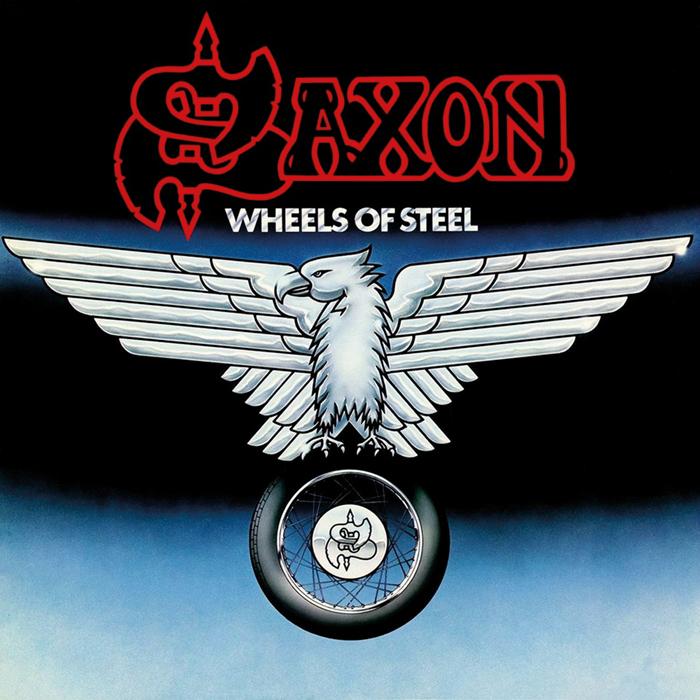
Saxon – Wheels of Steel (Album Review)

Saxon - Wheels of Steel (1980)
Saxon – Wheels of Steel (1980)

Despite being arguably the first album of the NWOBHM, Saxon’s 1979 debut album sounded more old-fashioned than new wave. But by the following year, revved up by a support slot on Motörhead’s Bomber tour, the band were back with Wheels Of Steel: a biker metal classic that broke the band and became one of the most iconic NWOBHM releases. Much of the album follows the direction set by the debut’s excellent Stallions Of The Highway: up-tempo, racing tunes like Motorcycle Man, Machine Gun and Freeway Mad combine wild Motör-riffing with hollering vocals, ringing chords and hot soloing. It’s headbanging heaven. Elsewhere, the album is less hectic but still brilliant: See The Light Shining has a clever shift in mood half-way through and Suzie Hold On has a yearning, streetwise quality that brings to mind UFO. But the album’s undoubted highlights are the greasy rocker Wheels Of Steel with its raunchy riff and bobbing bass and the wonderful 747 (Strangers in the Night), which tells the perilous tale of Flight 101 with unforgettable guitar hooks and Biff Byford’s enigmatic vocals. The album’s mix of pumping rock, gritty aggression and inspired songwriting shot Saxon to the pole position of the NWOBHM: scoring them hit singles, TV appearances and a spot on the first Monsters of Rock festival bill at Castle Donington. 1980 was a competitive year loaded with timeless metal classics but Wheels Of Steel proved that Saxon had what it took to stand up and be counted. Now their foot was on the throttle, there was no looking back.

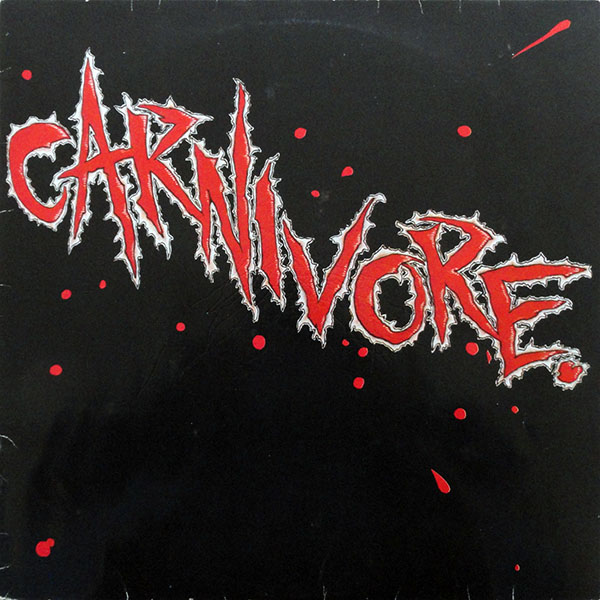
Carnivore – Carnivore (Album Review)

Carnivore - Carnivore (1985)
Carnivore – Carnivore (1985)

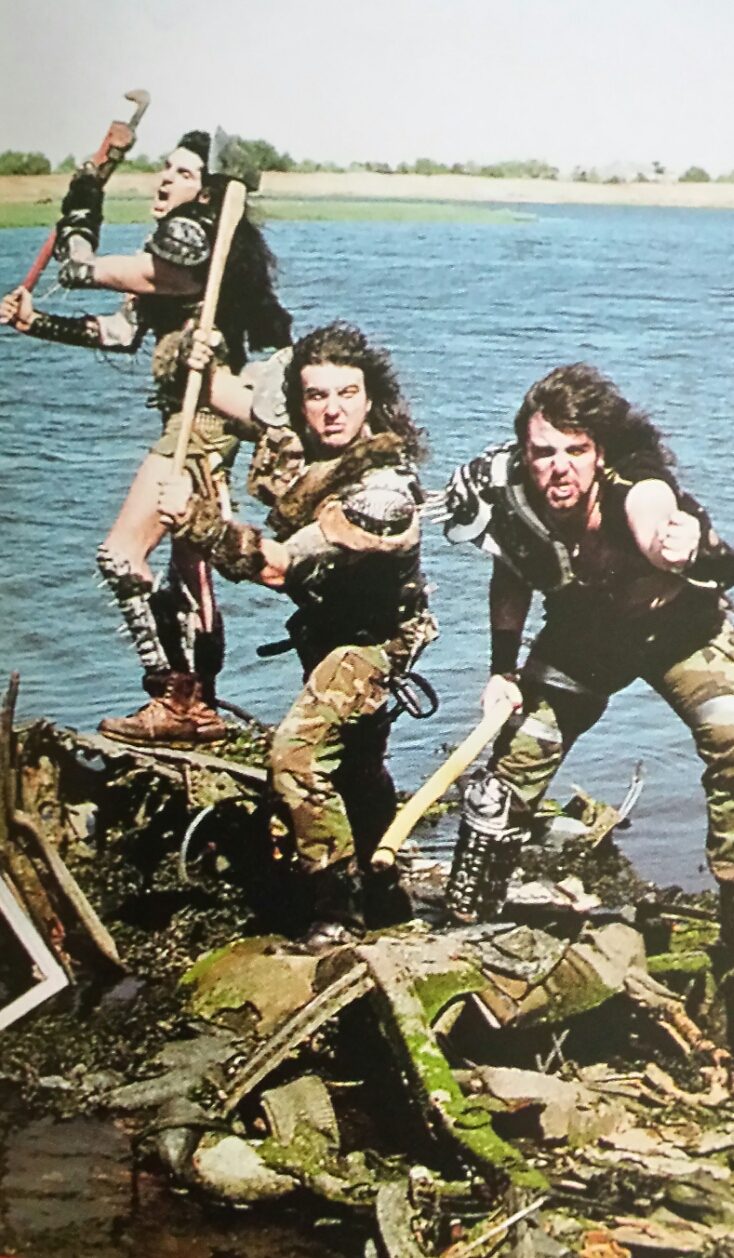
Greetings and felicitations, children of technology. Welcome to the post-apocalyptic world of Carnivore. Few bands are hardy enough to survive thermonuclear destruction but, led by the imposing Petrus T. Steele, this trio of New Yorkers had what it takes to survive World War III (and IV.)

They're meat eaters, they'd like to meet ya
They’re meat eaters, they’d like to meet ya

Along with Keith Alexander on guitar and Louis Beateaux on drums, Petrus and Carnivore unleashed their S/T debut album in 1985. It’s a raunchy and primitive mix of Punk and Metal with a hefty dose of Doom and Steele’s beefy vocals. Although the style is crude the performance is tight with live energy and just enough production effects to sound suitably futuristic. Predator kicks the proceedings off and sets the scene of life beneath the rrrrruined city. Male Supremacy has a dirty Crüe-style opening riff and unforgettable chorus. Armageddon has rampaging Crossover Thrash velocity and another golden chorus hook. There are also playful, musical detours: God is Dead’s chorus is mellow bongo-driven weirdness and Male Supremacy culminates in romantic balladry as Petrus returns home to his woman after a hard day’s war.

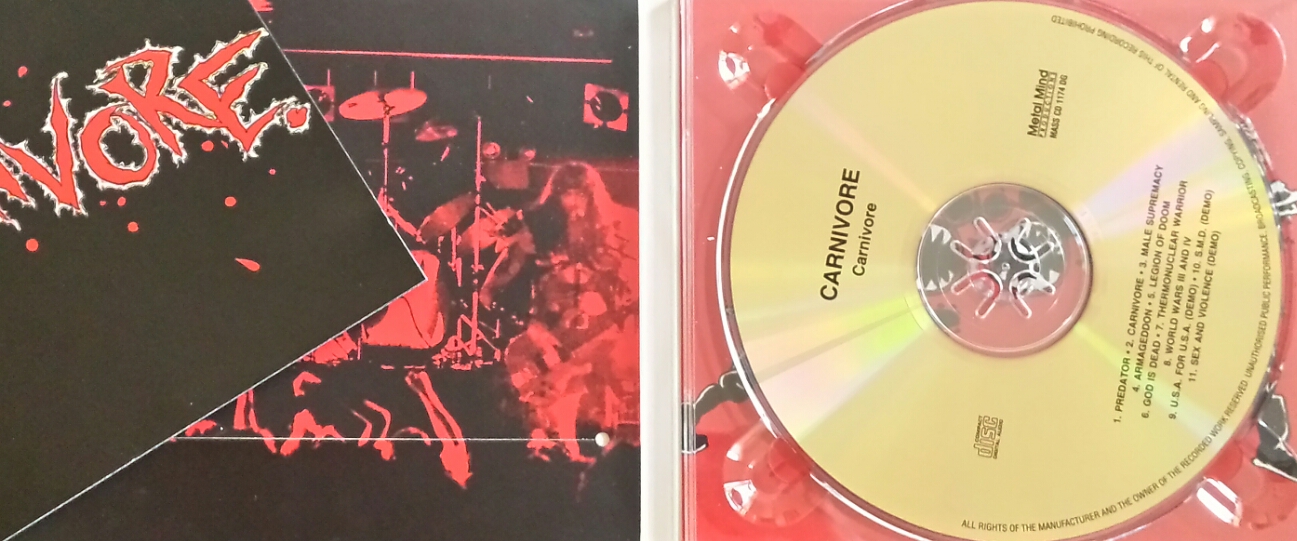
Metal Mind/Roadrunner Ltd Edition

The second side dips a little compared to the stronger first half but is saved by the more remarkable Doom sections (the “Crush Kill Destroy” section of Thermonuclear Warrior for example) and the rollicking, propulsive World Wars III and IV which ends the album on a high. Lyrically, Carnivore stick to what they know: the life and philosophy of post-apocalyptic, cannibal barbarians hunting for unsuspecting victims to chow down on. It’s something we can all relate to. The whole album is right up my Venom-loving street: filthy and rowdy with the hyper-masculinity of Manowar and a pre-GWAR sense of fun and mythology that wisely stops short of out-and-out comedy.

Petrus T. Steele would later change his name to Peter Steele and go on to great success in his next band Type O Negative. There is very little of Type O’s seductive, swooning October Rust style here but there are plenty of other similarities: the Hardcore elements of Type O’s debut Slow, Deep and Hard and later tracks like Kill All the White People. The shock-tactic humour, bass-heavy Doom riffs and songwriting chops are also heavily indicative of Steele’s future musical direction. Despite their talent for post-nuclear survival Carnivore only lasted for one more album before calling it a day but their music has proved more resilient. Carnivore is full of choice, prime cuts. Bon Appetit.

Candlemass – Epicus Doomicus Metallicus (Album Review)

The 1986 debut record of Sweden’s Candlemass casts the kind of pure Heavy Metal spell you’d expect to find scrawled in some dusty old grimoire found in a subterranean chamber. As well as giving the Doom Metal genre its name, the album’s title also describes its contents perfectly. Six ancient tales of myth, legend and tragedy told through Metal of portentous and quaking heaviness.

On Epicus… bassist and songwriter, Leif Edling, offers up a treasure-trove of timeless riffs, all heftily delivered by rhythm guitarist Mats “Mappe” Bjorkman, from the snaky, neoclassical riffs in Demons Gate and Crystal Ball, to the windswept bludgeon that opens Black Stone Wielder and the Am I Evil-esque riff that fires up Under the Oak. In addition to the lumbering guitars, the album’s acoustic passages and doleful harmonies add a bleak, gothic atmosphere.

Vocalist Johan Längqvist’s baritone is sincerely and chillingly emotive: anguished in funereal opener Solitude and channelling some arcane evil in Crystal Ball. He tells all of Epicus’ tales with theatrical flair and melodrama. Lead guitarist Klas Bergwall provides chinks of light and a very European flavour with his lyrical, neo-classical leads and drummer Matz Ekström proves to be the album’s secret weapon, filling the gaps between snail-paced chords with massive fills that sound like the raging elements.

It’s surprising, considering the musical chemistry and cohesiveness, that Candlemass wasn’t really a band at this point. They had been signed to France’s Black Dragon label on the strength of Edling, Bjorkman and Ekström’s demos. Längqvist and Bergwall were hurriedly drafted in for the album’s recording sessions but were uninterested in joining the band on a more permanent basis and after the recording finished, Ekström left the band too. Despite a positive critical reception, Epicus… sold poorly but the next line-up of Candlemass would record another masterpiece that helped boost the reputation of the band, sending many back to the debut.

The legend of Epicus… would grow in stature over time, becoming a mainstay of best-album polls and increasingly cited as an important influence by other bands. While forever associated with its titular sub-genre, it’s a timeless, magical classic for Metal fans of all stripes and still casts a powerful spell to this day.