Candlemass bassist/songwriter Leif Edling has dubbed his latest project “music from the catacombs” as it was a visit to Paris’ bone-ridden underworld that inspired its creation. It’s an apt description. With The Doomsday Kingdom’s debut EP Never Machine, Leif’s music goes deeper and darker than it has for some time. The opening title-track and The Sceptre stick fairly close to Candlemass’ modern style but Niklas Stalvind’s grave and gravelly vocals and Marcus Jidell’s excellent, vintage soloing give the songs a fresh, grittier edge. But it might just have been a decent, unremarkable release if it wasn’t for the more interesting and engaging second-half. Zodiac City is a coiled and creepy serial killer yarn with a great chorus hook and the EP ends on a high with Edling taking the mic for The Whispering, a haunting and ghostly string-laden ballad. Never Machine doesn’t quite reach the inspired heights of Leif’s classic output but it’s a real grower and a definite improvement on last year’s half-(Candlem)assed EP Death Thy Lover. Candlemass might have fallen out of favour but these demos show promising signs that Edling still has what it takes to reign again as a king of doom.
(Here’s my copy. It’s the new edition released by Nuclear Blast. With new artwork, lyric sheet and red vinyl)
Chase the Dragon and On a Storyteller’s Night are the sturdier, rockier picks of the Magnum back catalogue but they reached their peak of life-affirming, pop rock joy with Wings of Heaven: one of the most feelgood albums ever created. Tony Clarkin writing simple, catchy AOR rockers par excellence delivered with winning passion and panache by the ever-lovable Bob Catley. Boaby sings like he would take bullets for Magnum. “It’s a flame that keeps burning… everLASTing torrrchhhh!”, “Too old to die young, too big to cry… MAMA!” The guy’s a total hero. As soon as he chimes in on genius opener Days of No Trust (“Pray to the future…”) you are on your feet. The album continues with the vista of Wild Swan and the sublime power pop of Start Talking Love. Classics all. Different Worlds is a mid-album lull but Pray for the Day and the WWI epic Don’t Wake the Lion (Too Old to Die Young) end the album with weight and compassion: breathtaking, heartrending but still triumphant, mighty and melodic. It’s a colossal climax to an excellent album. File this in your collection alongside your Jovi, Lep and Whitesnake and it won’t be long before it steals your heart. A heavenly magnum opus.
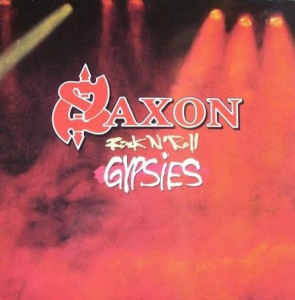
Saxon had lost their way with the dicey Destiny album. Dropped from EMI in 1988, they took a creative break. For the next couple of years their activity was restricted to touring and the release of a couple of live albums through one-off record deals. The first of these, recorded on a tour of Eastern Europe, was 1989’s Rock N’ Roll Gypsies.
The main historical interest is the new lineup: Nigel Glockler makes a welcome return to the drum stool and bassist Timothy ‘Nibbs’ Carter makes his Saxon debut. There’s no song duplication with their previous live album, 1982’s The Eagle Has Landed, and none of that album’s sweaty, beery atmosphere. But it kicks off very promisingly indeed. The band sound driving and ballsy and thunder through Power and the Glory, And the Bands Played On, Rock the Nations and a superb Dallas 1PM, only slipping up on a sleepy version of Broken Heroes. The next side kicks off with a rousing Battle Cry before things start to go pear-shaped. The patchiness of the band’s EMI years rears its ugly head as Rock N’ Roll Gypsy, Northern Lady and I Can’t Wait Anymore progressively suck more and more life out of the album: the excitement level dropping so low that the kinetic closer This Town Rocks barely registers.
CD editions add quality and value with bonus tracks The Eagle Has Landed and Just Let Me Rock but, all in all, Rock N’ Roll Gypsies is a solid but unremarkable live stop-gap. The lack of song duplication with The Eagle… is a double-edged sword. It’s more collectable and interesting to hear different songs but the feel of a live Saxon show is hampered when there’s no Wheels of Steel or Strong Arm of the Law. And given the lack of concert classics, the omission of Crusader (one of the band’s most triumphant post-1982 songs) is unforgivable. Great performances, dodgy tracklisting. The faltering steps of a great band finding its feet again.
Considering the huge impact Italy has had on the world of horror movies since the 60s, it’s hardly surprising that the first Italian Heavy Metal band was steeped in the sepulchral atmosphere of the graveyard. Death SS were formed in 1977 by guitarist Paul Chain (the “Death”) and vocalist Steve Sylvester (The “Vampire” whose initials also provided the “SS” of the band name). The band was rounded out by guitarist Claud Galley (The “Zombie”), bassist Danny Hughes (the “Mummy”) and the superbly-monikered Thomas Hand Chaste (the “Werewolf”) on drums. If the Village People ever went Hammer Horror they would probably end up looking something like Death SS.
Although they toiled in obscurity, Death SS still managed to release demos and some privately pressed singles. The Zombie/Terror 7” is the earliest of those singles, an extremely rare release that has now been exhumed and reissued by Svart Records. A-Side Zombie is a 1979 demo version recorded at a rehearsal and B-Side Terror is a rough live take from 1980. Both are horrible, crudely performed and even more crudely recorded. But an inspired and creative magick cuts through the sonic fog. Naively simple but ominous riffs are topped with chiming, ethereally spooky guitar melodies and the vocal hooks in both songs are immediate and melodic enough to endure Sylvester’s cheese-grater vocals. The ugly rawness of the production and singing also strengthens the dark, occult atmosphere: a method that many Black Metal bands would make a virtue of years later.
My copy
You could draw style connections via the Italians from Killer-era Alice Cooper through to the Black Metal genre but Death SS don’t really sound like anyone else. Their otherworldly eeriness, melodic nous and the murky, macabre shroud of sound makes for a darkly seductive listen that I’d strongly recommend to fans of occult/horror-themed Metal. Superior versions of both these songs can be found on the essential The Story of Death SS 1977 – 1984 compilation so newcomers should start there. But for existing fans this single is a great opportunity to own more of this obscure band’s rare and early work and to hear their first lumbering steps from beyond the grave.
(Single taken from The Good, the Bad & the Live: (6½ Year Anniversary EP Collection) that I bought back in January 2013)
Metallica’s second European single was released after its parent album Ride the Lightning to promote the band’s European tour. The A-Side song Creeping Death is a stone-cold Metalliclassic, a nuclear biblical epic. The B-Side Garage Days Revisited consists of two faithful covers of NWOBHM tracks (Diamond Head’s Am I Evil? and Blitzkreig’s Blitzkreig). Everyone would have already been familiar with the title-track when this was released but, especially outside the UK, fewer listeners would have known the B-Sides.
It seems that the classic Metal bands of the 70s weren’t doing many covers and the few exceptions were songs lifted from outside the genre and given “heavy” treatment. But in the 80s bands like Metallica and Iron Maiden seemed keen to indulge in a bit of “Record Collection Rock”: recording many covers and, crucially, covers of other heavy and hard rocking bands. Both Maiden and Metallica proved vital in my musical education, pointing me towards other great artists (as well as some great films, books and TV shows).
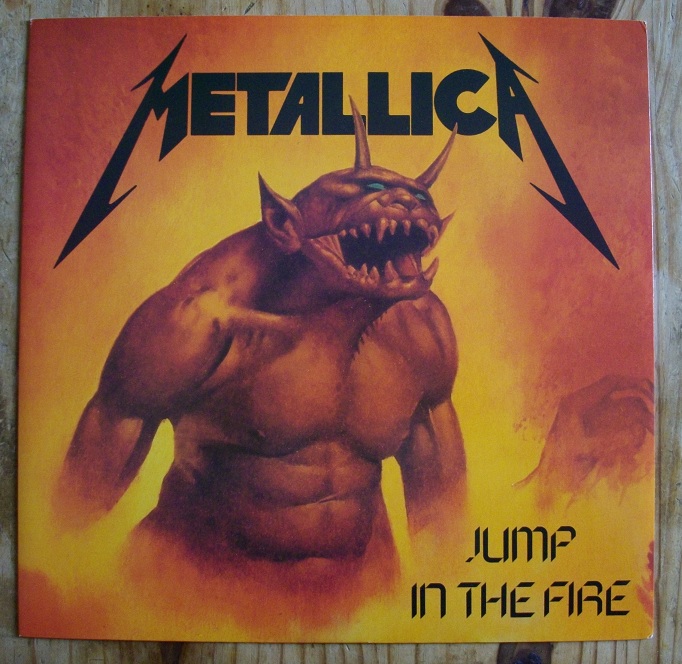
I miss the orange demon dude.
Were Metallica simply self-serving in making these powerful, but largely unheard, songs their own? Or were they benevolently offering a helping hand (and some welcome royalties) to some great bands that hadn’t found an audience, for the greater good of Metal? I’d say there were elements of both but I would also credit Metallica for having the confidence to put an astounding song like Am I Evil? alongside their own, especially when Metallica’s sound and style was so clearly indebted to Diamond Head. But Metallica’s own compositions had more than enough firepower of their own and enough credit was given to their beloved NWOBHM heroes in interviews and on their T-Shirts to avoid accusations of exploitation.
A Metal Classic
While Metallica’s cover versions of Am I Evil? and Blitzkrieg might not quite have the charm or impact of the originals, Metallica admirably put their own crunchy, barky stamp on both tunes. The realisation that there were older bands capable of penning tunes that could hold their own against a classic Thrasher like Creeping Death had many a fan, myself included, scurrying off to their nearest record store. The Metal genre, and my music collection, are much better off thanks to Metallica, one of the greatest gateway bands of all-time.
(Single taken from The Good, the Bad & the Live: (6½ Year Anniversary EP Collection) that I bought back in January 2013)
Can I be honest here and admit one of my main reasons for wanting this was the incredible cover? I love the orange demon dude. He looks so pleased with himself. And so he should! He is adorning the first (if you’re British, anyway) Metallica single!
Jump in the Fire is taken from Metallica’s seminal debut, Kill ‘Em All. It’s one of the more old-school Metal tracks on the debut with its mid-tempo rhythm, bluesy soloing and a sing-along chorus (which always reminds me of Deep Purple’s Space Truckin’). It’s a fun track but not one of the debut’s more promising efforts. Hammett’s soloing and Hetfield’s hoarse vocals sell the song and, thankfully, the band replaced the shagging lyrics from the No Life ‘til Leather demo version with something more orange demon dude friendly. Besides, no-one should have to imagine James Hetfield moving his hips in a circular way. Ever.
The Back Cover with the Studio and “Live” Sides
Apart from the orange demon dude, the main attraction of this single is its live B-Sides. Unfortunately, these “live” versions of Seek and Destroy and Phantom Lord were actually recorded in a studio. Reverb was added (most audibly on Hetfield’s voice) to replicate the acoustics of a larger venue and crowd noises were added on. I’m sure I can remember reading that the crowd noise was taken from a classic live album but I’m not sure if that’s true or not (answers on a postcard please) but the crowd noise does give the impression that the band had amassed a pretty large following at this early stage in their career!
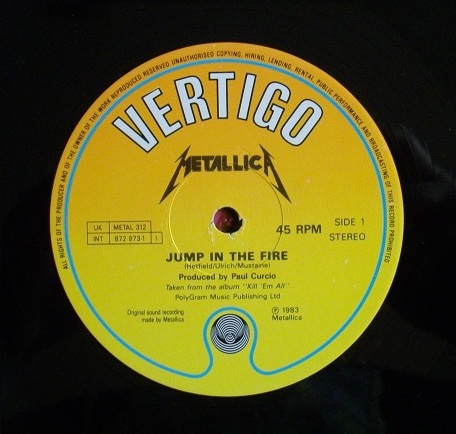
Like Hetfield’s hips, this record moves in a circular way
If you can get over the naïve fakery involved, these lively alternate versions are still well worth hearing. Both of the B-Side tracks are more representative of the band’s early, influential Thrash style than the A-Side. While these versions are missing the breakneck intensity of Metallica’s actual live performances, Cliff Burton’s fabulous bass playing is clear as a bell, Kirk’s soloing is free of bum notes and the performance as a whole is pretty tight. Pleasingly, Hetfield’s voice is starting to sound more like it would on future albums but his exhortations to the imaginary crowd (“let’s go, c’mon”) during Seek and Destroy are embarrassing.
Sans the fakery these are still excellent performances. If they had been radio sessions instead they would have been more appreciated and it’s probably preferable to think of them along those lines. For future releases, Metallica would lose the naiveté… and the orange demon dude.
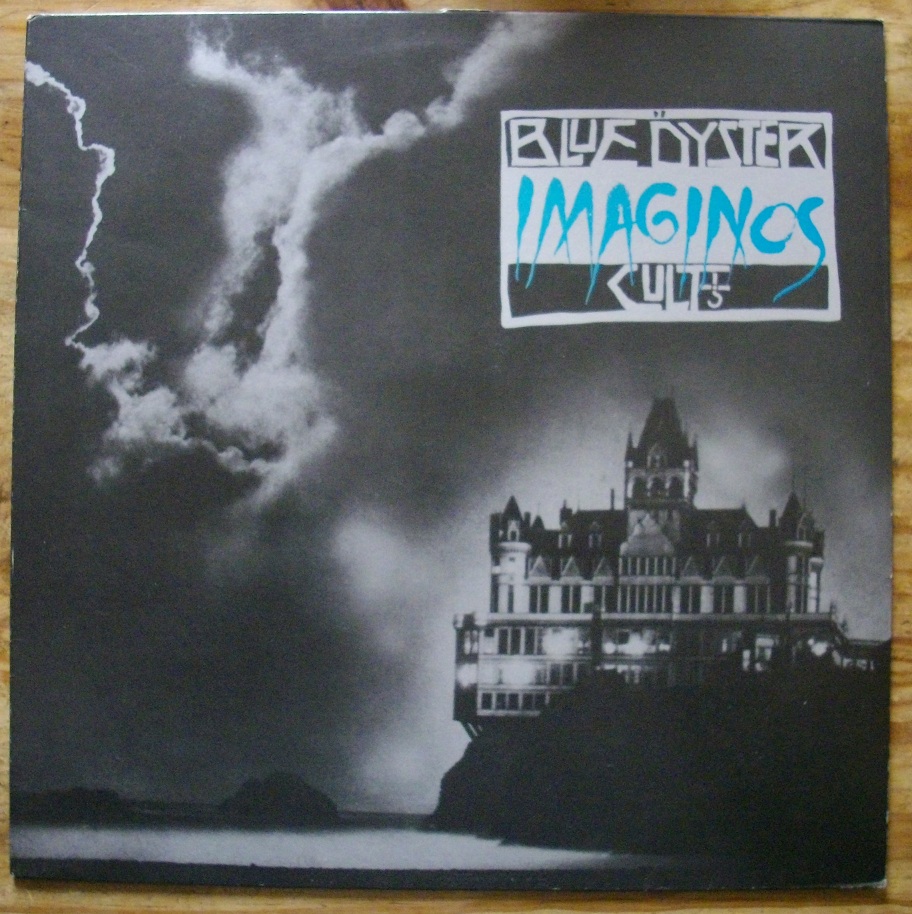
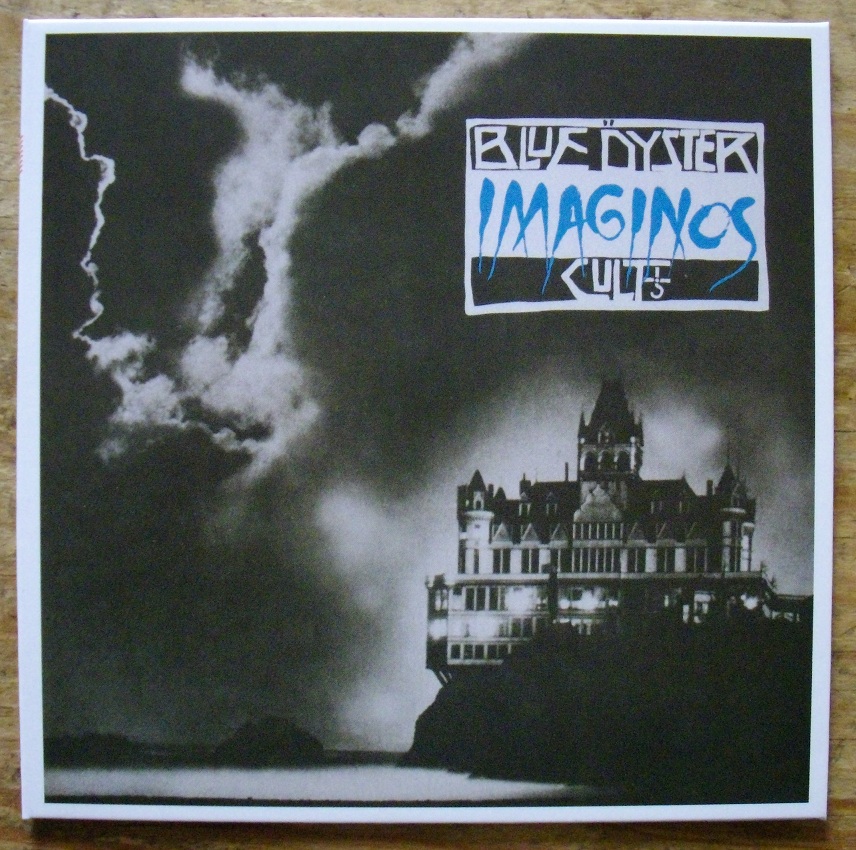
BÖC ended their tenure on Columbia with the ambitious concept album, Imaginos. It’s easily one of BÖC’s heaviest efforts in all senses but there were still enough keyboards, reverbed drums and glassy clean guitars to ensure it fit in with the musical trends of the mid-80s. In typical BÖC fashion, however, they added their own eerie and psychedelic quality to the mix. If you ever have a nightmare about the 80s it could easily sound like this!
The album had a long gestation and is really a combination of two projects. It started out in 1981 as the solo project of fired original member, Albert Bouchard. This project was rejected and later reworked as a Blue Öyster Cult project. Even though some of the original BÖC members were no longer in the band, the convoluted saga of the album’s making meant that all original members appear on it, giving the album the illusion of being a reunion effort. There are also many guest musicians and vocalists as a result of its long gestation.
Imaginos CD Cover
It’s perhaps surprising, then, that the album sounds so focussed. Del Rio’s Song has hooks to die for and serves as light relief amidst all the mystery and darkness. The Siege and Investiture of Baron Von Frankenstein’s Castle at Wisseria is explosively dramatic with superb guest vocalist Joey Cerisano channeling Chris Cornell. The album’s concept comes from poems written in the 60s by the band’s mentor and manager Sandy Pearlman. These ideas have featured in many songs throughout BÖC albums and some of this older material appears here in reworked form (including an upbeat, galloping take on the classic Astronomy).
Although the production does seem over-produced compared to the sparser sound of their classic albums, the lavish sound does suit the theatrical concept andfeels like an updated version of the band’s dark, arcane style to me. The use of lyrics and music from previous eras also creates the sense of this album as the definitive statement of BÖC’s career and mythology. Unfortunately, it turned out to be the band’s worst seller for the label and would be their swansong as a Columbia act. They wouldn’t release another studio album for 10 years. It’s a real shame because this album is creative, bold and uncompromising: a secret treat for anyone wanting to check out overlooked gems from the 80s.
Imaginos LP Inner – The “Explanation”
Imaginos – The “Explanation”
[Blue Öyster Cult – The Siege and Investiture of Baron Von Frankenstein’s Castle at Wisseria]







 HEAVY METAL OVERLOAD