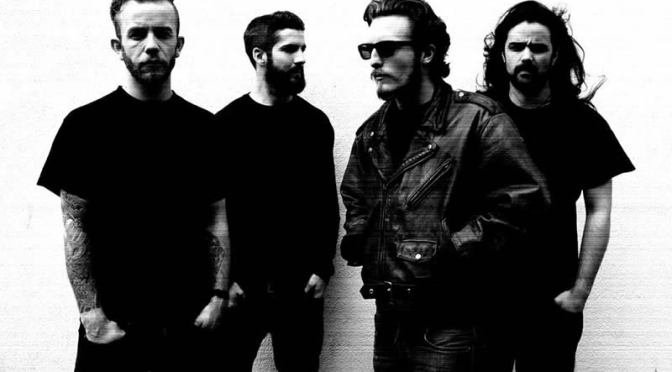
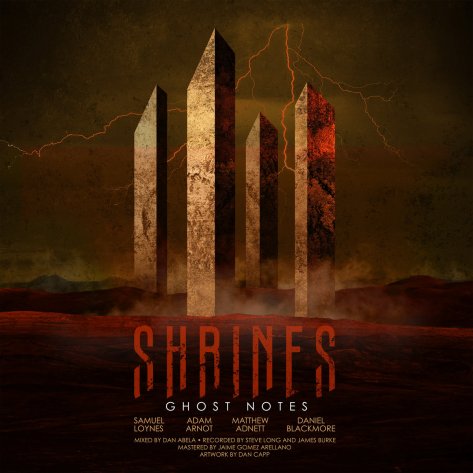
Given that their frontman Sam Loynes also keeps busy with Akercocke, The Antichrist Imperium, and Voices I can’t blame Shrines for taking six years to follow up their 2015 debut album with a four-song EP. But it helps that the EP, 2021’s Ghost Notes, is good: angular, dissonant progressive metal with pristine guitar tones, killer riffs and Loynes’ unique, melancholic voice and harmonies. While I miss the eclectic creativity and plaintive atmosphere of the debut, its good to have Shrines back and they sound like they have found a strong direction and purpose with Ghost Notes. Hopefully they won’t take so long to make their next move this time. Of all the bands in Loynes’ impressive CV this is the one I’d most like to hear more of.
Abbath’s third outing Dread Reaver is the most uniquely frustrating album I have heard in many, many moons. Not because it’s completely absymal. I’d take a disaster like Morbid Angel’s Illud Divinum Insanus over this any day. That was a hoot! The problem with Dread Reaver is that it’s stuck at this infuriating point of being solid but never exciting me or blowing me away. A noisy, thrashy, black metal album from one of the genre’s greats that takes in all sorts of brilliant influences (Manowar, Motörhead, Mayhem, lots of Bathory) should make me feel something. Either Abbath’s considerable craft and experience has taken over in lieu of genuine inspiration or passion or he’s overworked the thing to the point where any human factor has been ground out. Whatever’s happened, it leaves me cold. And not in a cool, “grim permafrost” way.
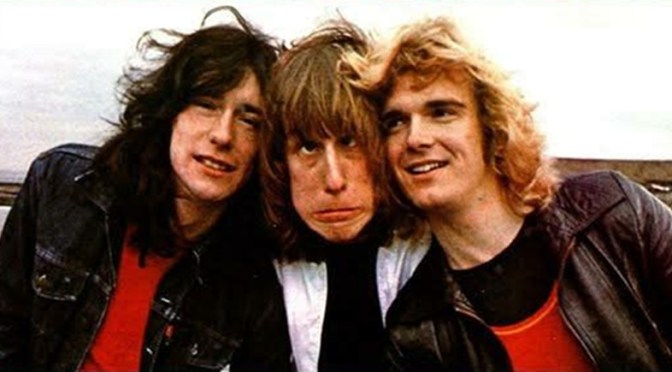
Despite being dubbed “athletic rock”, Newcastle’s Raven were slow off the starting blocks. Their 1980 single Don’t Need Your Money was well-received but there was a big wait for their debut album to finally appear in October 1981. Not sure what took so long because Rock Until You Drop sounds like the power trio just rocked up to the studio and banged out their live set in one go. This is just one corker after another, crackling with raw energy and infectious enthusiasm (just check out John Gallagher’s crazed yelp at the end of Hell Patrol). And it’s loaded with classics too: from gonzo hard rockers Hard Ride, Over The Top and Don’t Need Your Money to superb Priest slashers like For The Future. I could do without the pair of Sweet covers though. They’re fun and add to the live gig vibe but I’d rather have had another Raven original or two. But it’s a minor gripe as Raven then proceed to wreck the place with the proto-thrash Lambs To The Slaughter and the mighty epic Tyrant Of The Airways. Raven might not need your money but you should fling some their way because you need this over-the-top NWOBHM madness in your life.
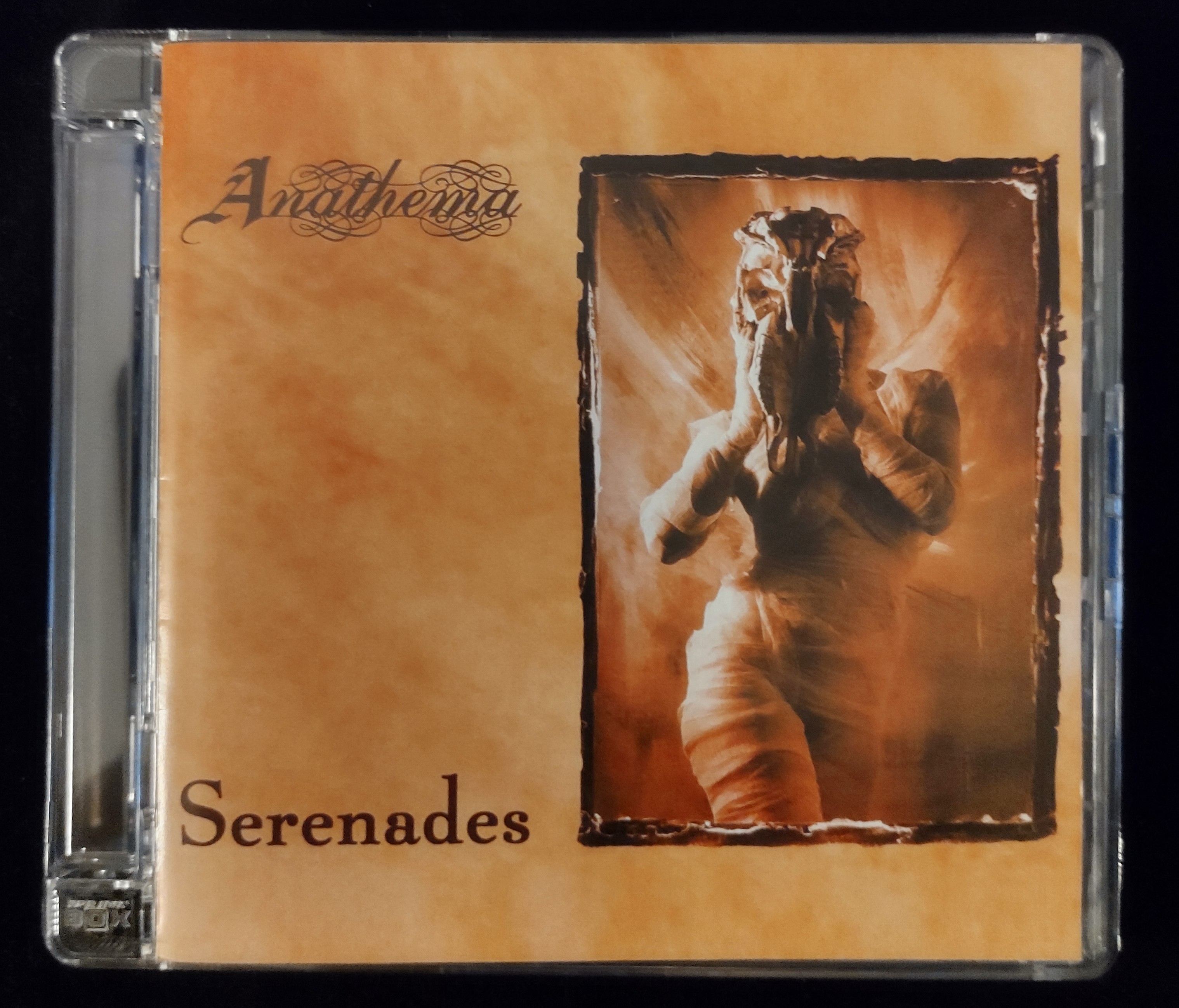
Anathema closed out their career with an album called The Optimist but back in their early days they were pessimistic purveyors of purest woe. Their 1993 debut album Serenades is growling, grinding doom: all funeral drapes, dead loved-ones and weeping willows. It puts a smile on my face though cause I love misery-guts metal and this is a great album to wallow in. The Cathedral-esque Sweet Tears is top drawer and Sleepless‘ goth melody makes it an early favourite of the band’s career. Even the more forgettable tracks like Under A Veil (Of Black Lace) have their share of cool riffs and moreishly sorrowful harmonies. Avant-garde interludes and French lady voices keep things interesting and varied. The 23 minutes of ambient wallpaper music at the end is a bit try-hard and the why/cry lyrics have a naiveté that would persist throughout the band’s career. But these minor quibbles are nothing to get sad about. Serenades is an impressive debut from a band with plenty of reasons to be optimistic.
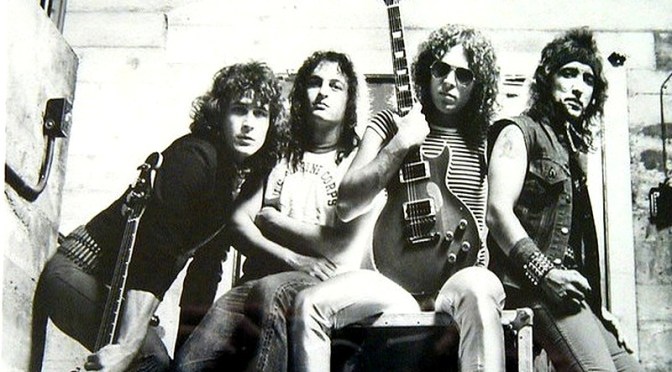
While other 80s doom giants like Trouble and Candlemass performed metal of mythic, epic proportions, Saint Vitus kept it to the streets. Their brand of doom metal was as scuzzy as it was totally unique. Their punkier take on the genre found more of a home in the hardcore scene: touring with Black Flag and signing to their label SST, who released their debut album Saint Vitus in 1984. A big factor in their sound is the unmistakable bass-heavy guitar tone of Dave Chandler. It washes over the whole album like a drug haze and his loose solos and heavy wah use adds a Hawkwind-style spaciness. Vocalist Scott Reagers’ also excels with his emotive, bombed-out croon. And there’s plenty of punk ‘tude in the writing too: simple song structures, caveman riffs and evil trills. No Sabbath-style rifforamas here; the longer songs are simply longer because they’re slower. But for all the simplicity, Saint Vitus is full of character, atmospheric and addictive. Burial At Sea is a shade over-stretched but the upbeat title-track, the stomping White Magic/Black Magic and the hypnotic Psychopath are all absolute classics. And best of all is Zombie Hunger with its fantastic, distraught vocals from Reagers. “I’m a zombie – my insides have died”. There’s still nothing quite like Saint Vitus. Spaced-out, burnt-out, deadbeat doom. It’s music for losers, but if you have this album in your collection, you’re winning at life.
Y&T had, in the less streamlined guise of Yesterday & Today, made ripples in the 70s with two studio albums and their exciting live performances. But they would make major tremors with their first album of the next decade: 1981’s Earthshaker. The Bay Area band hardened their cock rock with a bold, metallic edge that positioned them (along with bands like Riot) as the Stateside answer to the new wave of heavy bands appearing in Europe.
With their powerful rhythm section, blocky riffs and Dave Meniketti’s Hagar-esque vocals, Y&T stick so close to the Montrose blueprint that they don’t score many points for originality. But these road-hardened rockers know how to show you a good time. Hungry For Rock and Dirty Girl are all pocket and swagger. Meniketti cuts loose with wild Nuge-esque guitar on Shake It Loose and Squeeze and Rescue Me cunningly reworks Zep’s Babe I’m Gonna Leave You into a stomping dancefloor anthem.
Earthshaker‘s musical one-track mind starts to wear a little thin on side two. But the rousing Hurricane, blazing Knock You Out and moody closer I Believe In You more than make up for weaker tracks like Young And Tough. And ensure that Earthshaker is a hearty, hefty serving of meat and potatoes that will satisfy anyone hungry for rock.
Sammy Hagar has always been a divisive figure, not least for being the interloper who dared replace Dave Lee Roth in Van Halen. But when Hagar supporters find themselves unable to convince anyone of Van Hagar’s merits or the quality of his various other outings, they can always rely on one thing: the 1973 debut album from Montrose. It’s an unassailable classic of 70s man rock and one of the earliest examples of party-hearty American metal. Other 70s hard rockers would enjoy more fame and rewards but Montrose‘s cult influence would be heard everywhere from the clubs of the LA glam scene to the garages of the NWOBHM.
So kudos to Sammy for his charismatic vocals and songwriting contribution (“I gave love a chance and it shit back in my face”). But the real star of the show is the band’s guitarist and founder Ronnie Montrose. His superior playing and hot rod riffing is timeless and, in tandem with producer Ted Templeman, he colours the band’s meat and potatoes simplicity with a deceptively rich range of tones. From the spacey, hard-charging Zep chug of Space Station #5 and the revved up intro to Bad Motor Scooter to the monster-plod bludgeon of Rock Candy, Montrose is a treasure-trove of stealable guitar parts and sounds. The old-timey Good Rocking Tonight and One Thing On My Mind lean towards filler but both are served up with charm and stop the album from getting too po-faced.
Unfortunately, Montrose couldn’t make it last. One more (underrated) album later, Sammy would be fired. And he wouldn’t be involved with anything quite this good again. But it can be 1973 forever. Just take your top off, stick on Montrose and rock the nation.
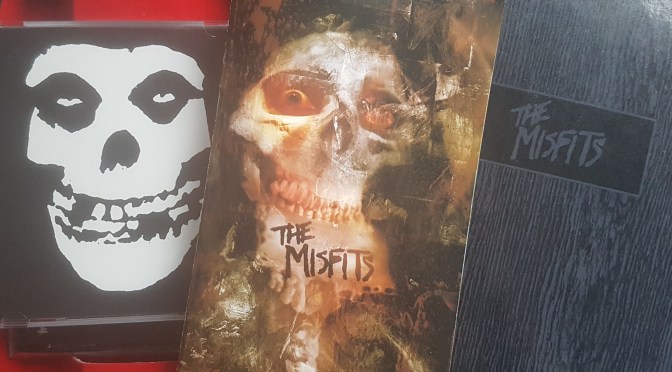
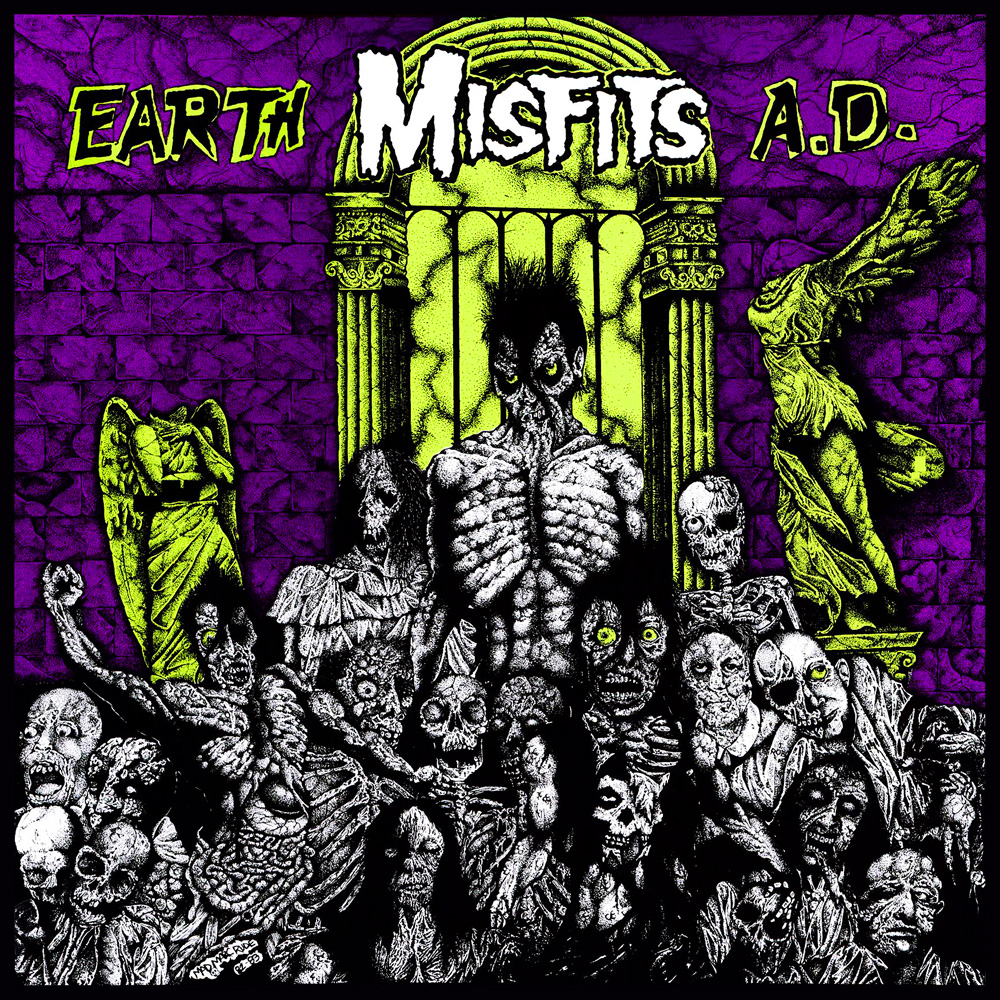
Backs blown out by shotgun blasts, skulls ripped out, eyes plucked from heads, hellhound dogs and warrior wasps. Welcome to Earth A.D. Released in 1983, this was the second and last album of The Misfits’ original run with Glenn Danzig at the helm. And they went out with a bang: ripping through eight songs in just under 15 minutes. The album is attacked with such ferocity that it’s often seen as inferior to their catchier debut album Walk Among Us. The 50’s horror and sci-fi fun of the debut had become dark, brutal and unhinged. And the hardcore speed, massive thrash metal guitar tones and shouted vocals all served to bludgeon the debut’s melody to a bloody pulp. But, while Earth A.D. doesn’t quite have any top-tier singalongs like Skulls or Astro Zombies, it still has plenty of hooks. You won’t be able to forget the bouncy chorus of Death Comes Ripping, the ominous croon of Bloodfeast or the gang vocals of the title track. And there’s a real glee in the album’s demented, vehement delivery. From Green Hell‘s muscular metal chugging to Devilock‘s slashing riff, this record gets the blood pumping like no other. In more ways than one. Earth A.D. is the musical equivalent of a killing spree. And if you think that sounds hellish… well, you’re really gonna like it here.
They would go on to enjoy insane, enormo-success and an inflated reputation as the One Band To Rule Them All but Led Zeppelin’s first flight was a rickety, low budget affair. Their S/T 1969 debut album was knocked out in just 36 hours for less than two grand, which is not bad going considering it became a seminal work in the early history of “heavy”. Before Black Sabbath and before In Rock, Led Zep dished out dark, powerful riff-based rock on tracks like the bewitching Dazed And Confused. But there are both good times and bad times to be had on Led Zeppelin. Communication Breakdown is a superb proto-Paranoid metal chug but Good Times, Bad Times‘ powerful rhythm section and Your Time Is Gonna Come‘s dreamy mix of acoustic guitar and organ can’t disguise the band’s dated, hippy songcraft. Elsewhere, the famously sticky-fingered Brits resort to mining other artists’ material. This approach works well on tracks like How Many More Times, where Zep supercharge the blues with swingingly heavy results. But it also results in stodgy workouts like I Can’t Quit You Baby and Black Mountain Side, a folk arrangement that shows good taste but lacks imagination. The album’s thudding rock power makes Led Zeppelin a notably heavy debut but it’s also heavy in mood: a monochrome moroseness that, mixed with some weak and old-fashioned material, makes repeat listens an increasingly dreary experience. Better would come when Zep’s creativity and vision caught up with the power of their delivery.
Having made a promising studio comeback with 1994’s From Now On… the newly-sober Glenn Hughes then set out to prove his reliability and viability as a live performer. Burning Japan Live, recorded in 1994 over two nights in Kawasaki, captures Hughes and his band (now including three members of Europe) in spectacular form. The album kicks off with a red-hot version of the Deep Purple classic Burn and continues with a revelatory run of non-Purple tracks. There’s a swaggering take on the Hughes/Thrall classic Muscle And Blood and the new solo tracks like From Now On… and The Liar sound magnificent. A cluster of mellow tunes causes a mid-set lull but the versions of Coast To Coast and This Time Around are classy examples of Hughes’ versatility. The chilled interlude also provides a nice breather before the show switches gears for a hard rocking climax that’s loaded with Purple anthems from Glenn’s MkIII and IV days. Burning Japan Live proved Hughes was back at the peak of his powers and also celebrated his long and storied career. It’s a vibrant, dynamic and sophisticated live album that cemented his reputation as the “Voice Of Rock”.










 HEAVY METAL OVERLOAD