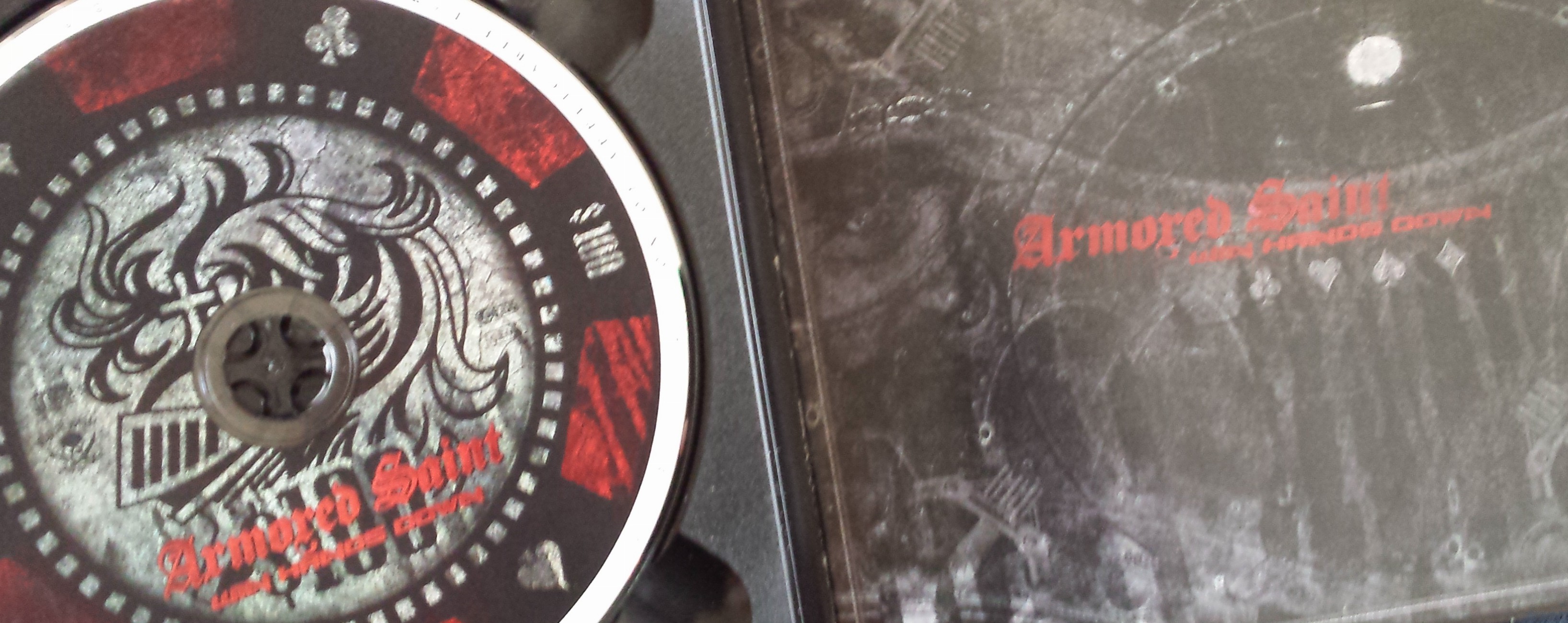
It’s very exciting to have new music from Armored Saint. There’s a great deal of chemistry and talent in the ranks and John Bush’s superior voice is always a draw. I’d like to see them do well and get the credit they deserve and, with their seventh album Win Hands Down, they seem to be getting some long overdue sales and recognition.
Initial spins were very exciting. There’s a real feeling of Rock history running through the whole thing. There are hints of Thrash, Alternative, burly Classic Rock groove and inventive Prog Rock twists and turns. The variation adding exciting colour to the band’s time-honoured muscular, melodic Metal. It’s the sound of a vintage band aging well. Win Hands Down opens the album with one of their best songs to date, a superb driving Rocker. And Mess is steely, massive and skilfully arranged. Armored Saint sound like they’re giving it their all. John Bush, in particular, is on peak form. No mean feat considering his track record.
But the Saints don’t totally conquer. The album hits a lull in its second half. With A Full Head of Steam and In An Instant are both curiously forgettable and the sultry Dive, although good, isn’t the kind of song to set things back on track. Some of the better songs are hobbled by weak lyrics too. They’re aiming for the raconteur character of lyricists like Lynott or Mogg but they don’t have the same skill or personality and end up hitting out with clumsy, cringe-inducing lines like “I even gave you your own unique rriinngg” and “He never killed anyone but he hurt somebody’s feelings once”. Even Bush’s can-sing-the-phone-book voice can’t save songs from clunkers like that.
Mah copy
Ultimately Win Hands Down is solid and well-performed but forgettable. If you don’t mind the wise-cracking lyrical personality of the album you might find plenty to enjoy here but it fails to connect emotionally with me. With repeat listens I’ve found myself losing interest in the album which is a shame as a few songs find the band at their very best. Plenty of people seem to be enjoying it more than me so I’m pleased for the band and their success. I just wish I had been more won over by it. Hopefully they can deliver something more up my street next time.
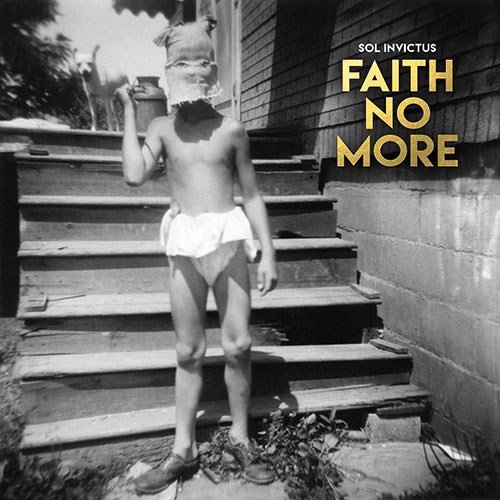
My favourite Faith No More albums, Angel Dust and King for a Day… Fool for a Lifetime, took time to grow on me. Big chunks of the albums would go over my head but there were always enough instantly accessible songs to keep me coming back for more. And with each listen their darker, more challenging material would start to work on me until I was completely won over. Continuing this tradition, their reunion album Sol Invictus has taken repeat listens to reveal itself too… but in a slightly different way. The news that the reunited Faith No More would be releasing their first new music since 1997’s Album of the Year was hugely exciting but the early singles Motherfucker and Superhero seemed disappointing. And on initial spins it seemed like Faith No More were playing it too safe. The material and delivery seemed lazy and half-baked. But, strangely, the album was more instantly satisfying in its darker, denser moments. Songs like Separation Anxiety, Matador and the fantastic Cone of Shame all reminders of the band at their very best and it was these tense and claustrophobic tracks that brought me back for repeat listens. And on those repeat listens songs like Sunny Side Up and Rise of the Fall began to exert a magnetic, hooky pull. Turns out that there’s a lot going on in the album’s short running time. I found hidden depths, enigmatic lyrics and moments of joy in songs I’d previously deemed throwaway. Even the singles started to grow on me, working better within the context of the album.
Mah copy
The things that struck me as weaknesses in early listens (the safe approach, restrained guitars, empty catchiness) are all objectively still there but now they just don’t seem to matter. Mike Patton’s remarkable vocals and Roddy Bottum’s keyboards prove to be the star turns here but mostly the band foregoes grandstanding in favour of serving the music’s expression and theatricality. Fans of the band’s more Caffeine-ated explosiveness might be disappointed but that was only ever one part of their style. This is still recognisably a Faith No More album, reminiscent of their past work but also a step forward and a new start. It’s a hugely rewarding listen and it’s also very much a grower. In other words, classic Faith No More. Welcome back.
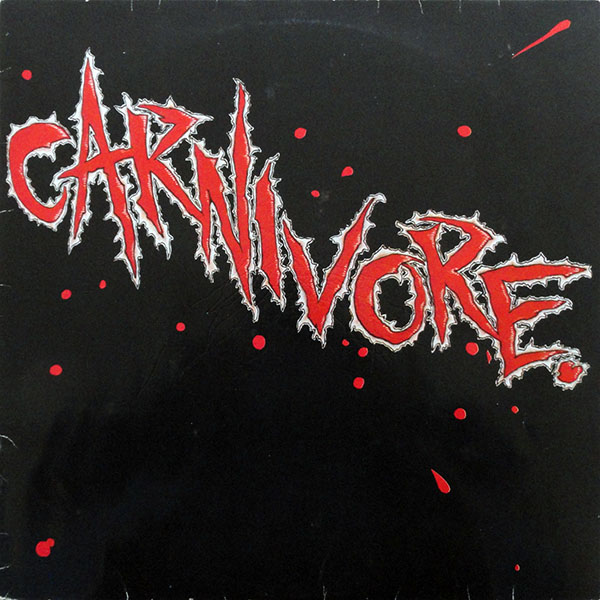
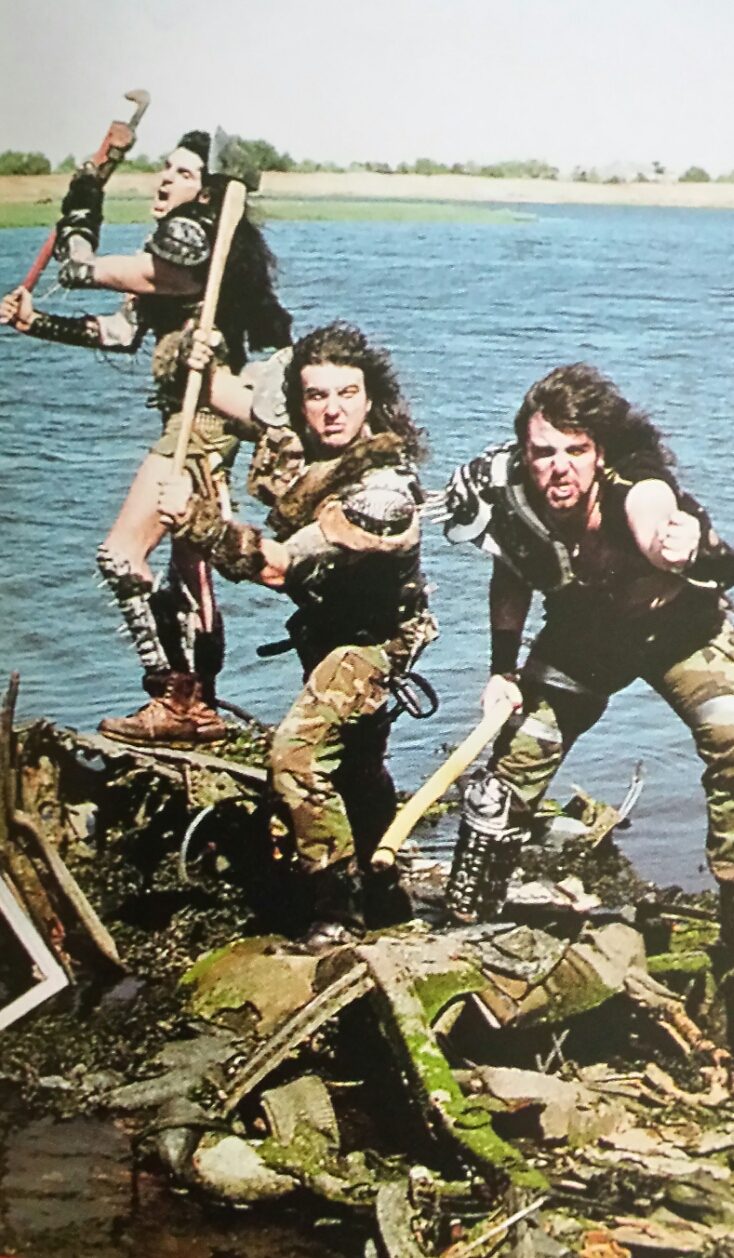
Greetings and felicitations, children of technology. Welcome to the post-apocalyptic world of Carnivore. Few bands are hardy enough to survive thermonuclear destruction but, led by the imposing Petrus T. Steele, this trio of New Yorkers had what it takes to survive World War III (and IV.)
They’re meat eaters, they’d like to meet ya
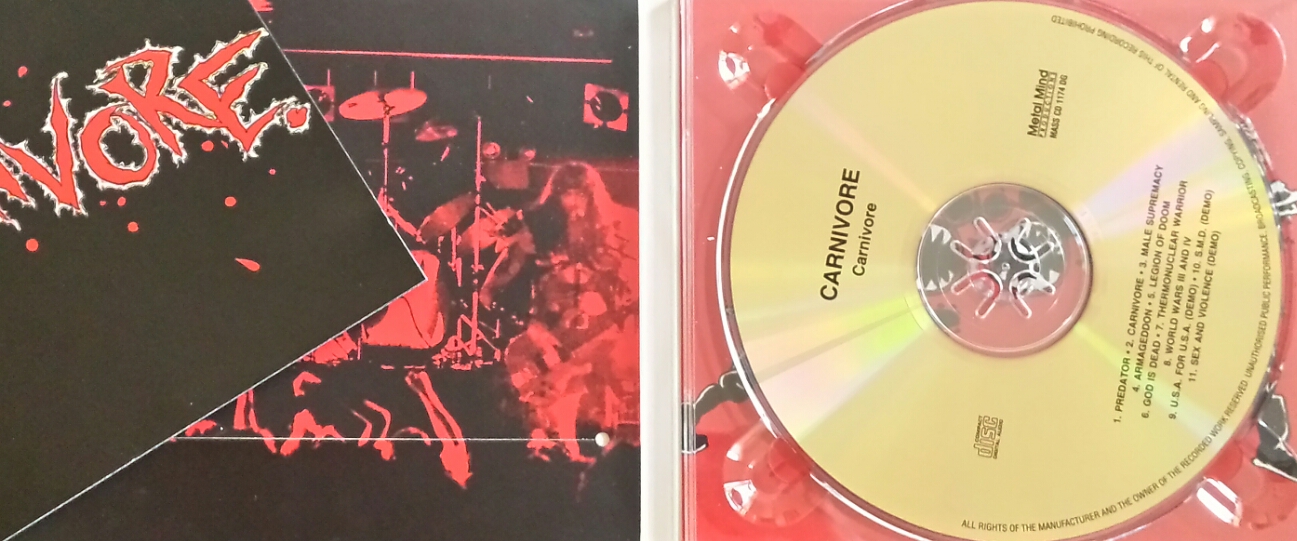
Along with Keith Alexander on guitar and Louis Beateaux on drums, Petrus and Carnivore unleashed their S/T debut album in 1985. It’s a raunchy and primitive mix of Punk and Metal with a hefty dose of Doom and Steele’s beefy vocals. Although the style is crude the performance is tight with live energy and just enough production effects to sound suitably futuristic. Predator kicks the proceedings off and sets the scene of life beneath the rrrrruined city. Male Supremacy has a dirty Crüe-style opening riff and unforgettable chorus. Armageddon has rampaging Crossover Thrash velocity and another golden chorus hook. There are also playful, musical detours: God is Dead’s chorus is mellow bongo-driven weirdness and Male Supremacy culminates in romantic balladry as Petrus returns home to his woman after a hard day’s war.
Metal Mind/Roadrunner Ltd Edition
The second side dips a little compared to the stronger first half but is saved by the more remarkable Doom sections (the “Crush Kill Destroy” section of Thermonuclear Warrior for example) and the rollicking, propulsive World Wars III and IV which ends the album on a high. Lyrically, Carnivore stick to what they know: the life and philosophy of post-apocalyptic, cannibal barbarians hunting for unsuspecting victims to chow down on. It’s something we can all relate to. The whole album is right up my Venom-loving street: filthy and rowdy with the hyper-masculinity of Manowar and a pre-GWAR sense of fun and mythology that wisely stops short of out-and-out comedy.
My copy
Alternative front cover for a 2001 reissue
Petrus T. Steele would later change his name to Peter Steele and go on to great success in his next band Type O Negative. There is very little of Type O’s seductive, swooning October Rust style here but there are plenty of other similarities: the Hardcore elements of Type O’s debut Slow, Deep and Hard and later tracks like Kill All the White People. The shock-tactic humour, bass-heavy Doom riffs and songwriting chops are also heavily indicative of Steele’s future musical direction. Despite their talent for post-nuclear survival Carnivore only lasted for one more album before calling it a day but their music has proved more resilient. Carnivore is full of choice, prime cuts. Bon Appetit.
I’m going to call this Cheap Trick live album “unofficial” rather than a “bootleg”. Bootlegs tend not to be stocked in Amazon, HMV etc… whereas this one is. There have been quite a lot of these radio broadcast releases lately and, while the recordings will have been floating around as bootlegs for years, they seem to have found a legal route to the shops. I’m guessing there is some loophole regarding the ownership rights to broadcast recordings and these labels are tellingly keeping themselves on the right side of the law by not using the copyrighted band logos. Bootleggers aren’t that shy about stuff like that are they? So… “unofficial” it is.
Recorded in December 1978, the band really were on top of the world: riding high between the release of their successful Heaven Tonight album and the domestic US release of the classic At Budokan. There’s a good deal of crossover between this and the Budokan release but the Passaic audience sounds way rowdier than the Japanese crowd. There are no high-pitched squeals of “Robin!” here. As a result the band performance feels more raucous and less mannered. This is Cheap Trick going for the throat and it puts a fresh, biting spin on the familiar Budokan tracks as well as offering up a couple of lesser-heard tunes too.
What a bill! WHAT. A . BILL.
The highlights of the set-list prove to be these less familiar tracks. Stiff Competition is absolutely savage with a shredding Robin Zander vocal. I’m also especially blown away by the rendition of Heaven Tonight. It’s not a track I was ever particularly excited about but here it is thrillingly menacing. Another highlight is Big Eyes, opened with an immensely entertaining guitar solo from Rick Nielsen during which he proclaims himself “100,000 times better than Fred Nugent will ever be!” to huge roars of approval. The scamp.
In general, the sound quality is very good: rough and raw but more evocative of the live atmosphere and excitement than many official live albums. Only Tom Peterson’s bass struggles to be heard on most tracks but makes up for it during Need Your Love, the intro of which sounds like it might have caused structural damage to the venue.
All in all, a great use of £8 and a great live album to add to the collection. I find it thoroughly inspiring hearing such classic acts in the raw and in the case of this and last year’s KISS release, The Ritz on Fire, it feels like I’m discovering the bands for the first time. Again!
As Henry Rollins would say, hearing a band live is the only way to know for sure, and on this evidence you can be very sure of Cheap Trick.
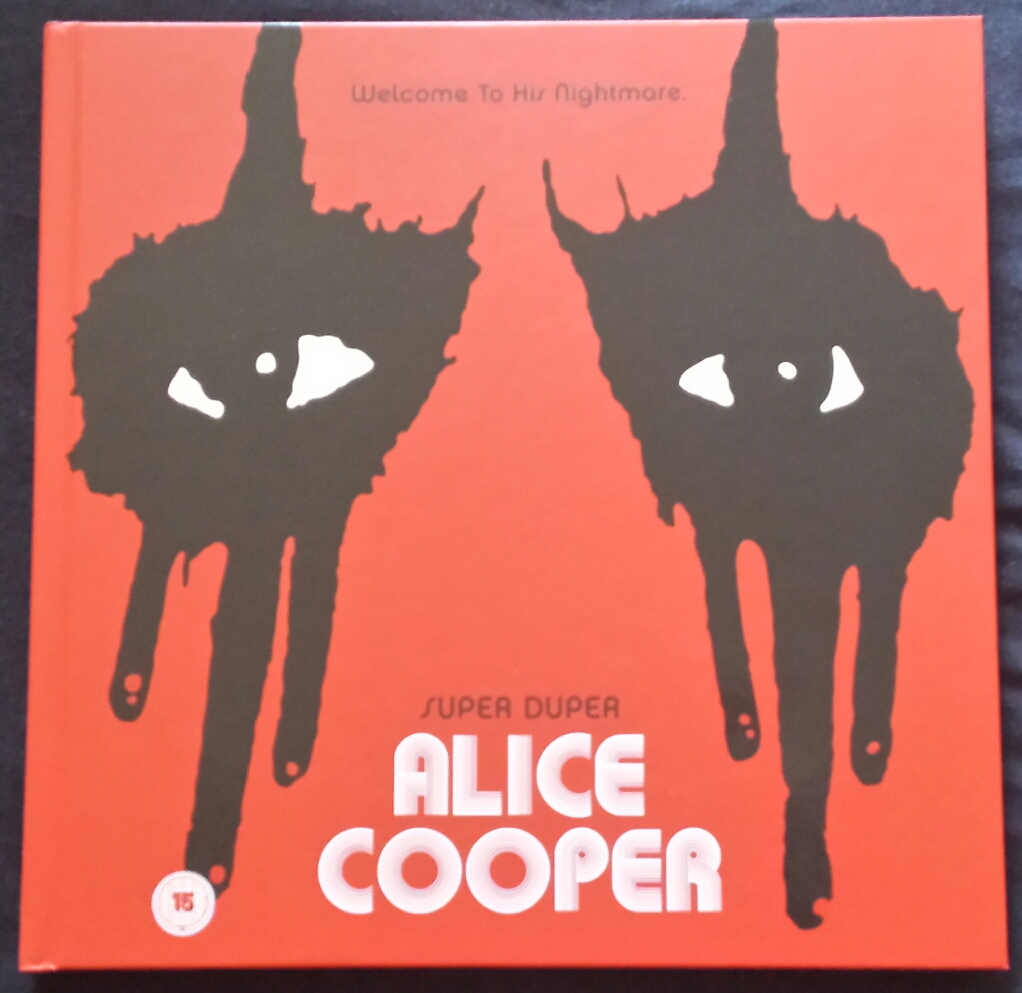
Super Duper Alice Cooper (2DVD/BR/CD – £37 Love Music Glasgow)
I do love a good music documentary, which is probably just as well as they seem to be coming down the pipeline at an impressive rate these days. I blame Anvil. But few musicians warrant a film biog more than Alice Cooper. And when the film, Super Duper Alice Cooper, comes courtesy of Banger Productions (Metal: A Headbanger’s Journey, VH1’s Metal Evolution and Rush: Beyond the Lighted Stage) then the prospects are very promising indeed. Hot on the heels of a limited cinema run comes the release on DVD and Blu Ray. I hadn’t expected this to come out until later in 2014 so it’s a nice surprise to have a copy so soon but does it live up to its promise?
The Eyes of Alice Cooper
THE DOCUMENTARY
Unexpectedly, the film takes the form of an extended montage. There is no footage of the interviewees as they are now, Alice and co-stars providing only voice-overs to the stream of archive footage and images. The 87min running time is a bit miserly for such a huge and important story so the film focuses squarely on Alice the man and performer with little discussion of the music or discography. And even then it all feels a bit breathless. The movie hurtles from anecdote to anecdote faster than you can say “Michael Bruce”. Which no-one here does. Not even once. The pace and the effect of only hearing the protagonists’ voices renders the whole thing strangely flat. And as the film progresses it is rarely as exciting or as moving as it should be.
He’s no’ well
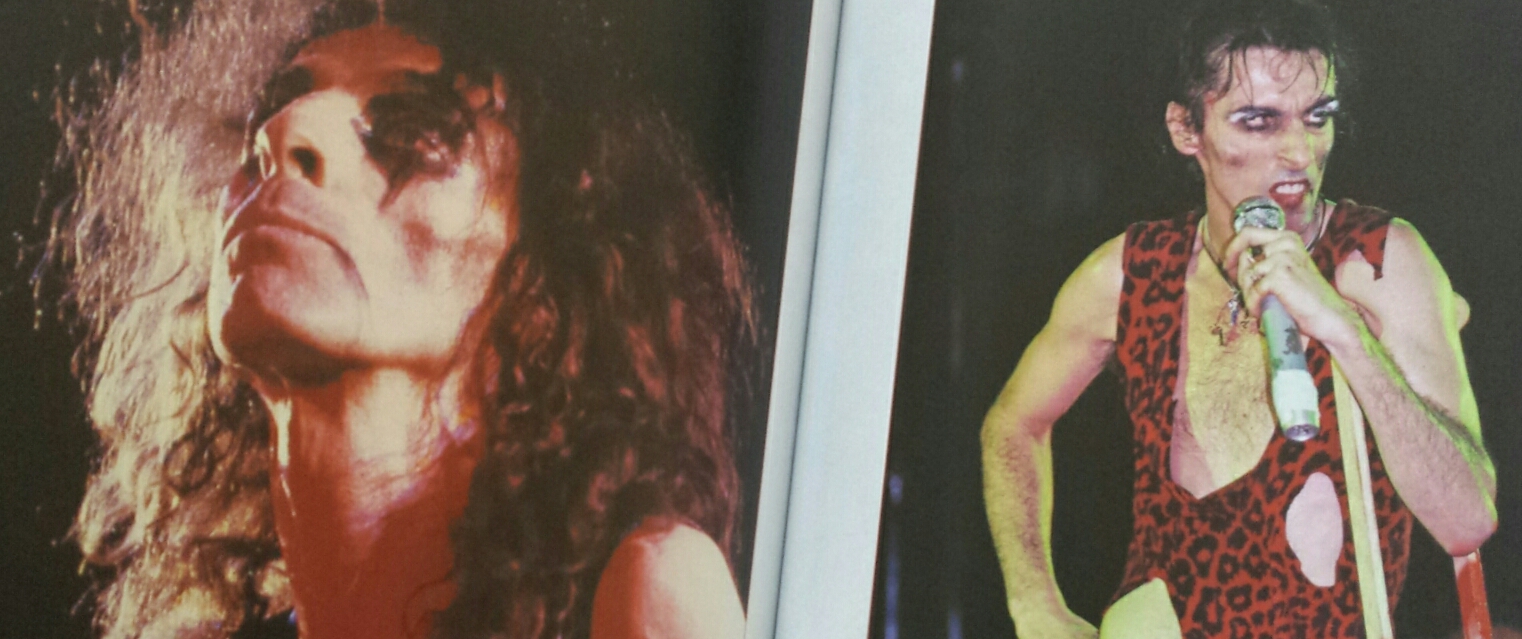
On the plus side, the film is a veritable treasure trove of visual material and, by cutting out the modern-day talking heads, a lot of this good stuff is crammed into the brief running time. I can understand the impulse to prioritise the historical footage but the filmmakers haven’t employed it with the dramatic and powerful effect of a film like Julien Temple’s The Filth and the Fury which took a similar approach. For long-time fans there are interesting and fresh insights into Alice’s life. Without spoiling too much, Dennis Dunaway’s recollections as the original band drift apart are sad and surprising and there is fascinating new light shed on Cooper’s addictions. The portrayal of the singer’s descent is harrowing enough to set-up a satisfying feel-good ending, as a healthier, happier Alice bounces back into action in the 80s with support from guitar-gunslinger (literally!) Kane “Rambo” Roberts. Nothing is said of his later career which seems strange as I felt that the reunion of the remaining original members with producer Bob Ezrin for Welcome 2 My Nightmare would have been a satisfying way to bring the story up to date and also full circle.
THE BOX SET
The individual DVD and Blu-Ray editions come with some extra archive footage, deleted scenes and extra interviews that were filmed for the Metal Evolution series. This deluxe version has even more extras that may prove very tempting for Coop fans. The LP-sized hardcover book has some great photos and some interesting insights from the film-makers which explain why they decided, rightly or wrongly, what approach to take with the documentary. And in addition to the DVD and Blu-Ray of the movie there is two bonus discs. The first is a DVD of footage shot from the 1972 Killer tour in Montreal. Any classic Alice Cooper concert footage is like gold-dust and I can imagine many fans buying this set for this disc alone. Sadly, the footage is very incomplete and the existing visual and audio components cut and pasted together to make as much out of it as possible. As a result the sound is often out of sync with the action and portions of the songs are missing. It’s a touch disappointing that the show is so incomplete but it is still a rare treat to the see the band in action at this point in their career. A fourth disc contains an energetic live performance from 2009’s Along Came a Spider tour at Montreaux which features some great classic material and great sound. It’s only slightly marred by some audible mic problems towards the end. I think all of the tracks here have been performed on other live releases so it’s fairly inessential in that respect but it’s a lean and rocking set and a nice bonus for any completists out there.
Taken individually the disappointing movie and patchy concert footage leave you wanting slightly more. But viewed together with the book and CD for bonus reading and listening, there’s an enjoyable evening of Cooper fun to be had here. And more archive Alice than you can shake a snake at! I still feel like the ultimate Cooper visual retrospective is still out there, waiting to be made, but this is still a welcome addition to the collection alongside Prime Cuts, Good to See You Again Alice Cooper and the many other Coop DVDs out there.
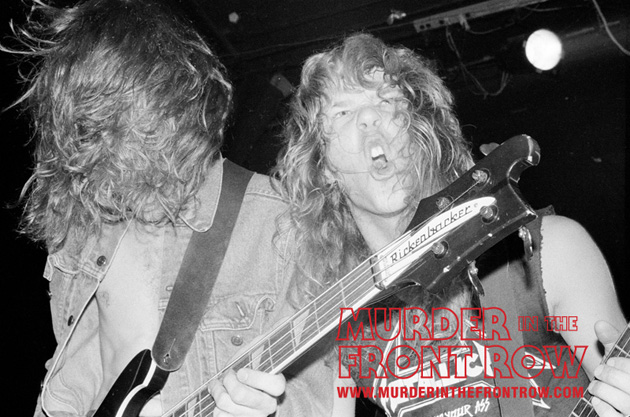
I was initially disappointed when this hardback turned up in the post. I wasn’t convinced a book crammed with photos of young, sweaty guys gurning and flipping their middle fingers was something I’d want to look at very often. But I was missing the point. Bazillion Points are doing a great service to Metal with books like this. Harald Oimoen and Brian Lew were part of the Bay Area Thrash scene from the very beginning and Murder in the Front Row is a beautifully put together documentation of the movement as seen through their lenses.
Oimoen and Lew contribute written recollections of their involvement with the genre, along with contributions from Ron Quintana, Gary Holt, Alex Skolnick and Robb Flynn, but the main attraction is the atmospheric photography. Many historic moments and formative band line-ups are captured here. Metallica feature heavily. There are great shots of the Mustaine/McGovney line-up as well as the very first photos of the band with legendary bassist Cliff Burton. While Exodus’ importance in the scene is often overlooked, they are given the profile they deserve here and, mainly due the larger-than-life presence of frontman Paul Baloff, they embody the wild and chaotic vibe of the movement. They also provide the book’s title via the lyrics of their classic Bonded by Blood.
Being an LA band, Slayer’s earliest eye-liner days aren’t included but by the time they hit the Bay Area they were already a darker and more visually striking prospect. The images of their first Bay Area shows seem to leap out of the book and Oimoen was on hand to capture Kerry King’s short-lived stint as guitarist in Megadeth. His spike-wristed appearances in early ‘Deth shows provide some of most fascinating sights in the book. The early Megadeth shows also illustrate the changed attitude of Dave Mustaine: his determined, sneering demeanour speaking volumes about his intent following his dismissal from Metallica.
Alongside the obvious main players, the grassroots moments of many other crucial bands are also included along with plenty of backstage meetings, drunken antics and – a crucial element often overlooked by professional Rock photographers – fans like Toby Rage who illustrate (often in mid-air) the audience mayhem these bands became notorious for.
So, although on first glance this is a book of photos of young sweaty guys, the authors’ dedication to the genre and their candid amateur photography turns it into something more: a brilliant evocation of the blood, sweat and beers of a unique and vibrant scene. Murder in the Front Row is essential for fans of the genre: it tells the story of Bay Area Thrash Metal more effectively and honestly than a bazillion words ever could and is the next best thing to having actually been there.
(Single taken from The Good, the Bad & the Live: (6½ Year Anniversary EP Collection) that I bought back in January 2013)
Metallica’s second European single was released after its parent album Ride the Lightning to promote the band’s European tour. The A-Side song Creeping Death is a stone-cold Metalliclassic, a nuclear biblical epic. The B-Side Garage Days Revisited consists of two faithful covers of NWOBHM tracks (Diamond Head’s Am I Evil? and Blitzkreig’s Blitzkreig). Everyone would have already been familiar with the title-track when this was released but, especially outside the UK, fewer listeners would have known the B-Sides.
It seems that the classic Metal bands of the 70s weren’t doing many covers and the few exceptions were songs lifted from outside the genre and given “heavy” treatment. But in the 80s bands like Metallica and Iron Maiden seemed keen to indulge in a bit of “Record Collection Rock”: recording many covers and, crucially, covers of other heavy and hard rocking bands. Both Maiden and Metallica proved vital in my musical education, pointing me towards other great artists (as well as some great films, books and TV shows).
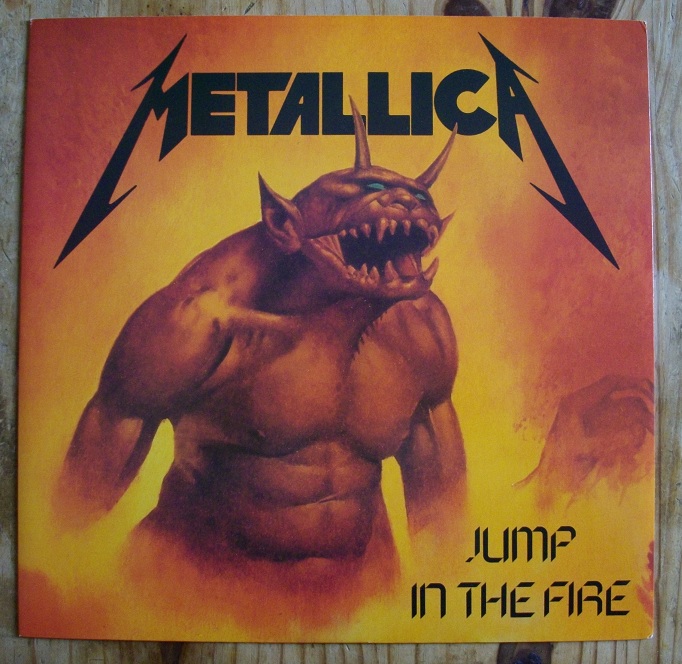
I miss the orange demon dude.
Were Metallica simply self-serving in making these powerful, but largely unheard, songs their own? Or were they benevolently offering a helping hand (and some welcome royalties) to some great bands that hadn’t found an audience, for the greater good of Metal? I’d say there were elements of both but I would also credit Metallica for having the confidence to put an astounding song like Am I Evil? alongside their own, especially when Metallica’s sound and style was so clearly indebted to Diamond Head. But Metallica’s own compositions had more than enough firepower of their own and enough credit was given to their beloved NWOBHM heroes in interviews and on their T-Shirts to avoid accusations of exploitation.
A Metal Classic
While Metallica’s cover versions of Am I Evil? and Blitzkrieg might not quite have the charm or impact of the originals, Metallica admirably put their own crunchy, barky stamp on both tunes. The realisation that there were older bands capable of penning tunes that could hold their own against a classic Thrasher like Creeping Death had many a fan, myself included, scurrying off to their nearest record store. The Metal genre, and my music collection, are much better off thanks to Metallica, one of the greatest gateway bands of all-time.
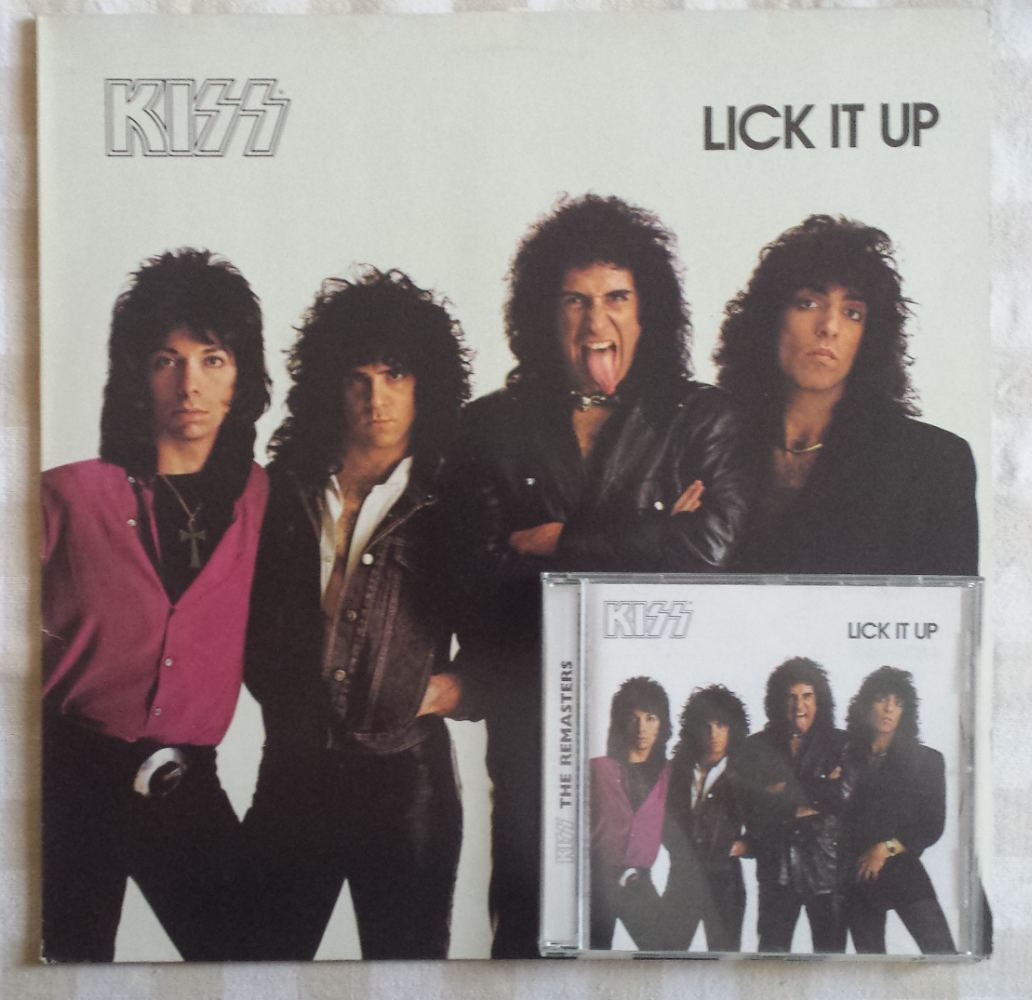
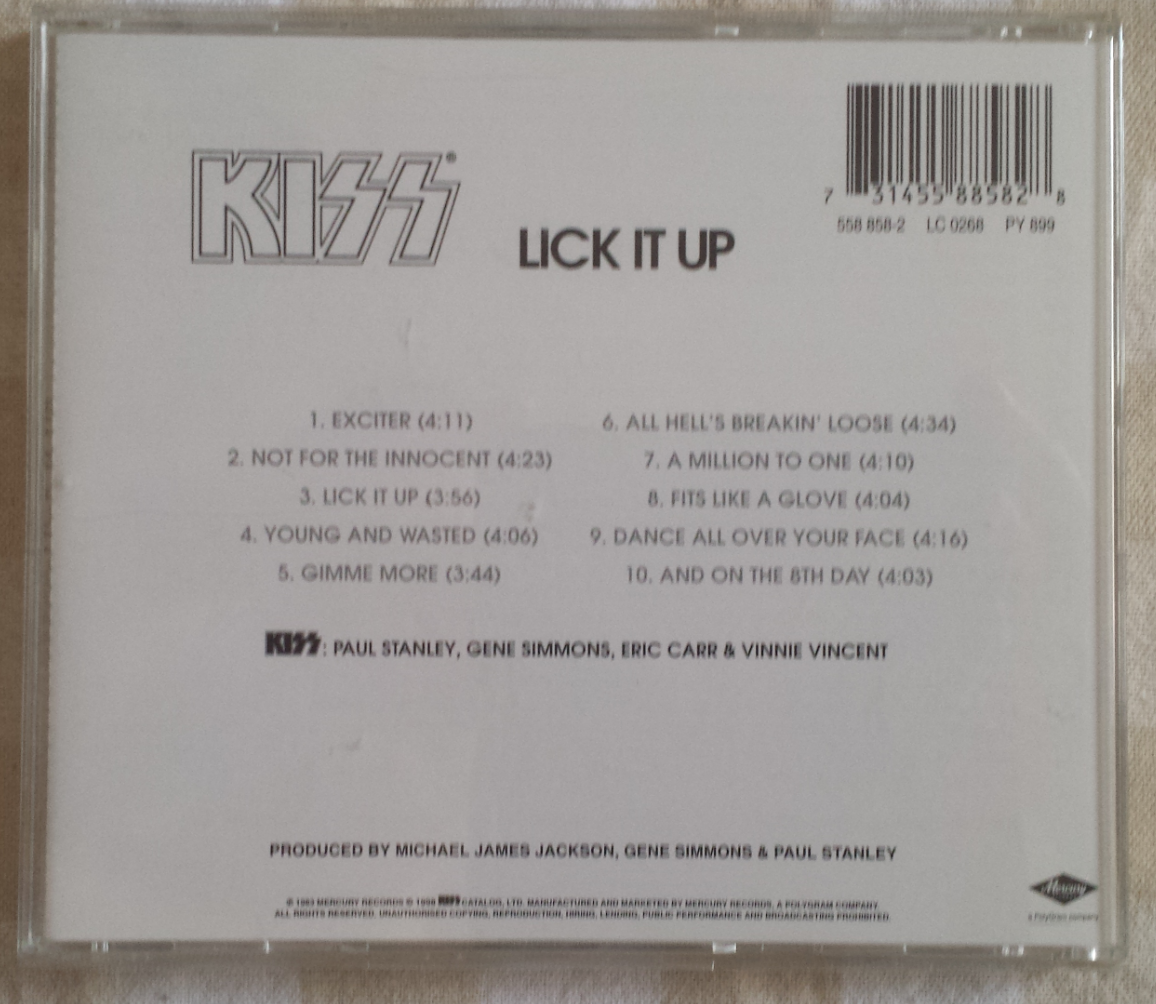
I discovered KISS in the late 80s. Up until Crazy Nights, they had never made much of a splash in the UK, so without much info on the band or their history I generally just ordered the cassettes that had the coolest titles and, subsequently, Lick it Up was an early acquisition. I didn’t know or care that it was their first album sans make-up so let’s not get into that too much. Suffice to say KISS had been floundering around for a few years, not quite sure what they wanted to do or who they wanted to do it with. A thrilling moment of discovery came with the stunning Creatures of the Night album. KISS were a full-blooded Metal band. Unfortunately, the sales were less than stunning so KISS played their trump card, removing the make-up for publicity and also signifying their new found musical confidence.
Lick it Up is the sound of that confidence. Not quite as dynamic and anthemic as Creatures… but the solid sound of a band that means business. And business was good! Lick it Up became their first album to go Gold in 3 years.
There’s a real sense of danger and threat in these songs. Tracks like Exciter and Million to One cut and thrust with emotively strained and dynamic vocals from HMO man-crush, Paul Stanley. Gene Simmons’ songs mostly rumble and lurch menacingly with little of the Blues/Rock N’ Roll licks he would rely on for the rest of the decade. Gimmie More and Fits Like a Glove are filthy raunch and All Hell’s Breaking Loose and the title track (it’s basically sex music) provide the anthemic relief. Drummer Eric Carr hits hard and reins in the tempo which adds to the muscular vibe but the whole album is tied together by its star player, lead guitarist and songwriter on 8 of the 10 tracks: Vinnie Vincent. Curbing (or forced to curb) his widdlier tendencies, his classy riffs, licks and solos are the most remarkable and creative contributions to the album.
Unfortunately, Vinnie would soon be gone and, although KISS would continue to release superb albums for the rest of the decade, they were never quite this good or this assured again. Lick it Up is not only a strong contender for the greatest KISS album of all-time but a strong contender for my favourite album of all-time. Don’t agree? Well, listen bitch! I’ve got news…
(Single taken from The Good, the Bad & the Live: (6½ Year Anniversary EP Collection) that I bought back in January 2013)
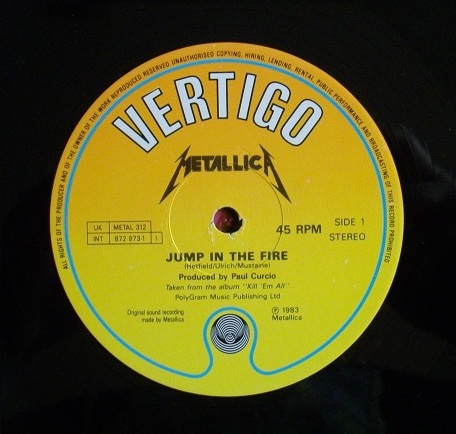
Can I be honest here and admit one of my main reasons for wanting this was the incredible cover? I love the orange demon dude. He looks so pleased with himself. And so he should! He is adorning the first (if you’re British, anyway) Metallica single!
Jump in the Fire is taken from Metallica’s seminal debut, Kill ‘Em All. It’s one of the more old-school Metal tracks on the debut with its mid-tempo rhythm, bluesy soloing and a sing-along chorus (which always reminds me of Deep Purple’s Space Truckin’). It’s a fun track but not one of the debut’s more promising efforts. Hammett’s soloing and Hetfield’s hoarse vocals sell the song and, thankfully, the band replaced the shagging lyrics from the No Life ‘til Leather demo version with something more orange demon dude friendly. Besides, no-one should have to imagine James Hetfield moving his hips in a circular way. Ever.
The Back Cover with the Studio and “Live” Sides
Apart from the orange demon dude, the main attraction of this single is its live B-Sides. Unfortunately, these “live” versions of Seek and Destroy and Phantom Lord were actually recorded in a studio. Reverb was added (most audibly on Hetfield’s voice) to replicate the acoustics of a larger venue and crowd noises were added on. I’m sure I can remember reading that the crowd noise was taken from a classic live album but I’m not sure if that’s true or not (answers on a postcard please) but the crowd noise does give the impression that the band had amassed a pretty large following at this early stage in their career!
Like Hetfield’s hips, this record moves in a circular way
If you can get over the naïve fakery involved, these lively alternate versions are still well worth hearing. Both of the B-Side tracks are more representative of the band’s early, influential Thrash style than the A-Side. While these versions are missing the breakneck intensity of Metallica’s actual live performances, Cliff Burton’s fabulous bass playing is clear as a bell, Kirk’s soloing is free of bum notes and the performance as a whole is pretty tight. Pleasingly, Hetfield’s voice is starting to sound more like it would on future albums but his exhortations to the imaginary crowd (“let’s go, c’mon”) during Seek and Destroy are embarrassing.
Sans the fakery these are still excellent performances. If they had been radio sessions instead they would have been more appreciated and it’s probably preferable to think of them along those lines. For future releases, Metallica would lose the naiveté… and the orange demon dude.
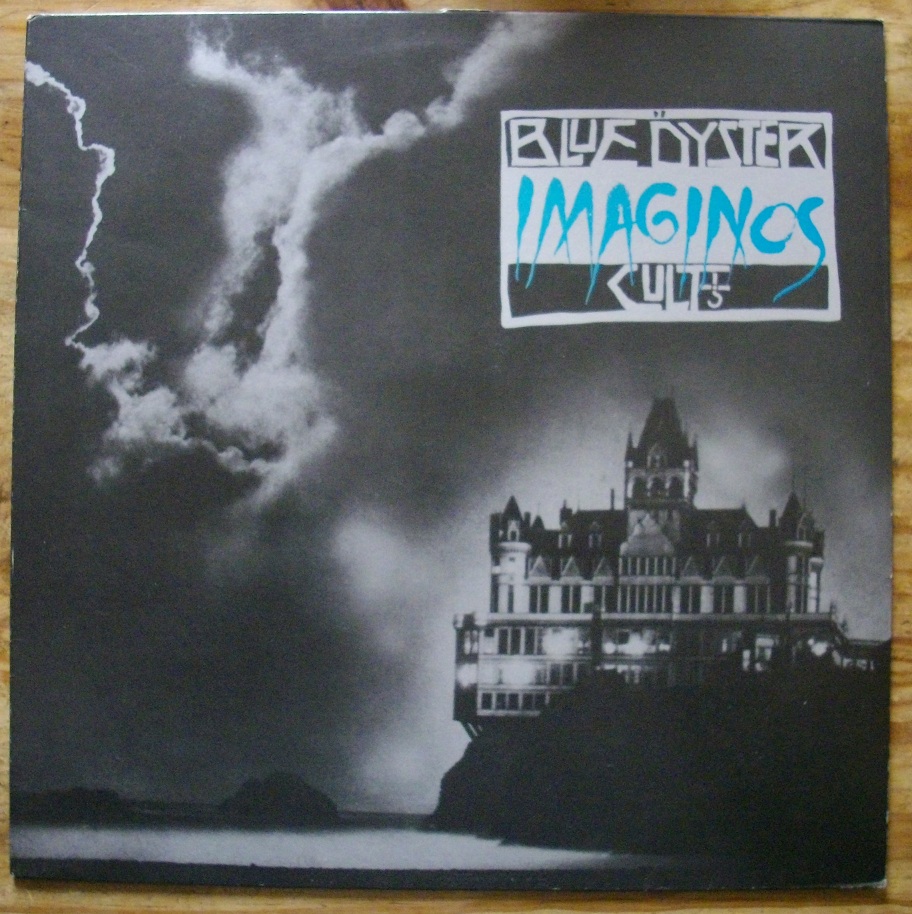
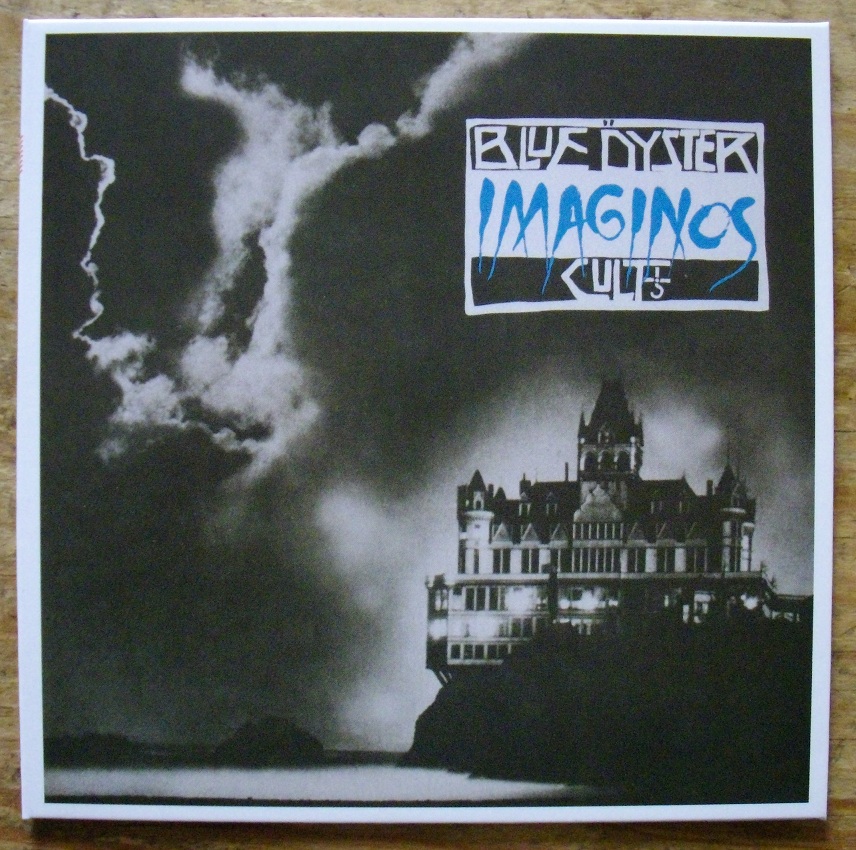
BÖC ended their tenure on Columbia with the ambitious concept album, Imaginos. It’s easily one of BÖC’s heaviest efforts in all senses but there were still enough keyboards, reverbed drums and glassy clean guitars to ensure it fit in with the musical trends of the mid-80s. In typical BÖC fashion, however, they added their own eerie and psychedelic quality to the mix. If you ever have a nightmare about the 80s it could easily sound like this!
The album had a long gestation and is really a combination of two projects. It started out in 1981 as the solo project of fired original member, Albert Bouchard. This project was rejected and later reworked as a Blue Öyster Cult project. Even though some of the original BÖC members were no longer in the band, the convoluted saga of the album’s making meant that all original members appear on it, giving the album the illusion of being a reunion effort. There are also many guest musicians and vocalists as a result of its long gestation.
Imaginos CD Cover
It’s perhaps surprising, then, that the album sounds so focussed. Del Rio’s Song has hooks to die for and serves as light relief amidst all the mystery and darkness. The Siege and Investiture of Baron Von Frankenstein’s Castle at Wisseria is explosively dramatic with superb guest vocalist Joey Cerisano channeling Chris Cornell. The album’s concept comes from poems written in the 60s by the band’s mentor and manager Sandy Pearlman. These ideas have featured in many songs throughout BÖC albums and some of this older material appears here in reworked form (including an upbeat, galloping take on the classic Astronomy).
Although the production does seem over-produced compared to the sparser sound of their classic albums, the lavish sound does suit the theatrical concept andfeels like an updated version of the band’s dark, arcane style to me. The use of lyrics and music from previous eras also creates the sense of this album as the definitive statement of BÖC’s career and mythology. Unfortunately, it turned out to be the band’s worst seller for the label and would be their swansong as a Columbia act. They wouldn’t release another studio album for 10 years. It’s a real shame because this album is creative, bold and uncompromising: a secret treat for anyone wanting to check out overlooked gems from the 80s.
Imaginos LP Inner – The “Explanation”
Imaginos – The “Explanation”
[Blue Öyster Cult – The Siege and Investiture of Baron Von Frankenstein’s Castle at Wisseria]















 HEAVY METAL OVERLOAD