Category Archives: Classic Rock

Saxon – Unleash The Beast (Album Review)

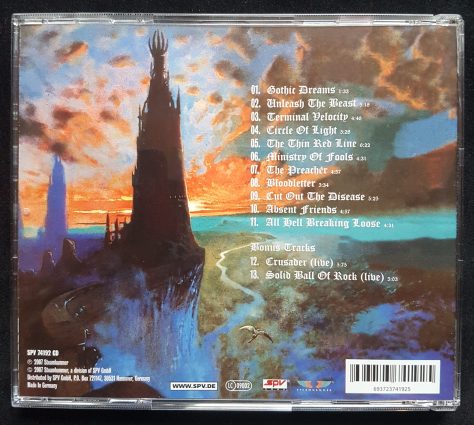
Saxon – Unleash The Beast (1997)

Unleash The Beast, Saxon’s thirteenth studio album and the first to feature the band’s current line-up, finds the band dialling up the kind of heaviness previously hinted at on older tracks like Altar Of The Gods, Battle Cry and Dogs Of War.

As usual for Saxon, this 1997 album’s big classic is the title-track: a brilliant thrasher with a chorus hewn from pure gold. But the harder edge comes at the expense of the band’s usual chemistry and charisma. The serious mood fits songs like the dark, grooving Cut Out The Disease and the moody, slow-burner The Preacher. But songs like Ministry Of Fools and The Thin Red Line fall strangely flat when they should be uplifting. The driving Terminal Velocity, uncannily catchy Circle Of Light and vigorously rowdy All Hell’s Breaking Loose inject much-needed sparks of excitement but can’t quite lift the album into the classic zone.

Its po-faced proficiency makes it one to appreciate rather than love but Saxon’s consistency and focus impresses and this was a crucial album for them. As well as unleashing the beast, they ushered in a new era, finding a style and purpose that would restore their credibility and serve them well for years to come. The story of modern Saxon starts here.
Judas Priest – Firepower (Album Review)

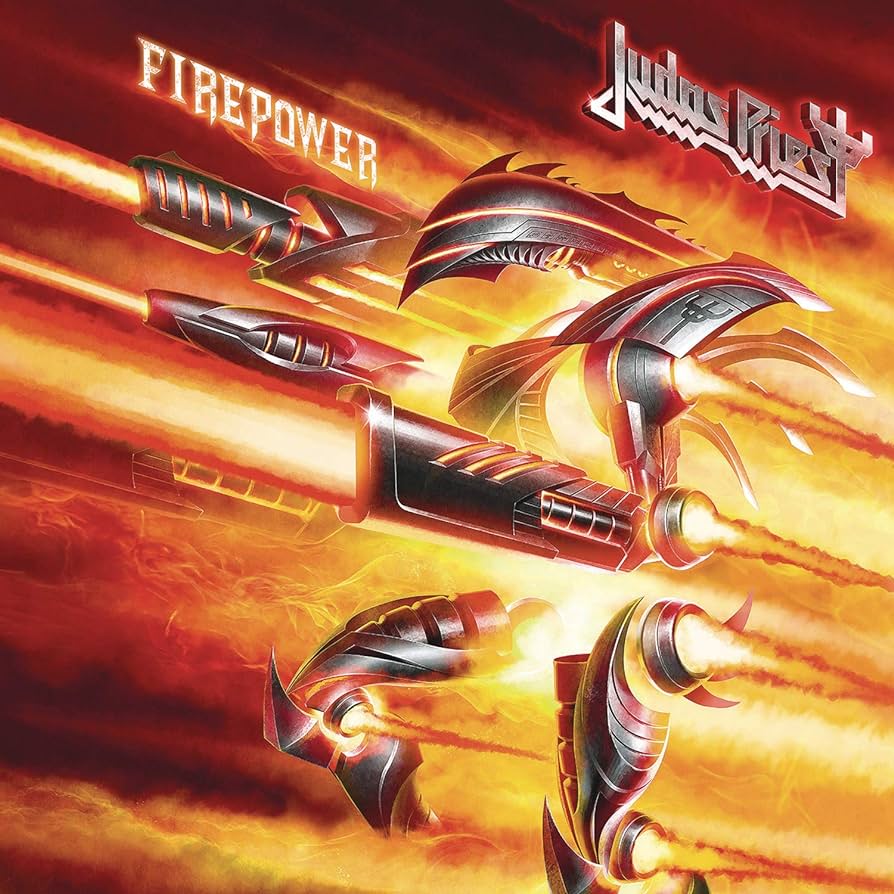
Judas Priest – Firepower (Columbia – 2018)

With Black Sabbath calling it a day in 2017, Judas Priest are now one of the oldest metal bands still on the go. They’re one of the genre’s most definitive, influential and original acts. But they’ve also been dogged by consistency problems for decades, making any new release equal parts exciting and fraught. While dodgy production and some weak songwriting hampered 2014’s Redeemer Of Souls it was promising enough to leave me hopeful that better was yet to come. And so it has proved, these old dudes are sounding pretty potent on their latest album Firepower.

The most obvious improvement is the album’s crisp, classic production, but the band’s performance is more assured too: the solos build excitement and Rob Halford is on commanding vocal form. The excellent opening title track and Lightning Strike immediately give this album the edge over its predecessor.

But the songwriting is still not totally consistent. Being more of a fan of melodic Priest like Desert Plains, I prefer the more anthemic tracks like Rising From Ruins and Never The Heroes and find the more hammering Painkiller-type tracks like Necromancer and Flamethrower too clunky. But all the songs have their moments and the varied tempo and style keeps the album engaging. And the band aren’t too long in the tooth to progress either: the doom-laden Children Of The Sun, malevolent Spectre and the raunchy Lone Wolf adding new flavours to the band’s style.

Firepower doesn’t quite have the audacity or vitality to put it in the top tier of the band’s discography but it is their best and most cohesive release in aeons. At a time when many older acts are bowing out or resting on their laurels, Priest’s impressive dedication to forging ahead keeps them at the forefront of the genre. Still metal gods, still defenders of the faith, still delivering the goods.

KISS – KISS (Album Review)

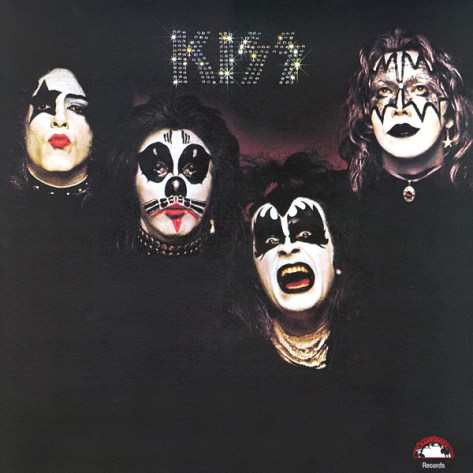
Can you guess which of these guys got someone else to do their makeup?

KISS, the band’s self-titled debut album from 1974, is loaded with more classics than any other studio album they would ever put out. The masked New York rockers were already making a reputation as an explosive live act and when you look at the tracks featured here, Strutter, Firehouse, Cold Gin, Deuce, Black Diamond and 100,000 Years, it’s no wonder few bands dared take them out as support act.

But it’s not all cut from that timeless cloth. The glam stomp single Kissin’ Time and the instrumental Love Theme From KISS don’t rank among the band’s better moments. And the young musicians were unable to capture the power and excitement of their live shows in the studio. KISS at their best put a spring in your step like no other band but the production and performance here is too tentative to quite achieve that.

KISS would eventually deliver definitive renditions of these songs on their mega-selling 1975 album Alive! But there’s a reason so many of that live album’s songs were drawn from their debut. KISS is a must-hear for fans of street-level, meat and potatoes hard rock. A flawed classic that planted the seeds of success with its pop-savvy mix of Humble Pie boogie, tasty heavy riffs and an array of songs that would become the stuff of legend.

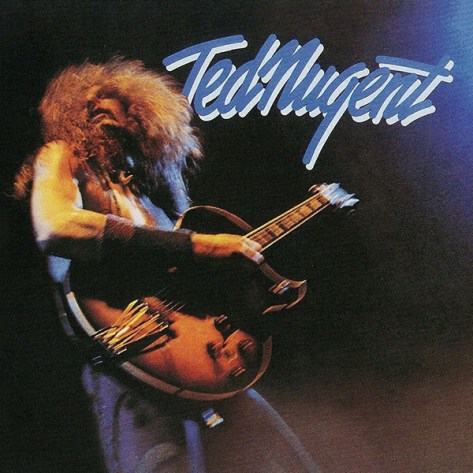
Ted Nugent – Ted Nugent (Album Review)

Ted Nugent – Ted Nugent (1975)

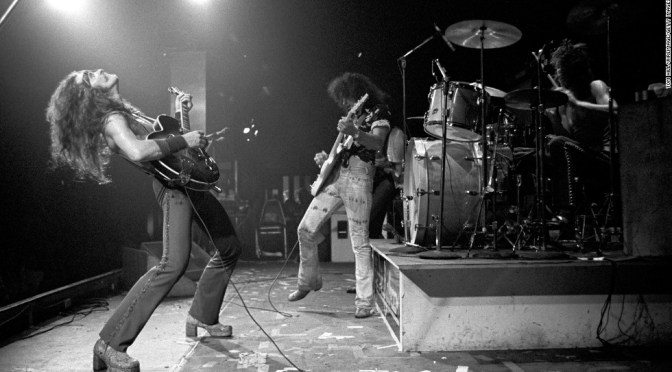
He’s a phenomenally exciting guitar player and intense live performer but there are a disconcerting number of patchy studio albums to wade through in “Terrible Ted” Nugent’s discography. This 1975 album, his solo debut after ditching the Amboy Dukes band moniker, is as close to filler-free studio greatness as he ever got. Outside of a compilation or live album, this is the most classic Nuge songs that you’re going to find in one place.

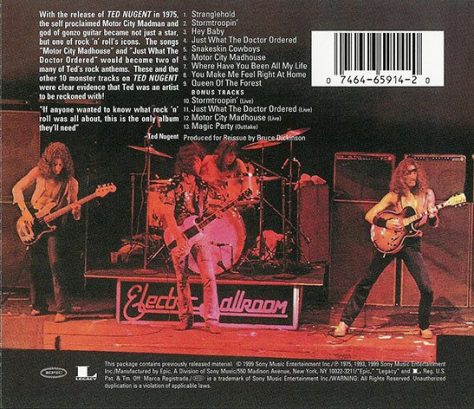
And what classics! Stranglehold is an audacious and timeless opener: a moody, psychedelic workout that brilliantly showcases the excellent band, Nugent’s guitar chops and that superbly raunchy Gibson Byrdland tone. Motor City Madhouse is a gonzo rager and the stunning hard rockers Just What The Doctor Ordered and Stormtroopin’ are two of my all-time faves. The lesser-known Hey Baby and Snakeskin Cowboys are catchy, swaggering rock n’ rollers that hold their own among the hits.

But the patchy criticism still applies and Ted doesn’t always hit the target here, running out of steam with a brace of comparatively forgettable closing tracks. But this is still the most consistently brilliant studio album of his career and a great place for newbies to start. Like the “murder capital of the world” referenced in Motor City Madhouse, Ted Nugent is loaded with killers.

Great reissue with quality bonus tracks

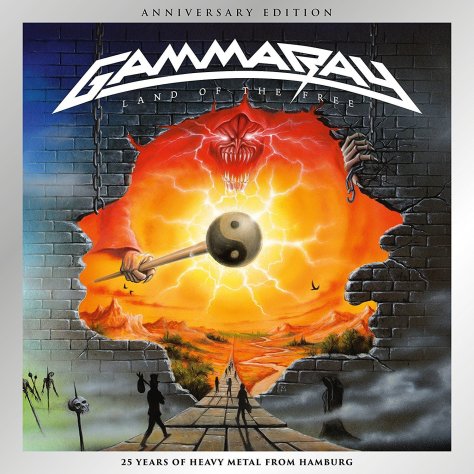
Gamma Ray – Land Of The Free (Album Review)

Gamma Ray – Land Of The Free (1995)

With vocalist Ralf Scheepers out the band, hell bent on joining Judas Priest, Gamma Ray guitarist (and former Helloween guitarist/lead vocalist) Kai Hansen decided to make a surprise, and welcome, return to the mic. The re-jigged German band found a renewed sense of vitality and their fourth album, 1995’s Land Of The Free, proved to be their best yet. It’s a definitive power metal classic: humungous, anthemic heavy metal goods properly delivered by a band on a mission.

2017 Anniversary Edition with 7 bonus tracks

The opening track Rebellion In Dreamland is metal at its gloriously epic best and tracks like Man On A Mission and All Of The Damned feature precision hooks. The band’s earlier albums often stumbled into silliness but this is a more serious and consistent effort. The only overly jolly moment comes when, yet another former Helloween vocalist, Michael Kiske joins the band for Time To Break Free. But it’s a very minor grumble and, for the most part, this has all the stately riffage, wild soloing, singalong choruses, fairy feller interludes and last-ale balladry you could possibly want. Gamma Ray achieve hero status for persevering with bombastic trad metal at a time when it was totally out of fashion and their musical bravado found the perfect home in Land Of The Free.

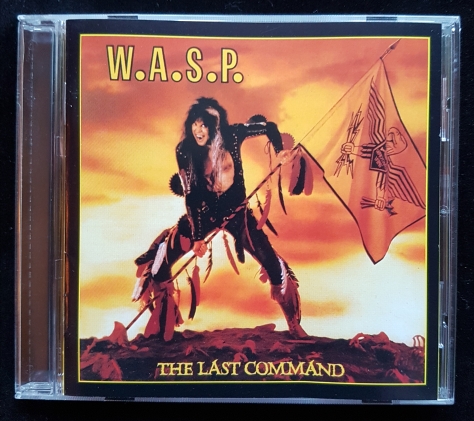
W.A.S.P. – The Last Command (Album Review)

W.A.S.P. The Last Command (1985)

Frontman Blackie Lawless might be flying his shock rock flag high on the cover but the only things worth rallying behind on 1985’s The Last Command are a few decent songs and Lawless’ unique howling rasp of a voice. W.A.S.P.’s eponymous debut was a superbly untamed slice of evil filth but on this second album, the band’s songwriting is sliding into the unremarkable. The free-spirited opener Wild Child and the debauched Blind In Texas are the must-hear tracks but for every song like the fun-but-silly Ballcrusher or the mean, moody Widowmaker there’s a banal Jack Action or the humdrum title track. But, while the balance between the filler tracks and the good ones is dangerously unbalanced, the band’s delivery and that voice manage to just lift the album out of the realm of the ordinary. It’s a good enough time if you’re in the right mood, a bore if you’re not. OK for occasional plays but not regular revisits. At the end of final track Sex Drive, Lawless rolls over and asks “tell me that don’t hit the spot”. Well, it was good fun but I’d be lying if I said the earth moved.

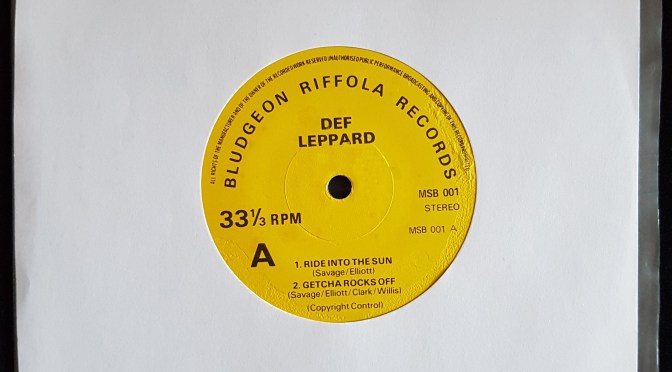
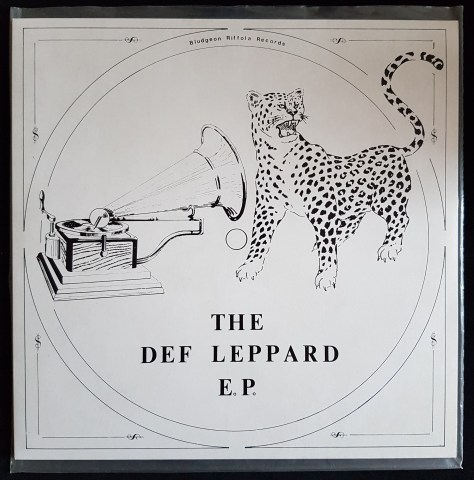
Def Leppard – The Def Leppard E.P. (Review)

Record Store Day Edition

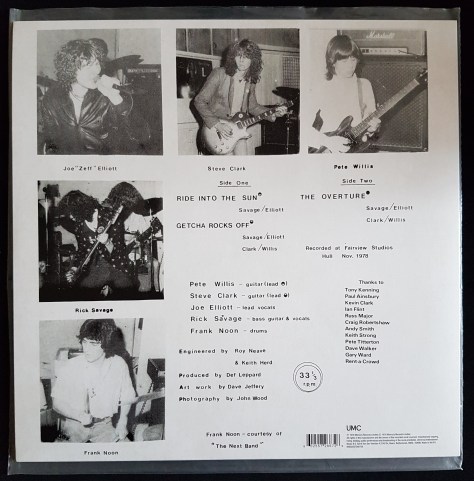
Def Leppard roared onto the UK metal scene with this self-titled EP. Hard to imagine now, but the squillion-selling stars of Hysteria fame had to release this on their own label Bludgeon Riffola after paying for the recording with borrowed money and recording it with borrowed drummer, Frank Noon. It was the kind of DIY move that became a big factor in the growing New Wave of British Heavy Metal and The Def Leppard EP put the Sheffield band right at the forefront of the movement. Before the term NWOBHM had even been coined!

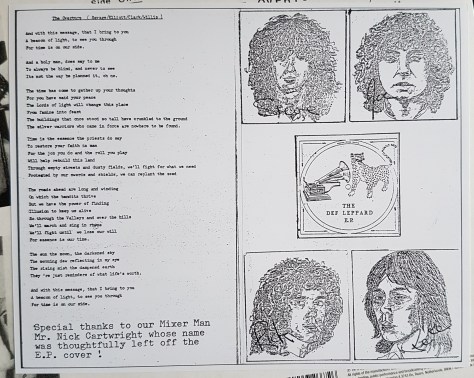
Released in January 1979 the EP features early versions of Ride Into The Sun, Getcha Rocks Off and The Overture: all songs that would be re-recorded later, with varying results. A later Hysteria-era remake of Ride Into The Sun improved on the original’s clunky vocals but that bouncy riff is still killer here and it’s fun to hear Lep in such naïve form. Getcha Rocks Off and The Overture would appear again on the band’s debut album On Through The Night but these are the definitive takes with their lively hot-of-the-press feel. The Overture in particular is a highlight, top epic-metal cobblers that puts the album version in the shade.

Zeff?

None of this is going to blow you away but it’s a fun, interesting listen and must-have for Lep fans. It’s been released in various vinyl editions that might set you back now but it has just been made available digitally for the first time EVER so there has never been a better time to getcha rocks off with this excellent piece of metal history.

UFO – Phenomenon (Album Review)

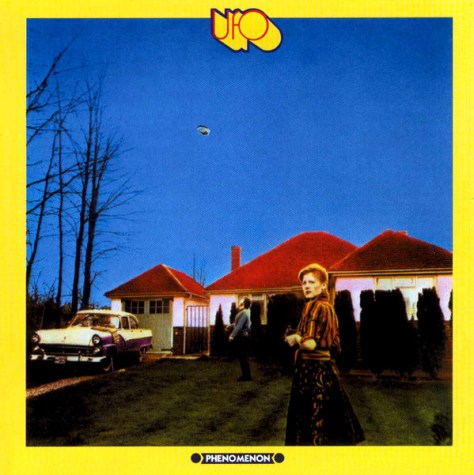
UFO – Phenomenon (1974)

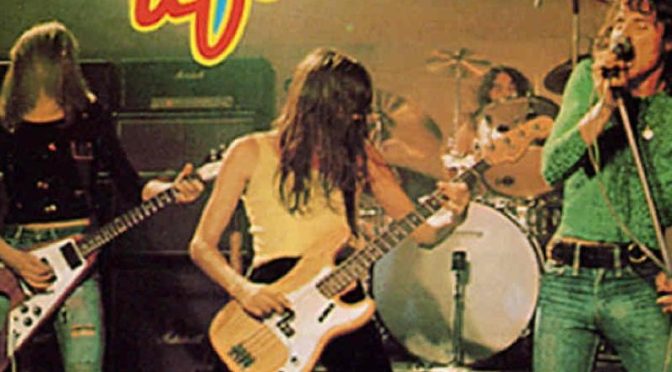
With two studio albums behind them, UFO took off in 1974 with the recruitment of the German mad axeman Michael Schenker and the release of their excellent third album Phenomenon.

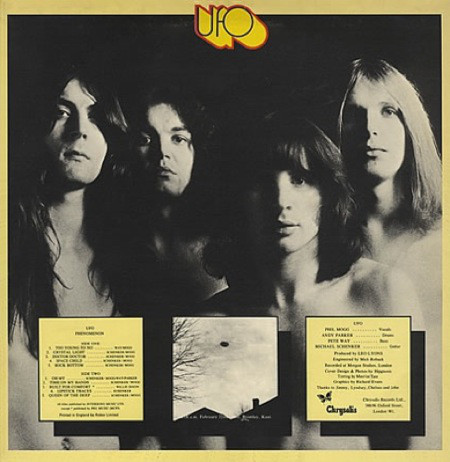
The spacey tendencies of the band’s earlier work remain in the cosmic balladry of tracks like Space Child and Crystal Light and vocalist Phil Mogg shines on these mellower tracks. But Schenker shows what he can do on the album’s rockers: peppering opener Oh My with fluid leads,  chugging infectiously on Doctor Doctor and offering up a veritable guitar goldmine on Rock Bottom. Side two is less memorable but contains two highlights in the majestic Queen Of The Deep and Too Young To Know: a great example of the kind of ultra-catchy storytelling rock that would become the band’s speciality.

More accomplished albums would follow and cement UFO’s place as classic rock giants but Phenomenon more than lives up to the promise of its titular billing with its raw and innocent mix of riffy, trippy boogie. It’s a big favourite of mine and has a uniquely proto-metal place in the UFO discography. Essential listening if you enjoy the early outings of Priest, Scorpions and Budgie and want to hear the development of a style that would be heard later, louder and heavier, in the output of NWOBHM bands such as Maiden, Saxon and Diamond Head.

[UFO – Queen Of The Deep]

*note that older versions have ‘Oh My’ swap sides with ‘Too Young To Know’ (also occasionally mis-spelled as ‘Too Young To No’!)

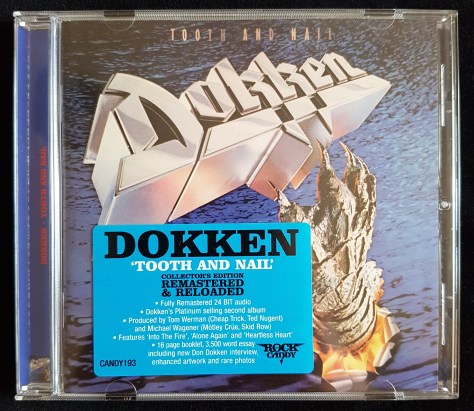
Dokken – Tooth And Nail (Review)

Dokken – Tooth And Nail (1984)

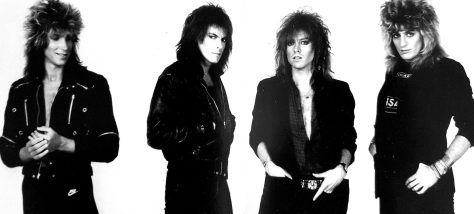
When their debut album Breaking The Chains stiffed in the US, Dokken’s record deal with Elektra was on thin ice. Backs against the wall, the band would have to fight Tooth And Nail (see what they did there?) to keep their rokken roll dream alive. But when they should have been forming a united front, the band members were fighting among themselves. Producer Tom Werman decided early on that he’d had enough and the band had to complete the record the only way they could. Separately. Guitars, drums and bass were finished up with Roy Thomas Baker during the day, while frontman Don Dokken recorded alone with Michael Wagener during the night.

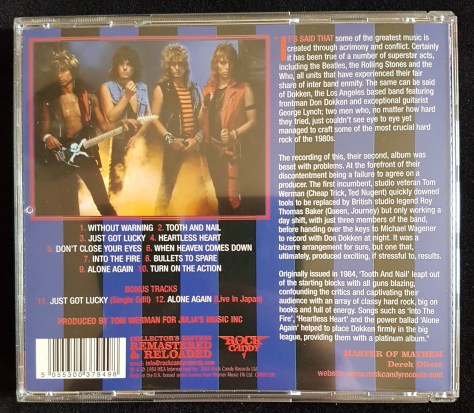
Fortunately the struggling, warring band had some top notch material to draw from. Superb L.A. glam meets Ozzy/Scorpions-style Euro metal. A lush and ominous guitar intro leads into the superb thrashabout title track. Just Got Lucky and Into The Fire have humungous raunchy hooks. Alone Again is classy manfeels and When Heaven Comes Down is a heavy, stately centrepiece.

Back Cover – Rock Candy Reissue

And, amazingly, considering the fractious nature of the album’s creation, it’s the raw, live vibe and delivery that is the real magic on Tooth And Nail. There’s a moment in Heartless Heart where a drum and vocal bridge suddenly explodes into harmonised arena rock heaven. It sounds like a band playing the gig of their lives, having their moment of world-beating peak performance flow. George Lynch firing off godly guitar licks left, right and centre and Don, aloof and weedy on the debut album, now generating massive sparks of excitement with committed and charismatic ease. Tearing it up in the daytime, burning it down at night, straight to the top… Tooth And Nail is the sound of a band fighting for their lives and winning heroically.

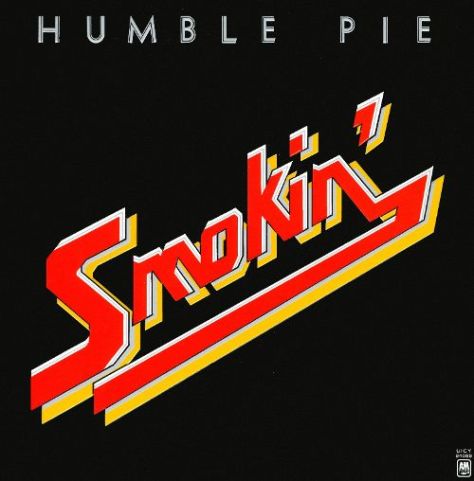
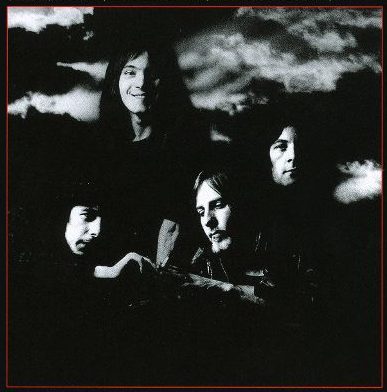
Humble Pie – Smokin’ (Album Review)

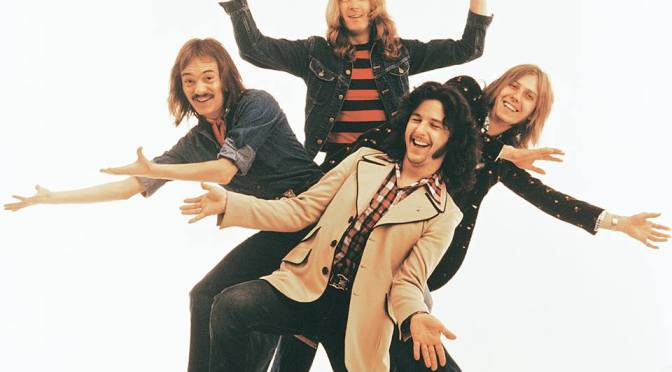
Humble Pie was one of those 70s bands that struggled to capture their magic in the studio before scoring big with a live album. But following the success of the essential Performance: Rockin’ The Fillmore they were then faced with the challenge of coming up with a satisfactory studio follow up. An even more daunting prospect given that the supergroup was now rendered considerably less “super” following the departure of founding member Peter Frampton.

Frampton felt that the audience had decided the heavy blues rock direction that The Pie had to go in and that meant the pastoral acoustic diversity that he contributed to previous albums was no longer required. The accepted narrative is that the band’s first post-Frampton outing, 1972’s Smokin’, is a harder rocking affair but that’s only partly true. The whole album is more consistently rooted in soulful, bluesy rock but there’s still plenty of mellow diversity. So for every hard-riffing track like Fixer you get an Exile On Main Street-style rootsy outing like Old Time Feelin’.

But the standout moments of Smokin’ are undoubtedly the louder tracks. The smouldering boogie of Hot N’ Nasty, a fat riffing cover of C’Mon Everybody and the superbly greasy rocker 30 Days In The Hole are all brilliant showcases for the peerless vocal power of Steve Marriott and the guitar chemistry he forged with new recruit Clem Clempson. The mellow tracks aren’t as exciting or memorable but tracks like the Zep-blues of I Wonder impress and add crucial depth and variety.

Smokin’ lives up to its name. It’s a rockin’, feel-good time with a loose and natural production and delivery that successfully captures the band’s live prowess. A gradual, coke-fuelled decline in quality on subsequent albums makes this Humble Pie’s studio peak and ensured that the band would remain overlooked and under-rated, especially in their native UK. But fans of rootsy rockers like The Stones, The Faces and Cream (as well as more modern acolytes like The Black Crowes) should definitely check out The Pie and Smokin’ is the perfect place to start: a great band and legendary frontman at the top of their game, proving that they could rock in the studio just as well as they could in the Fillmore.