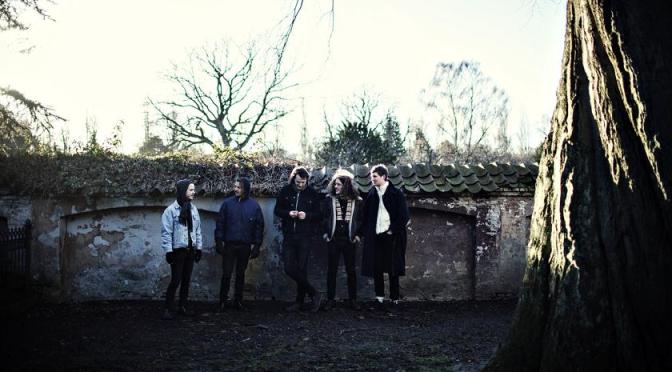
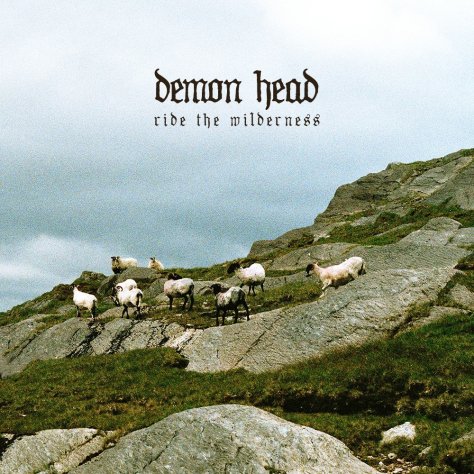
It’s officially summer now but winter darkness reigns eternal in the heart of the HMOverlord so here’s Winterland by Copenhagen’s Demon Head. Taken from their 2015 album Ride the Wilderness, we’re in firmly retro territory here, harking back to the vintage proto-metal of Pentagram or even the heavier bluesy bands like Fleetwood Mac. The band’s sound is refreshingly clean and warm, the heaviness coming from the doom-laden riffs and delivery. And Ferreira Larsen’s excellent Bobby-Liebling-meets-Glenn-Danzig vocals are cultishly addictive. It’s great stuff from a very promising debut album. If you like this, the bands entire digital discography can be acquired very cheaply via Bandcamp and keep an eye out the follow-up album Thunder On The Fields, due out in April 2017.
Savage’s relatively late debut album (1983’s Loose N’ Lethal) might make them seem like one of the few New Wave of British Heavy Metal bands that couldn’t lay a claim to being an influence on the mighty Metallica. But, far from being Johnny-Come-Latelies, Savage had already been around for a while. By 1981 they had already released a demo, a single and made two appearances on a compilation album Scene of the Crime. One of those compilation tracks was the classic Let it Loose and it soon made its way into the hands of, you guessed it, Lars Ulrich. Only appearing in early Metallica live sets and on a demo tape, it’s not one of the more famous or celebrated Metallica NWOBHM covers but there’s a strong whiff of the thrash giants’ early style here. And although ‘tallica didn’t exactly pass it off as one of their own they weren’t in a hurry to draw attention to the fact that it was a cover either. And, if any listeners thought it was one of their own original songs, that was fine by them too. Have a listen to the 1981 Scene of the Crime version of the track here to hear why.
The Swiss power trio Coroner has often been called the “Rush of Thrash” for their progressive bent and formidable performances. And their albums don’t get much more progressive and formidable than their fourth, 1991’s Mental Vortex. Here’s one of my favourite tracks from it, Son of Lilith. It’s still got enough crunch and neck-snapping intensity to please thrashers but this song is more about precision and groove. It’s got an earworm of a chorus and a guitar solo to die for. Total class.
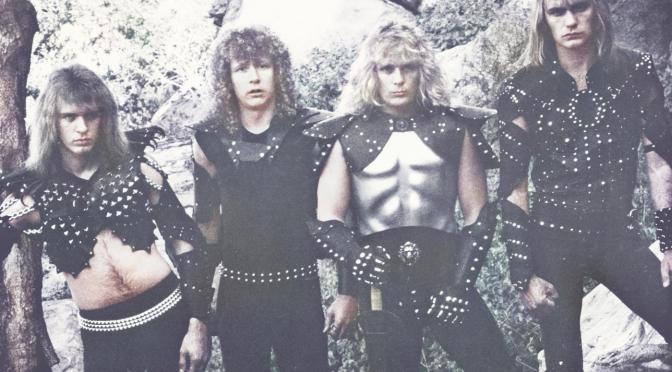
Candlemass bassist/songwriter Leif Edling has dubbed his latest project “music from the catacombs” as it was a visit to Paris’ bone-ridden underworld that inspired its creation. It’s an apt description. With The Doomsday Kingdom’s debut EP Never Machine, Leif’s music goes deeper and darker than it has for some time. The opening title-track and The Sceptre stick fairly close to Candlemass’ modern style but Niklas Stalvind’s grave and gravelly vocals and Marcus Jidell’s excellent, vintage soloing give the songs a fresh, grittier edge. But it might just have been a decent, unremarkable release if it wasn’t for the more interesting and engaging second-half. Zodiac City is a coiled and creepy serial killer yarn with a great chorus hook and the EP ends on a high with Edling taking the mic for The Whispering, a haunting and ghostly string-laden ballad. Never Machine doesn’t quite reach the inspired heights of Leif’s classic output but it’s a real grower and a definite improvement on last year’s half-(Candlem)assed EP Death Thy Lover. Candlemass might have fallen out of favour but these demos show promising signs that Edling still has what it takes to reign again as a king of doom.
(Here’s my copy. It’s the new edition released by Nuclear Blast. With new artwork, lyric sheet and red vinyl)
Tired of crushing your enemies, seeing them driven before you and all that? Why not let off some steam with Omen’s Be My Wench? This is top metal cobblers, it’s got a chorus that you’ll never get out of your head and it’s also got the kind of raunchy lyrics that most po-faced modern bands wouldn’t touch with a bargepole. But if you’re going to do Conan metal there needs to be some shagging in there. It’s the barbarian way.
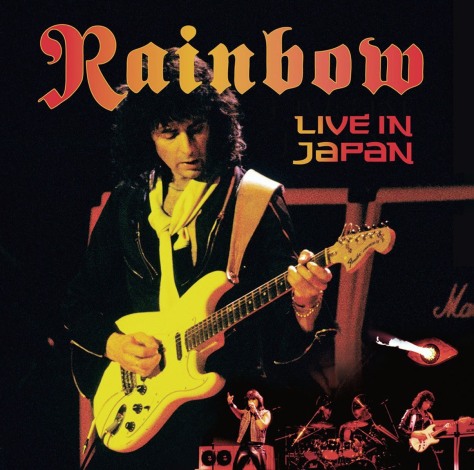
I know most metal fans prefer the Dio-fronted Rainbow but round these parts Joe Lynn Turner rules. So here’s a superb version of the classic Rainbow track I Surrender. It’s taken from the Live in Japan 1984 double live album that was made available recently as bonus discs with the Ritchie Blackmore Story box set. It’s a bonus extra that outstrips the main feature easily. Listening to Ritchie Blackmore reminiscing about his career is one thing: listening to him play is another entirely. And if you’ve never listened to The Man in Black’s live playing, you’ve never really heard him at all. No criticism of his studio output – it’s adorned with legendary guitar work – but this is a man that likens studio recording to “being at the dentists”. Unshackled from the studio, his playing reaches a transcendent level of inspiration and excitement. The whole band is on great form here, especially Joe Lynn Turner who sings with passion and commitment. But Blackmore grabs this great AOR track by the balls, lifting it to another level with one of his ingeniously messy, improvisational and thrilling solos. There’s a tag I use on this site: The World’s Greatest Guitarist. It’s reserved for The Man in Black and performances like this are why.
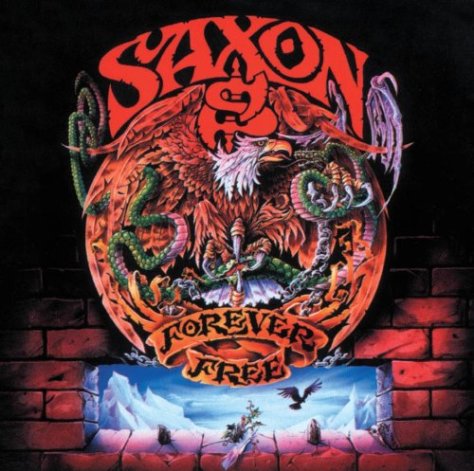
Saxon had enjoyed a return-to-form with 1991’s Solid Ball of Rock and moved fast to keep the momentum going, releasing the follow-up Forever Free just over one year later. As well as hurrying, the band also skimped on costs, recording in Vienna with unknown, cut-price producer Urwin Hersig. It probably comes as no surprise, then, that Forever Free sounded rushed and cheap.
For the most part, Forever Free comes across like a collection of leftovers from Solid Ball of Rock. It continues that album’s mix of Euro-metal and AC/DC raunch but many of the tracks stray too far into forgettable territory. Songs like Cloud Nine, Get Down and Dirty, Grind and the cyber-metal cover of I Just Want to Make Love to You sound like the band are jamming out ideas: working versions rather than the finished product. This isn’t helped by the sound: much of Forever Free sounds like a demo, a decent demo but a demo all the same.
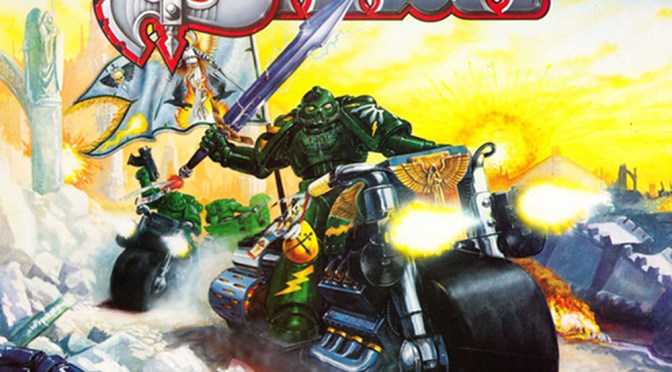
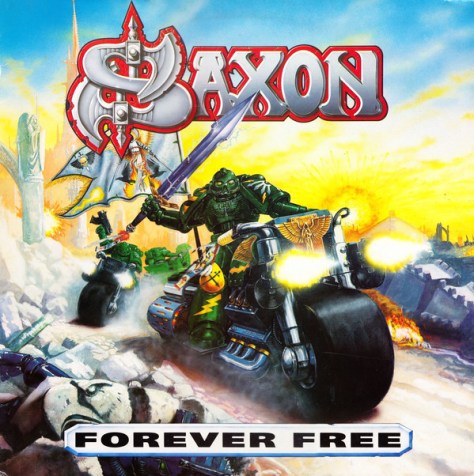
The alternative UK Games Workshop cover… released on Warhammer Records!
On the positive side, these weaknesses give the album a sense of charm. The under-cooked tracks have a playfulness about them and the loose, jamming approach throws up some truly inspired playing from the Quinn/Oliver guitar duo (check out the hot solo on Night Hunter). And, while the bungled production wasn’t going to cut it for casual listeners and airplay, it results in the rawest, most metallic album the band had put out in years.
There are only a couple of real keepers though. The title track is the album’s enduring classic, a “wind in your hair” biker anthem that turns the clock right back to the band’s classic NWOBHM days. Iron Wheels is an enchanting folky strum and, if the lyrics sound familiar, it’s because you already heard them on Destiny’s Calm Before the Storm. The blue-collar imagery works much better here in this rustic setting and makes for one of the albums more affecting and creative tracks. The albums best, and most overlooked, deep cut is the stunning Hole in the Sky, with its spellbinding chorus and Ozzy-ish riffing.
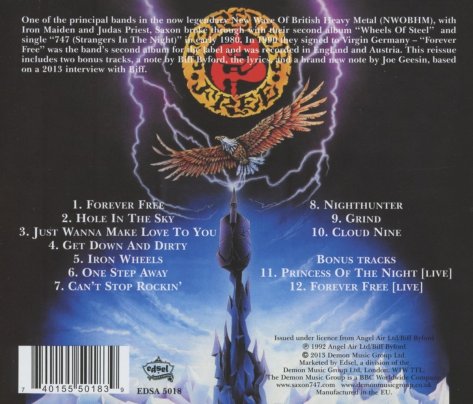
Back cover of 2013 reissue
Forever Free is a mixed bag that only committed Saxon fans will enjoy. It’s not a disaster and, unlike previous Saxon missteps, at least it sticks to the band’s core style. But it is still a misstep and did real damage to the band’s regeneration. Coming off the back of its well-received predecessor, Forever Free sold well but this rough and patchy effort ensured that many of those customers wouldn’t be back for more. Saxon had lost a crucial battle in the war to re-establish themselves but, as their next album would prove, these old dogs weren’t about to surrender any time soon.
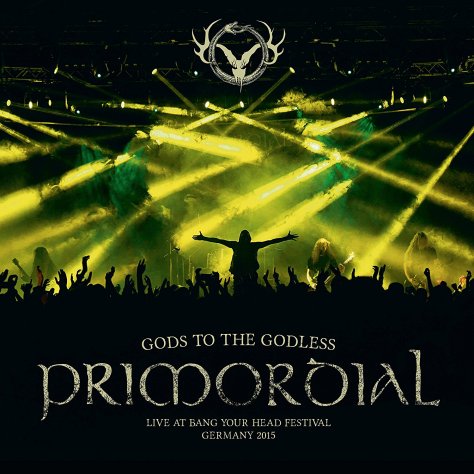
Here’s a rousing track from Primordial’s new live album Gods to the Godless (Live at Bang Your Head Festival Germany 2015). I always feel like live shows are defined by the inclusion of new tracks. My memories of live performances usually revolve around the new songs that were played. For better or worse, bands seem to put extra welly into the new stuff: meaning that brilliant new songs make for an unforgettable show but weak ones will likely mar my recollections, no matter how classics-laden the show might have been. The former is definitely the case with Primordial. Four of the eleven songs here are taken from their last album Where Greater Men Have Fallen and here’s an amazing version of the title track: a burly and martial take that surpasses the studio version. Alan Nemtheanga proves himself, once again, the consummate metal frontman, and the band’s chemistry and the skill of their arrangements are even more evident in the live setting: every instrument occupying a unique space to create a massive wall of sound. Primordial, over twenty years into their career, sound like they’re determined to remain impassioned and vital until the bitter end.
[To hear the Song of the Week, click track three on the YouTube screen below. And then listen to the whole thing, you won’t regret it]
You’d expect a black metal supergroup featuring members of Immortal, Enslaved and Gorgoroth to be an all-out blaster. But, instead, their 2006 album Between Two Worlds was a more traditional affair: the band using the new project to celebrate their pre-2nd Wave influences and indulge in a bit of hero worship. Pre-2nd Wave heroes don’t get much bigger than Bathory and their mastermind Quorthon had died just two years earlier so many of the tracks here have a Bathory influence all over them. Of those, this is my favourite. It’s an epic lament which finds the world-weary Vikings riding their tired horses out “from the mountainous regions” to “where great warriors sleep”. Pillaging can be such a grind. But Warriors’ mix of bold defiance (“It’s a great day for fire”) and raging sadness is always stirring.
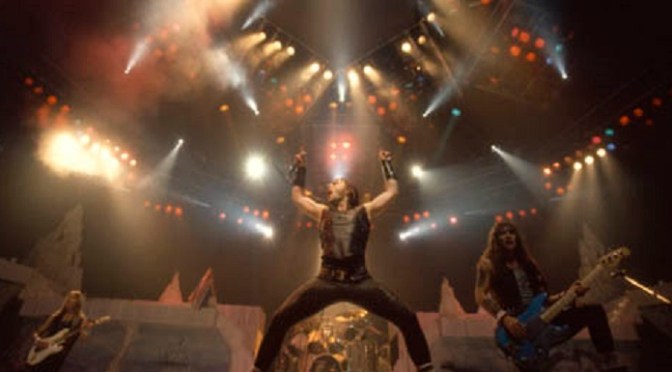
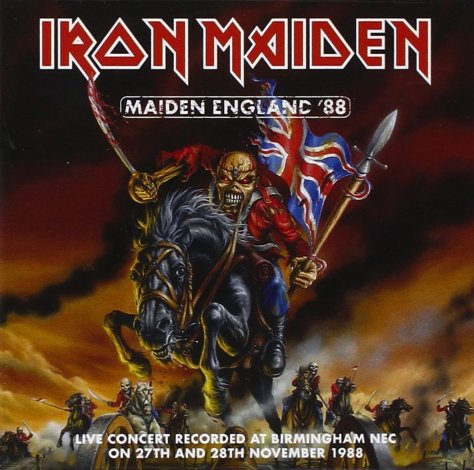
It’s been a dark and frosty week here in Glasgow. Perfect conditions for enjoying some black metal but I decided I needed some sunshine in my listening. Time for some synth-era 80s Maiden then! I opted for the excellent live album Maiden England ’88 and this song always stands out for me. The real magic happens 3mins in though, as the “take my hand…” bridge ratchets up the tension and the song’s tone shifts from jaunty to totally epic. Then the song cruises into the famous, roadie-enhanced “woah-oh-oh”s. This singalong section always seemed like it was devised for live performance so it’s no surprise that it works so much better here than on the Somewhere in Time studio version. The building urgency, shimmery guitar fills and Bruce’s added exhortations to the audience make it breathlessly exciting. It’s brilliant stuff that turns one of the potentially weaker songs of the set into an outright showstopper.






 HEAVY METAL OVERLOAD